Eucryphia, Genus, cordifolia, Species,
- Genus & species
eucryphia
Southern Chile — the Valdivian temperate rainforest from approximately 37°S to 45°S latitude; moist forest at low to mid-elevations
Overview
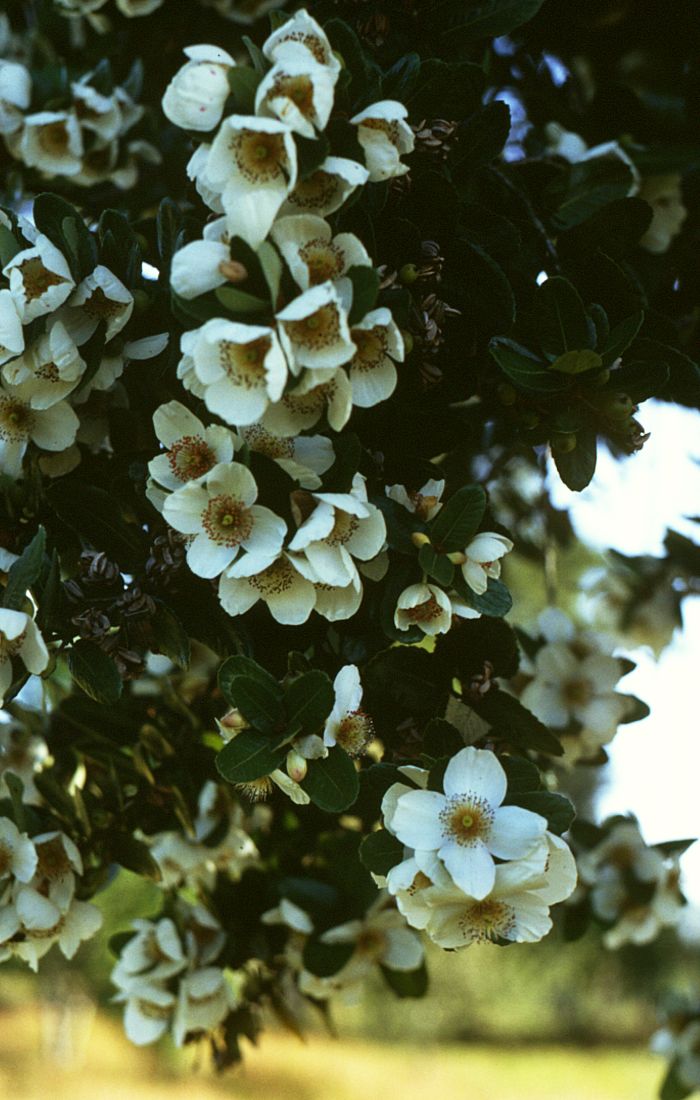
Eucryphia cordifolia is an upright evergreen tree in the family Cunoniaceae native to the Valdivian temperate rainforest of southern Chile, reaching 30-50 feet (9-15 m) tall and 15-25 feet (4.5-7.5 m) wide. Leaves are simple, oblong, 2-3 inches (5-7 cm) long with wavy margins, dark glossy green above and pale gray-green below, and evergreen year-round. White bowl-shaped flowers 2-2.5 inches (5-6 cm) across with a central boss of golden-yellow stamens open in July and August, and midsummer bloom on a broadleaf evergreen canopy stands apart from the spring bloom typical of other cultivated broadleaf evergreens in temperate gardens. Growth is slow. The species is called ulmo in Chile and the flowers are a major nectar source for Apis mellifera honey production — ulmo honey is a regional export with a distinct pale color and mild flavor. Cold hardiness is limited to approximately 15°F (-9°C), which confines cultivation to mild maritime climates such as the Pacific Northwest coast, coastal California, coastal western Britain, and western Ireland. The species requires cool humid summers and does not tolerate hot dry conditions, which further restricts cultivation even within its nominal hardiness range. The hybrid E. × nymansensis 'Nymansay' (a cross of E. cordifolia and E. glutinosa) is more commonly available in cultivation and slightly hardier.
Native Range
Eucryphia cordifolia is native to southern Chile, where it grows in the Valdivian temperate rainforest from approximately 37°S to 45°S latitude on moist well-drained soils at low to mid elevations. The species is a canopy-forming component of old-growth forests in the region and has declined significantly in its native range because of historical logging and land conversion.Suggested Uses
Planted as a specimen tree in mild maritime gardens at 15-25 foot (4.5-7.5 m) spacing where winter lows stay above approximately 15°F (-9°C) and summer heat remains moderate. The midsummer white bloom on a broadleaf evergreen canopy suits the species to specimen positions in Pacific Northwest coastal gardens, coastal California, coastal western Britain, and western Ireland. Combined with other Chilean Valdivian forest species such as Drimys winteri and Gevuina avellana in themed temperate rainforest plantings in zones 8-9. Not suited to continental climates with hot dry summers, sites colder than zone 8, alkaline soils above pH 7.0, or drought-prone positions.How to Identify
Appearance
Size & Dimensions
Height30' - 50'
Width/Spread15' - 25'
Colors
Bloom Information
White bowl-shaped flowers 2-2.5 inches (5-6 cm) across with a central boss of golden-yellow stamens open in July and August in zones 8-9, averaging 5 weeks of bloom. Flowers are lightly fragrant and bee-pollinated — the species is a major nectar source for Chilean ulmo honey production in its native range.
Detailed Descriptions
Flower Description
white with a central boss of golden-yellow stamens; bowl-shaped; 2-2.5 inches (5-6 cm) across; singleFoliage Description
dark glossy green above and pale gray-green below; simple oblong leaves 2-3 inches (5-7 cm) long with wavy margins; evergreen year-roundGrowing Conditions
Sun Requirements
Requires 4-8 hours of direct sunlight daily
• Full Sun: 6+ hours of direct sunlight
• Partial Shade: 3-6 hours of direct sunlight
• Full Shade: Less than 3 hours of direct sunlight
Care & Maintenance
Care Guide
Plant in well-drained acidic soil with a pH of 5.5-6.5 in part sun to full sun; tolerated soil types include loam, peat, and silt. The species requires cool humid summers and does not tolerate hot dry conditions — cultivation is practical only in mild maritime climates such as the Pacific Northwest coast, coastal California, coastal western Britain, and western Ireland. Water weekly through the first 2-3 growing seasons and continue regular summer watering on established trees because the species is not drought-tolerant. Cold hardiness is limited to approximately 15°F (-9°C) and foliage and stem damage occurs at lower temperatures. Pruning is done in late winter (February through March) if shaping is needed. The upright columnar form develops naturally and heavy pruning is not required. The hybrid E. × nymansensis 'Nymansay' is slightly hardier and is substituted for the species in marginal sites.Pruning
Pruning is done in late winter (February through March) if shaping is needed. Dead or damaged branches are removed at the branch collar at any time. The natural upright columnar form develops without corrective work, and heavy pruning is not required on healthy trees. Crossing and inward-growing branches are removed to maintain an open canopy.Pruning Schedule
Prune: February–March
early spring