Eucryphia, Genus, spp., Multiple species,
- Genus
- Multiple species
eucryphia
Temperate South America (Chile, Argentina) and south-eastern Australia (Tasmania, New South Wales)
Overview
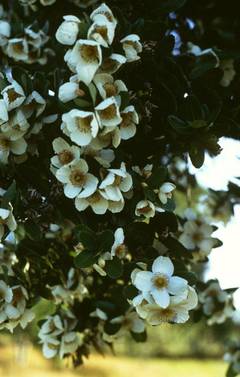
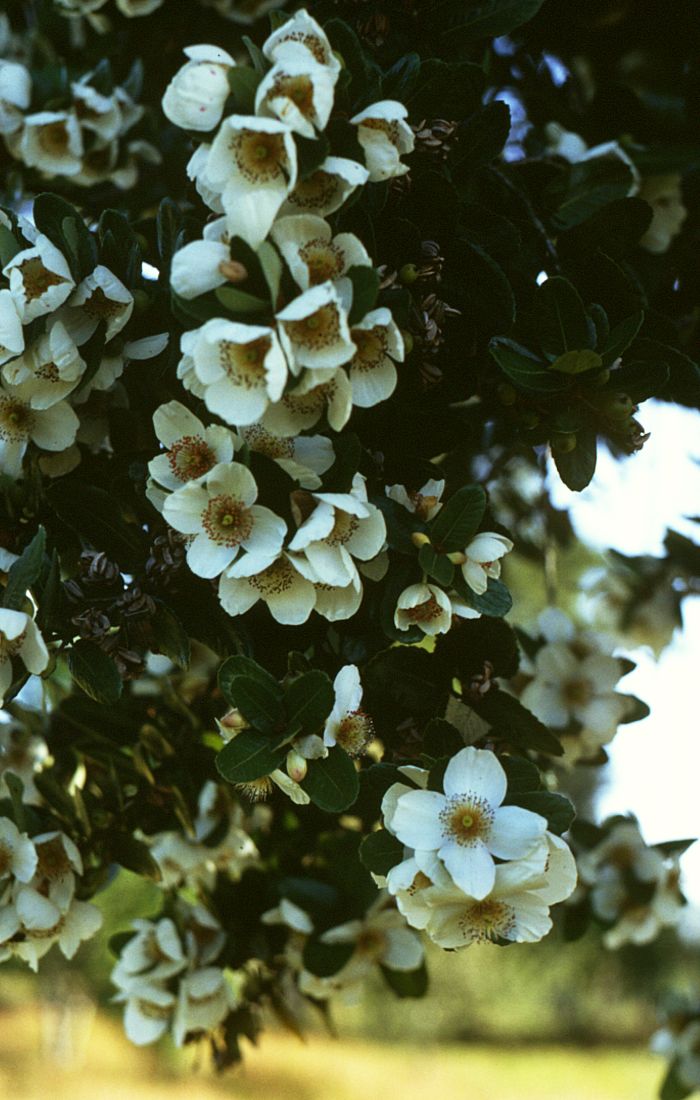
Eucryphia is a genus of about seven species of evergreen and, in one species, deciduous trees and large shrubs in the family Cunoniaceae, with a disjunct distribution across the temperate Southern Hemisphere. Species occur in the rainforests of southern Chile and adjacent Argentina and in the cool-temperate forests of Tasmania and south-eastern Australia. Plants range from compact 10-foot (3 m) shrubs to forest trees reaching 130 feet (40 m) in habitat, typically columnar to upright in form. Leaves are opposite, simple or pinnately compound depending on species, leathery, and glossy dark green. White four-petalled flowers, 1.5-2.5 inches (4-6 cm) across, carry a dense central boss of stamens tipped with pink or yellow anthers and open from midsummer into early autumn. The flowers are rich in nectar and are the source of leatherwood and ulmo honeys. Fruit is a woody capsule splitting to release winged seeds. Most species need acidic, moisture-retentive soil and shelter from cold drying wind, and they grow slowly, often taking several years to begin flowering. Hard frost damages young growth in the more tender species.
Native Range
Eucryphia has a disjunct Southern Hemisphere distribution, with species native to the temperate rainforests of southern Chile and Argentina and to the cool-temperate forests of Tasmania and south-eastern Australia.Suggested Uses
Grown as a flowering specimen tree or large shrub in mild, moist-climate gardens and woodland edges. The upright form suits narrow spaces and mixed shrub borders with acidic soil. Planted near paths and seating where the late-season nectar flowers draw bees.How to Identify
Appearance
Size & Dimensions
Height10' - 130'
Width/Spread10' - 30'
Bloom Information
Detailed Descriptions
Foliage Description
glossy dark greenGrowing Conditions
Sun Requirements
Requires 4-8 hours of direct sunlight daily
• Full Sun: 6+ hours of direct sunlight
• Partial Shade: 3-6 hours of direct sunlight
• Full Shade: Less than 3 hours of direct sunlight
Care & Maintenance
Care Guide
Grow in a sheltered position in sun to part shade, with the root zone shaded and kept cool and moist. Soil should be acidic to neutral, around pH 5.5 to 7.0, deep, and rich in organic matter, never drying out fully in summer. Cold, dry winds scorch the foliage, and hard frost cuts back young shoots in the more tender Chilean species, so a wall or woodland edge in cooler zones gives protection. E. glutinosa and the hybrid E. × nymansensis withstand more cold than E. cordifolia. Water regularly through dry spells until plants are well established, as the genus has limited drought tolerance. Growth is slow, and flowering may take five to eight years from planting.Pruning
Little pruning is needed beyond removing dead, damaged, or crossing branches in spring. The naturally columnar habit rarely requires shaping, and hard cutting into old wood is slow to regenerate. Any wayward shoots are shortened just after flowering.Pruning Schedule
Prune: August–September
summer