Escallonia, Genus, 'Newport Dwarf', Cultivar,
- Genus
- Cultivar
newport dwarf escallonia
Hybrid of garden origin from South American species
Overview
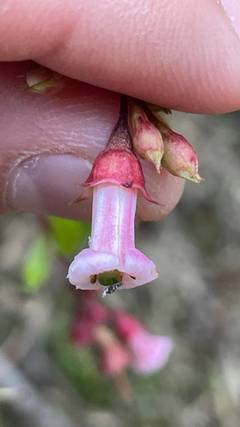
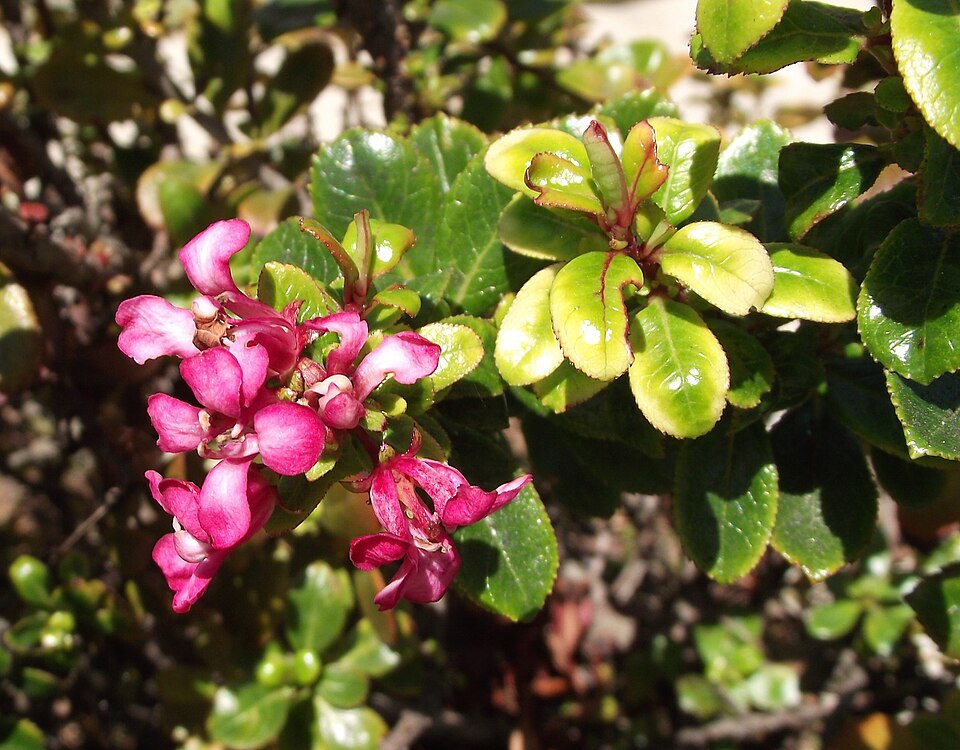
Escallonia 'Newport Dwarf' is a compact, mounding to spreading, dense, evergreen shrub reaching 2–3 feet (60–90 cm) tall with a spread of 3–4 feet (90–120 cm). This cultivar is the most compact escallonia available—less than half the height of 'Apple Blossom' (5–8 feet / 1.5–2.4 m). The flowers are small, tubular, 0.4 inch (1 cm) long, in rose-pink to medium pink, borne in short terminal clusters from June through August. Flowering is lighter than the larger cultivars. The leaves are small, glossy, dark green, oval, 0.5–1 inch (1–2.5 cm) long—the smallest leaves in the escallonia collection, proportional to the compact habit. The dense, mounding form creates a low, glossy evergreen mass. Growth rate is slow to moderate. Tolerates wind and coastal conditions. Hardy to zone 7.
Native Range
Escallonia 'Newport Dwarf' is a hybrid cultivar of garden origin from South American species. Selected for compact, dwarf habit.Suggested Uses
Planted as a low hedge, edging, or groundcover at 2–3 foot (60–90 cm) spacing. The compact size suits small gardens, containers of at least 5 gallons (19 L), foundation plantings, and positions where larger escallonias are too big. Functions as a low, glossy evergreen border along pathways. The dwarf habit fills the role of a broadleaf evergreen groundcover in mild coastal climates. Not suitable for zones below 7, exposed inland sites, or shade.How to Identify
Appearance
Size & Dimensions
Height2' - 3'
Width/Spread3' - 4'
Bloom Information
Short terminal clusters of small, tubular, rose-pink flowers 0.4 inch (1 cm) long from June through August. Flowering is lighter than larger cultivars. Bloom duration is 8–10 weeks.
Detailed Descriptions
Flower Description
Rose-pink to medium pink, small tubularFoliage Description
Glossy dark green, small oval, dense, evergreenGrowing Conditions
Sun Requirements
Requires 6-10 hours of direct sunlight daily
• Full Sun: 6+ hours of direct sunlight
• Partial Shade: 3-6 hours of direct sunlight
• Full Shade: Less than 3 hours of direct sunlight
Care & Maintenance
Care Guide
Plant in full sun in well-drained soil. Tolerates wind and coastal conditions. Hardy to zone 7. The compact habit requires minimal pruning. No serious pest or disease problems in mild climates. May suffer dieback in severe zone 7 winters.Pruning
Light shearing after flowering (August–September) to maintain compact shape. The naturally dense, mounding habit requires less pruning than larger cultivars. Remove winter-damaged stems in spring.Pruning Schedule
Prune: August–September
summerfall
Container Growing
Suitable for container growing
Minimum container size: 5 gallons