Erysimum, Genus, capitatum, Species,
- Genus & species
western wallflower
Overview
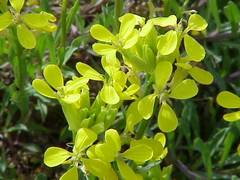
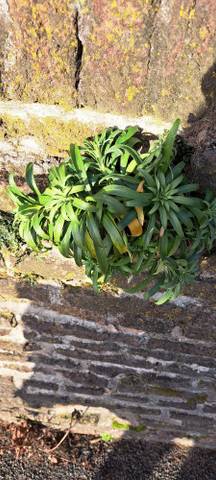
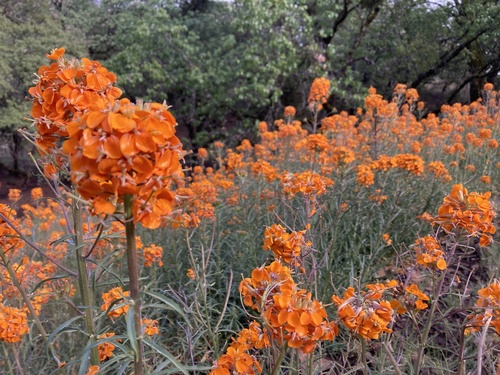
Erysimum capitatum is a biennial or short-lived perennial in the mustard family, growing 8-40 inches (20-100 cm) tall on one or several erect, mostly unbranched stems. A basal rosette of narrow, lance-shaped leaves 1-5 inches (2.5-13 cm) long forms in the first year, with smaller leaves alternating up the stem. From spring into summer each stem ends in a dense, rounded cluster of four-petaled flowers, each 0.5-0.8 inch (1.2-2 cm) across, typically yellow to orange and sometimes cream, maroon, or red. The flowers carry a light fragrance and open over several weeks as the cluster elongates into a raceme. Slender four-sided seed pods 1.5-4 inches (4-10 cm) long stand upright along the stem and split to release flat seeds. The plant grows on dry slopes, rocky outcrops, sandy flats, and open woodland from low desert to alpine elevations. It tolerates drought and poor soils but is short-lived, often dying after flowering, and persists in gardens through self-sowing. Wet, heavy soils cause crown rot.
Native Range
Native to western and central North America, ranging from British Columbia and the Great Plains south to Mexico. It grows across a wide elevation range on dry slopes, rocky outcrops, sandy flats, and open coniferous woodland.Suggested Uses
Grown in rock gardens, gravel gardens, dry borders, and wildflower meadows where its spring flowers draw bees and butterflies. It suits xeric and pollinator plantings on poor, free-draining soils. Self-sowing lets it drift through naturalistic schemes from year to year.How to Identify
Appearance
Size & Dimensions
Height8" - 3'4"
Width/Spread6" - 1'
Bloom Information
Detailed Descriptions
Flower Description
yellow to orangeFoliage Description
greenGrowing Conditions
Sun Requirements
Requires 6-12 hours of direct sunlight daily
• Full Sun: 6+ hours of direct sunlight
• Partial Shade: 3-6 hours of direct sunlight
• Full Shade: Less than 3 hours of direct sunlight
Care & Maintenance
Care Guide
Performs in full sun on free-draining, lean soil, including sandy, gravelly, or rocky ground at a pH from 6.0 to 7.5. Once established it tolerates drought and needs little water, while wet or heavy soils bring on crown and root rot. Plants are hardy in zones 3 to 8 and withstand cold, dry winters. As a biennial or short-lived perennial, it forms a rosette the first year, flowers, then often dies, returning from self-sown seed. Lean conditions and sharp drainage produce sturdier plants than rich, watered beds. It self-sows where the ground stays open.Pruning
No routine pruning is needed. Cutting back spent flower stems can prompt a second, smaller flush and tidies the plant. Leaving some stems to seed maintains the planting, since individual plants are short-lived.Container Growing
Suitable for container growing
Minimum container size: 2 gallons