Erodium, Genus, spp., Multiple species,
- Genus
- Multiple species
stork's-bills
Mediterranean Basin and temperate Eurasia
Overview
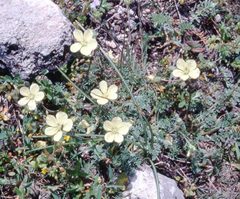
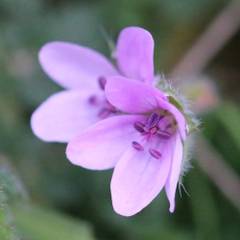
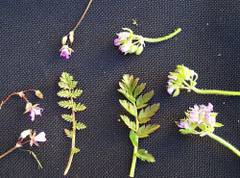
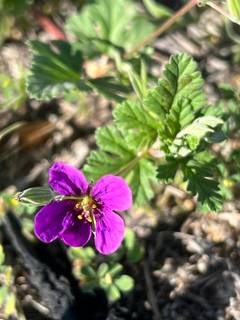
Erodium is a genus of roughly 60 to 130 species of annual and perennial herbs in the geranium family (Geraniaceae), distributed across the Mediterranean Basin, temperate Eurasia, and with naturalized or native representatives in North America, Australia, and South America. Plants form low rosettes or mounds 2-12 inches (5-30 cm) tall and 6-18 inches (15-45 cm) wide, though weedy species such as E. cicutarium can reach 20 inches (50 cm). Leaves are basal or on short stems and range from rounded and lobed to finely divided and fern-like, often with soft hairs that give a grey-green to silvery cast. Flowers have five petals and measure 0.3-1.2 inches (8-30 mm) across, in pink, magenta, white, or purple, frequently with darker veins or basal blotches, carried singly or in small umbels through spring and summer. The fruit is a long beaked structure 0.8-1.6 inches (2-4 cm) that splits into five segments, each with a coiled awn that twists with changes in humidity and drives the seed into the soil. Several species are cultivated as rock-garden and alpine plants for their compact form, while others, including E. cicutarium, are naturalized weeds of disturbed ground across much of North America. Most species are short-lived and reseed readily.
Native Range
Erodium species are native to the Mediterranean Basin, temperate Europe, North Africa, and central and western Asia, with additional species native to Australia, southern Africa, and the Americas. The center of diversity lies in the Mediterranean region.Suggested Uses
Compact Erodium species are grown in rock gardens, alpine troughs, gravel gardens, and the front edges of sunny borders, spaced 8-12 inches (20-30 cm) apart. Their drought tolerance suits xeriscape and Mediterranean-style plantings. Trailing forms are used in wall crevices and container edges.How to Identify
Appearance
Size & Dimensions
Height2" - 1'8"
Width/Spread6" - 1'6"
Colors
Bloom Information
Most Erodium species bloom from spring into summer, generally April through August in temperate zones, with some Mediterranean and alpine species flowering sporadically into autumn where moisture allows. Individual flowers last one to two days, but plants produce a succession of blooms over several weeks. Flower colors span pink, magenta, white, and lilac-purple.
Detailed Descriptions
Flower Description
pink, magenta, white, or purpleFoliage Description
green to grey-green, some silveryGrowing Conditions
Sun Requirements
Requires 6-12 hours of direct sunlight daily
• Full Sun: 6+ hours of direct sunlight
• Partial Shade: 3-6 hours of direct sunlight
• Full Shade: Less than 3 hours of direct sunlight
Care & Maintenance
Care Guide
Most species grow in full sun and sharply drained soil, including gravelly, sandy, or rocky substrates with a pH near neutral to slightly alkaline. Established plants tolerate drought and need little supplemental water once rooted. Heavy or waterlogged soil causes crown and root rot, the most common cause of failure. Alpine and rock-garden species require sharp drainage and are damaged by prolonged winter wet, while weedy species such as E. cicutarium adapt to a wide range of disturbed soils. Hardiness varies by species across roughly USDA zones 5 to 9. Plants are generally short-lived perennials or annuals that reseed to maintain a population.Pruning
Pruning needs are minimal. Shearing spent flower stems limits self-seeding and can lengthen the flowering period. Cutting back worn foliage in late winter allows fresh basal growth in perennial species.Container Growing
Suitable for container growing