Erodium, Genus, chrysanthum, Species,
- Genus & species
yellow Stork's bill
Greece (Peloponnese, mainland; rocky limestone crevices, scree 3,000-7,000 ft)
Overview
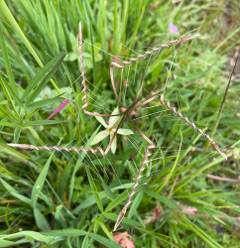
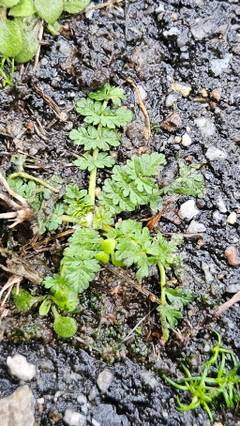
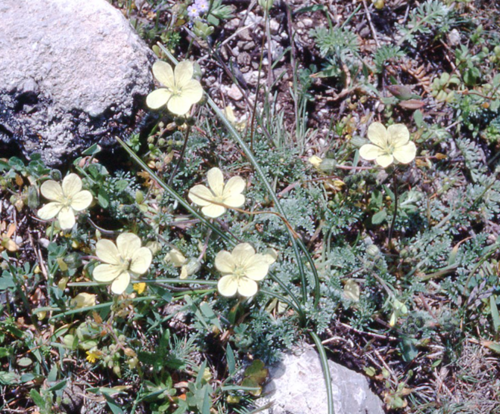
Erodium chrysanthum is a low, mounding, semi-evergreen perennial reaching 6–8 inches (15–20 cm) tall with a spread of 8–12 inches (20–30 cm). The Greek alpine species carries finely dissected silvery-gray fern-like foliage and pale sulphur-yellow to cream-yellow flowers—the only commonly grown Erodium with yellow flowers, where most garden species in the genus open pink, magenta, or white. Leaves are bipinnately divided into hair-like segments, forming a dense silvery-gray cushion that reads strongly against green-leaved companions. Flowers are 5-petaled, 0.5–0.75 inch (1–2 cm) across, in clusters of 3–8 on short stems just above the foliage from May through July. The species is dioecious—male and female flowers on separate plants—and female plants may also carry pale pink flowers rather than the yellow of male plants, a cultivar-level variation that depends on the sex of the individual plant. Fruit is the characteristic stork's-bill for which the genus is named—a long spirally coiling awn 1–1.5 inches (2.5–4 cm) long that twists and untwists with humidity changes to drill the seed into the soil surface. Growth rate is slow. Sharp drainage is required. Hardy to zone 5. Short-lived in wet winter climates where crown rot takes out plants within 2–3 seasons.
Native Range
Erodium chrysanthum is native to Greece, specifically the mountains of the Peloponnese peninsula and mainland Greece, growing in rocky limestone crevices and scree slopes at 3,000–7,000 feet (900–2,100 m). The Mediterranean summer-dry / winter-cold climate of the native habitat shapes the species' intolerance of warm wet conditions in cultivation—plants that would survive a severe cold winter can die in a mild wet winter because the crown rots before the cold reaches lethal levels. The specific epithet 'chrysanthum' translates as 'golden-flowered' from the Greek chrysos (gold) plus anthos (flower).Suggested Uses
Planted in rock gardens, alpine troughs, raised beds, and gravel gardens at 8–10 inch (20–25 cm) spacing. The silvery-gray fern-like foliage is the primary ornamental feature and carries delicately textured silver color through the growing season—the yellow flowers contribute a secondary late-spring and early-summer display. Grows in containers with sharp drainage, which suits the species to trough gardens and shallow pans where drainage can be controlled by substrate composition. Paired with other alpines such as Dianthus species, Sempervivum rosettes, and dwarf Phlox subulata cultivars, the species combines well in miniaturized rock-garden compositions. Rich border soils, wet winter climates without drainage modifications, mixed borders at scale, and shaded positions are poor fits for the species.How to Identify
Appearance
Size & Dimensions
Height6" - 8"
Width/Spread8" - 1'
Bloom Information
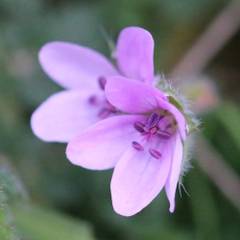
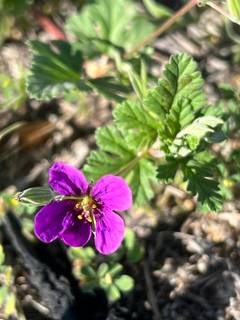
Clusters of 3–8 pale sulphur-yellow to cream-yellow 5-petaled flowers 0.5–0.75 inch (1–2 cm) across open on short stems from May through July. Bloom duration is 6–8 weeks. The characteristic spiral-coiling stork's-bill fruit follows bloom and matures over summer.
Detailed Descriptions
Flower Description
Pale sulphur-yellow to cream-yellow, 5-petaledFoliage Description
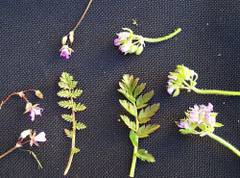
Silvery-gray, finely bipinnately dissected, fern-likeGrowing Conditions
Sun Requirements
Requires 6-10 hours of direct sunlight daily
• Full Sun: 6+ hours of direct sunlight
• Partial Shade: 3-6 hours of direct sunlight
• Full Shade: Less than 3 hours of direct sunlight
Care & Maintenance
Care Guide
Plant in full sun in sharply drained, lean, gritty soil. Sharp drainage is essential—wet winter soils cause crown rot, which is the primary cause of plant loss. Alpine-garden or rock-garden conditions match the species' Greek limestone scree origin. Hardy to zone 5 (−20°F / −29°C). Short-lived (2–4 years) in regions with wet winters; raised beds, troughs, or gravel gardens with extra grit improve drainage and extend plant life to 5–7 years. Fertilizer is not needed—rich soils produce lax stretched growth and reduced silvery-gray foliage tone. No serious pest or disease problems.Pruning
Spent flower stems are removed after bloom to tidy the plant and to encourage a second minor bloom flush. No other pruning is needed. The semi-evergreen foliage cushion is not cut back—hard cutback damages the crown, which does not regenerate from woody stems.Pruning Schedule
Prune: July
summer
Container Growing
Suitable for container growing
Minimum container size: 1 gallons