Eriocapitella, Genus, hupehensis, Species,
- Genus & species
Hubei anemone
Overview
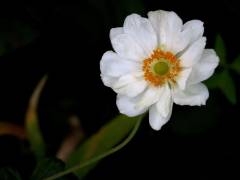
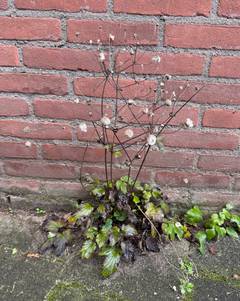
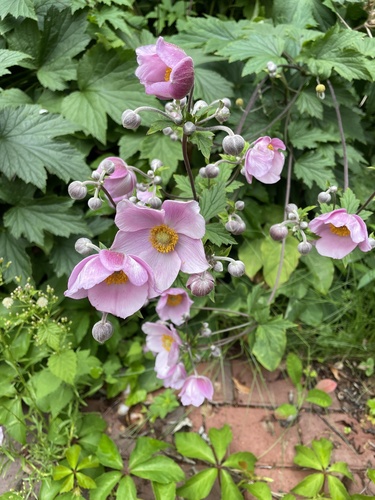
Eriocapitella hupehensis is a clump-forming herbaceous perennial 60-90 cm (24-35 in) tall that flowers from late summer into autumn, recently moved from the genus Anemone. It builds a basal mound of dark green, three-parted leaves with toothed lobes, above which wiry branching stems carry the flowers well clear of the foliage. Each flower is 4-6 cm (1.6-2.4 in) across with usually five to six rounded tepals in shades of mauve-pink to rose, surrounding a boss of yellow stamens and a green central button. Spreading roots send up new shoots around the parent, so an established plant widens into a patch over several years. After flowering the seed heads form fluffy, cottony balls that hold through autumn. It takes a year or two to settle and is slow to recover from disturbance once established, but then returns reliably and can spread further than wanted in rich, moist soil.
Native Range
Eriocapitella hupehensis is native to central and western China, where it grows at moist woodland edges, in scrub, and along streams in hill country. It has long been grown in gardens and is a parent of many autumn-flowering hybrids.Suggested Uses
Grown in mixed and woodland-edge borders, where its late flowers extend the season after summer perennials fade. It suits cottage and naturalistic schemes in light shade. Its spreading roots make it too invasive for tightly planted small beds.How to Identify
Appearance
Size & Dimensions
Height2' - 2'11"
Width/Spread1'6" - 3'
Bloom Information
Flowers open from August to October (late summer to mid-autumn), continuing for six to eight weeks. Buds open in succession on the branched stems, so a clump carries flowers and round green buds at once. Bees and hoverflies visit the open flowers.
Detailed Descriptions
Flower Description
mauve-pink to rose with yellow stamensFoliage Description
dark greenGrowing Conditions
Sun Requirements
Requires 4-8 hours of direct sunlight daily
• Full Sun: 6+ hours of direct sunlight
• Partial Shade: 3-6 hours of direct sunlight
• Full Shade: Less than 3 hours of direct sunlight
Care & Maintenance
Care Guide
Eriocapitella hupehensis grows in full sun to part shade on fertile, moisture-retentive soil that does not dry out in summer. It prefers a pH from about 5.5 to 7.0 and tolerates clay where drainage is reasonable. New plants are slow to establish and flower more freely from the second year on. Once settled the roots spread and throw up new shoots, which can be lifted in spring to make new plants or to curb the patch. A mulch keeps the roots cool and moist. It is left undisturbed because root disturbance checks growth.Pruning
Faded flower stems are cut down after the seed heads fade, or left standing for winter structure. Foliage is cleared to the ground in late autumn or early spring. Unwanted spreading shoots are dug out in spring.Pruning Schedule
Prune: March & November
fallearly spring
Container Growing
Suitable for container growing
Minimum container size: 5 gallons