Eriocapitella, Genus, spp., Multiple species,
- Genus
- Multiple species
fall-blooming anemones
Eastern Asia, from the Himalayas to Japan
Overview
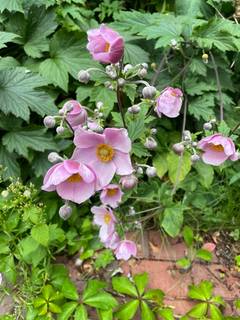
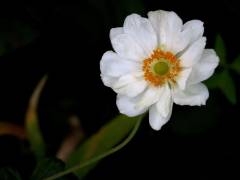
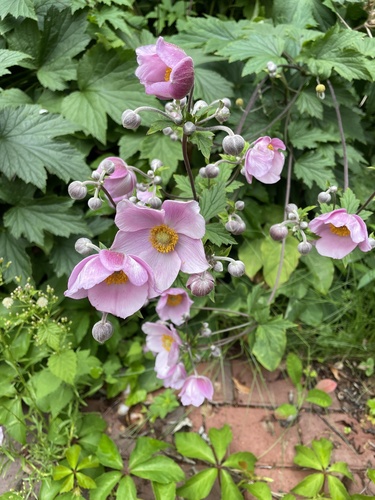
Eriocapitella is a genus of herbaceous perennials in the buttercup family, Ranunculaceae, recently separated from Anemone and known as fall-blooming or Japanese anemones, native to eastern Asia from the Himalayas through China to Japan. Plants grow from spreading rhizomes into a basal clump of long-stalked, lobed or divided dark green leaves, above which rise branching, wiry stems 2 to 5 feet (60 to 150 cm) tall. From late summer into autumn the stems carry saucer-shaped flowers 1.5 to 3 inches (4 to 8 cm) across, each with five or more petal-like sepals in white, pink, or rose surrounding a central boss of yellow stamens. The flowers are followed by rounded, woolly seed heads that release cottony seed. Eriocapitella spreads steadily by underground runners and can form wide colonies over time, sometimes outgrowing its space. The genus includes E. hupehensis and the garden hybrids grouped as E. × hybrida, long grown in temperate gardens for late-season flowers in part shade. Plants grow in moist, fertile soil and tolerate shade better than most autumn perennials. The sap contains protoanemonin and can irritate skin, and the plant is toxic if eaten.
Native Range
Eriocapitella is native to eastern Asia, from the Himalayas and western China through to Japan, where the plants grow in mountain meadows, open woodland, and along streams. Garden Japanese anemones are derived from E. hupehensis, E. vitifolia, and related species. The genus is not native outside Asia.Suggested Uses
Grown in shaded and woodland borders, cottage gardens, and mixed plantings for late-summer and autumn flowers. The tall stems are used toward the middle or back of borders and as cut flowers. Spreading colonies suit naturalized plantings under light shade.How to Identify
Appearance
Size & Dimensions
Height2' - 5'
Width/Spread1' - 3'
Bloom Information
Eriocapitella flowers from late summer into mid-autumn, roughly August to October, a season when few other perennials bloom. Tall branching stems open a succession of saucer-shaped flowers over six to eight weeks. The woolly seed heads that follow hold interest into winter.
Detailed Descriptions
Flower Description
white, pink, or roseFoliage Description
dark greenGrowing Conditions
Sun Requirements
Requires 3-8 hours of direct sunlight daily
• Full Sun: 6+ hours of direct sunlight
• Partial Shade: 3-6 hours of direct sunlight
• Full Shade: Less than 3 hours of direct sunlight
Care & Maintenance
Care Guide
Eriocapitella grows in part shade to full sun in moist, fertile, humus-rich, well-drained soil and tolerates more shade than most autumn perennials. Plants are slow to settle in the first year and then spread by rhizomes, sometimes widely, so they are given room or confined at the roots. They need steady moisture in summer and grow poorly in hot, dry, or waterlogged soil. Established clumps are long-lived and rarely need feeding. The plants spread from root fragments, so digging can scatter them. The sap contains protoanemonin and irritates skin, and all parts are toxic if eaten.Pruning
Eriocapitella is cut back to the ground in late autumn or late winter after the foliage and seed heads decline. Spent flower stems can be removed earlier to limit self-seeding. Runners that spread beyond the intended area are dug out in spring.Pruning Schedule
Prune: February & November
fallwinter
Container Growing
Suitable for container growing
Minimum container size: 3 gallons