Ericameria, Genus, nauseosa, Species,
- Genus & species
rubber rabbitbrush
Overview
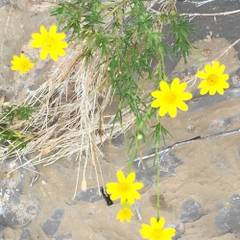
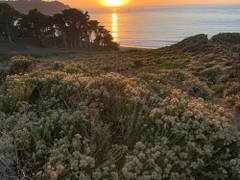
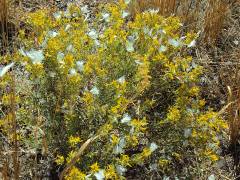
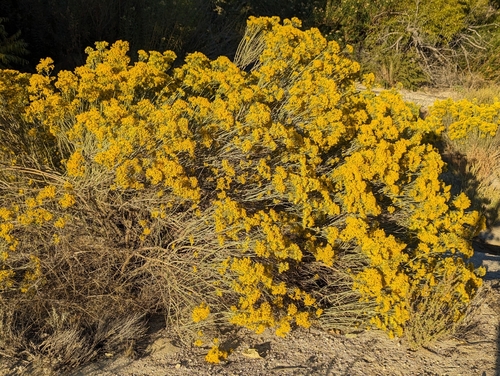
Ericameria nauseosa is a rounded, deciduous shrub in the daisy family, growing 2-7 feet (0.6-2.1 m) tall and wide on flexible, erect stems covered in a felt of white hairs. The narrow, gray-green leaves are 1-3 inches (2.5-7.5 cm) long and thread-like, giving the whole shrub a soft silver-green look. From late summer into fall the branch tips carry dense, rounded clusters of small golden-yellow flower heads made up of tubular disk florets, without the ray petals of typical daisies. The bloom is heavily scented and draws large numbers of bees, butterflies, and other late-season pollinators. Fluffy, wind-borne seeds follow and let the plant colonize open ground. The stems contain a milky latex once studied as a domestic rubber source, and the foliage has a strong, rubbery smell when crushed. Ericameria nauseosa grows on dry plains, slopes, washes, and disturbed roadsides across western North America, tolerating drought, alkaline and saline soils, and cold. It needs full sun and sharp drainage and is short-lived on rich or poorly drained ground.
Native Range
Ericameria nauseosa is native to western North America, from the Great Plains and Rocky Mountains west to the Pacific states and from Canada south into Mexico. It grows on dry plains, foothills, and disturbed ground, often in alkaline soils.Suggested Uses
Grown in dry and native-plant gardens, on banks, and in low-water and restoration plantings for its fall flowers and silver foliage. The late bloom feeds migrating monarchs and many native bees when little else is in flower. Its toughness and deep roots suit erosion control and reclaiming dry, disturbed, or saline sites.How to Identify
Appearance
Size & Dimensions
Height2' - 7'
Width/Spread2' - 6'
Bloom Information
Flowering comes late in the season, from late summer into mid-fall, mainly August through October. The golden flower clusters open as many other plants finish and last several weeks. The bloom is a major late-season nectar source for pollinators.
Detailed Descriptions
Foliage Description
gray-greenGrowing Conditions
Sun Requirements
Requires 6-12 hours of direct sunlight daily
• Full Sun: 6+ hours of direct sunlight
• Partial Shade: 3-6 hours of direct sunlight
• Full Shade: Less than 3 hours of direct sunlight