Ericameria, Genus, ericoides, Species,
- Genus & species
California goldenbush
Overview
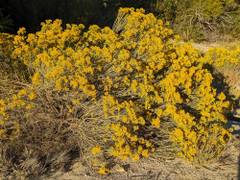
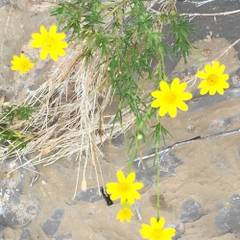
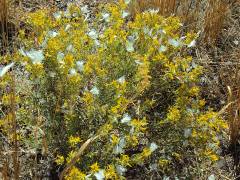
Ericameria ericoides is a rounded, much-branched evergreen shrub 1-4 feet (30-120 cm) tall and 2-5 feet (60-150 cm) wide, with stems densely covered in short, needle-like leaves. The leaves are 0.2-0.5 inch (5-13 mm) long, narrow, resinous, and crowded in small clusters along the stems, giving a heath-like look. Yellow flower heads about 0.3 inch (8 mm) across are grouped in branched clusters at the stem tips from August to November. Each head holds both ray and disc florets. The seeds carry slender bristles that aid wind dispersal. The shrub grows in coastal sand and helps hold dune surfaces in place with its spreading roots. New stems are sticky with resin. Older plants become woody and open at the base. Growth slows in summer drought and resumes with cooler, moister fall weather.
Native Range
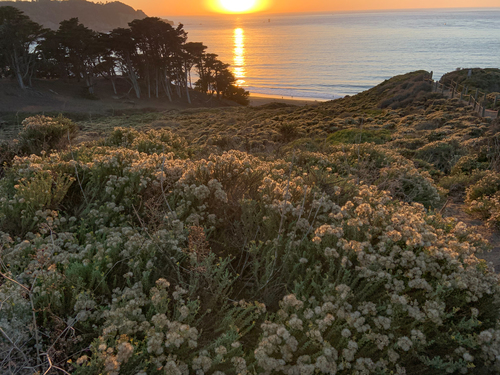
Native to the coast of California, mainly on dunes and sandy bluffs from the San Francisco Bay area south along the central and southern coast. Grows in coastal dune scrub and sandy soils near the ocean, usually below 500 feet (150 m).Suggested Uses
Grown in coastal, dune-restoration, and dry native plantings, spaced 3-4 feet (90-120 cm) apart, and used to stabilize sandy slopes. The fall flowers are visited by bees and butterflies. It is suited to seaside gardens with sharp drainage and tolerates salt wind.How to Identify
Appearance
Size & Dimensions
Height1' - 4'
Width/Spread2' - 5'
Bloom Information
Flowers from August to November, with peak bloom in early fall. Flowering follows the dry summer and continues until cooler weather. The bloom period for a plant spans 6-10 weeks, with heads opening in succession.
Detailed Descriptions
Foliage Description
greenGrowing Conditions
Sun Requirements
Requires 6-12 hours of direct sunlight daily
• Full Sun: 6+ hours of direct sunlight
• Partial Shade: 3-6 hours of direct sunlight
• Full Shade: Less than 3 hours of direct sunlight
Care & Maintenance
Care Guide
Grows in full sun in sandy, sharply drained, low-fertility soil, including coastal dune sand. Water occasionally during establishment; mature plants tolerate drought, salt spray, and wind, and decline in heavy or wet soil. It withstands the lean, alkaline-to-neutral soils of coastal dunes. Inland, it needs sharp drainage and tolerates less summer water than many garden shrubs. Root rot develops in clay or irrigated ground. Plants become woody and sparse with age and are cut back or replaced.Pruning
Cut back stems by up to one-third after flowering to keep a denser form. Shearing of old, woody plants prompts new growth from younger wood, though very old stems may not resprout. Remove dead branches as they appear.Pruning Schedule
Prune: November–December
fallwinter