Epipactis, Genus, palustris, Species,
- Genus & species
marsh helleborine
Europe, western Asia, and North Africa
Overview
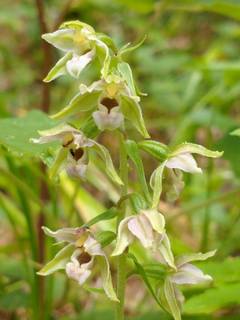
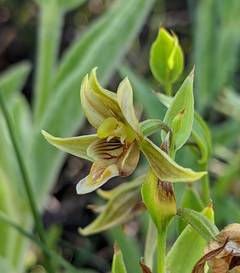
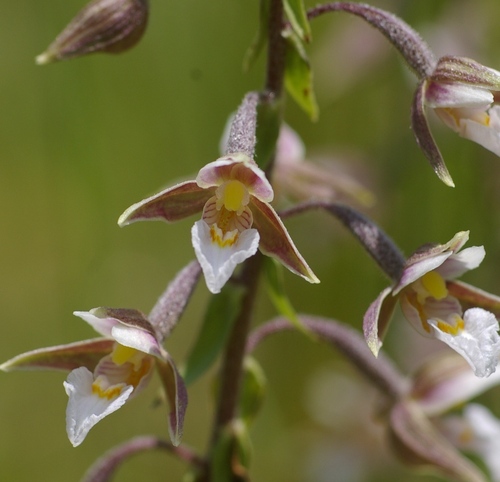
Epipactis palustris is a slender perennial orchid of wet, lime-rich ground, growing 6-18 inches (15-45 cm) tall from a creeping rhizome that forms small colonies. The narrow, folded, strongly ribbed leaves clasp the lower stem and grade into bracts up the flower spike. Each loose spike carries 7-20 nodding flowers; the outer sepals are greenish to brownish-purple, the inner petals whitish flushed pink, and the frilled white lip is marked with yellow and crimson at its base. Flowering comes in midsummer, mainly July. It grows in fens, dune slacks, marshes, and wet, base-rich grassland, on ground that stays moist through the year. Like many orchids it depends on soil fungi and is slow to establish, so it does not transplant well and resents disturbance.
Native Range
Native across Europe and into western Asia and North Africa, growing in calcareous fens, marshes, and damp dune hollows. In Britain it is local and declining, tied to wet, lime-rich sites that have been lost to drainage.Suggested Uses
Grown by specialist growers in calcareous bog gardens, tufa beds, and conservation collections that recreate fen conditions. In the wild it is a plant of protected fens and dune slacks rather than gardens. Its summer flowers draw wasps, bees, and hoverflies.How to Identify
Appearance
Size & Dimensions
Height6" - 1'6"
Width/Spread6" - 1'
Bloom Information
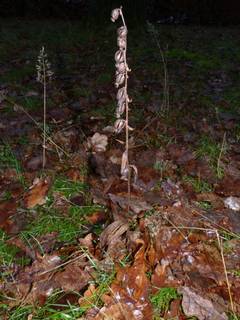
Nodding flowers open in midsummer, mainly through July, from the base of the spike upward. They are pollinated by wasps, bees, and hoverflies drawn to nectar on the hinged lip, and ripen into upright capsules that release dust-like seed.
Detailed Descriptions
Flower Description
White, pink, and crimson with yellowFoliage Description
GreenGrowing Conditions
Sun Requirements
Requires 4-10 hours of direct sunlight daily
• Full Sun: 6+ hours of direct sunlight
• Partial Shade: 3-6 hours of direct sunlight
• Full Shade: Less than 3 hours of direct sunlight