Image 1 of 11
1 / 11
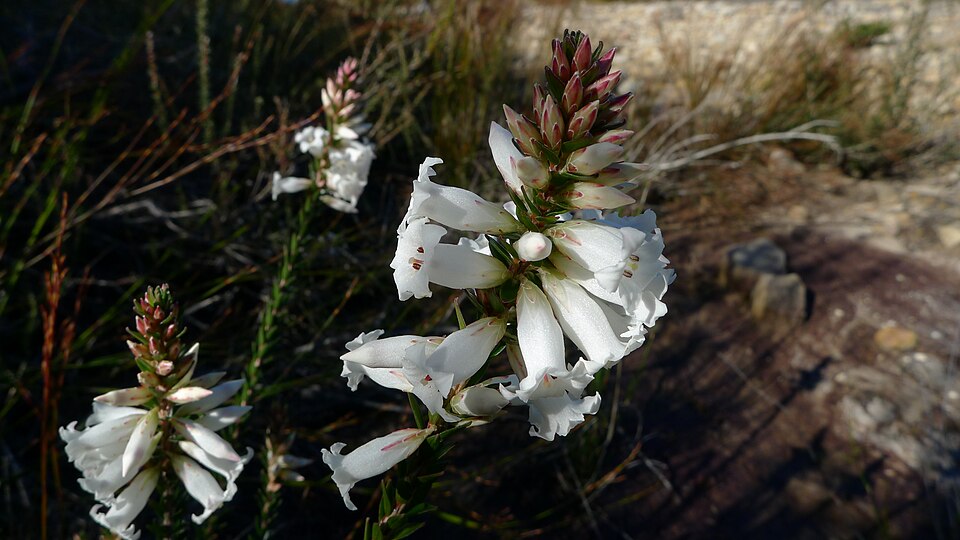
© John Tann from Sydney, Australia, some rights reserved (CC-BY) · Wikimedia Commons
Epacris, Genus, obtusifolia, Species,
- Genus & species
blunt-leaf heath
Overview
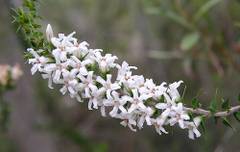
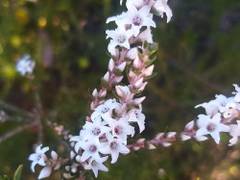
Epacris obtusifolia is an evergreen shrub reaching 12-60 inches (30-150 cm) tall and 12-32 inches (30-80 cm) wide, with slender, erect, sparingly branched stems. The leaves are small, 0.2-0.5 inch (5-12 mm) long, oblong with blunt tips, thick, and crowded along the stems, spreading to slightly down-turned. Small tubular to bell-shaped flowers, white to cream and about 0.2 inch (4-6 mm) long, line the upper stems in dense leafy spikes. The flowers carry a honey scent. Flowering occurs mainly in autumn and winter, with some bloom into spring. The flowers are followed by small dry capsules. Plants are short-lived and reshoot or regenerate from seed after fire. The species grows in wet heath, swamp margins, and damp sandy flats on acidic, peaty soils that stay moist. It declines on dry or limy ground.
Native Range
Native to eastern Australia, from Queensland through New South Wales and Victoria to Tasmania. Grows in wet heath, swamps, and damp sandy flats on acidic, peaty soils, often where water sits near the surface in winter.Suggested Uses
Used in bog gardens, pond and dam margins, and damp native plantings, spaced 18-30 inches (45-75 cm) apart. Suits moist, acidic sites where many shrubs fail. Its need for constant moisture limits use in general borders.How to Identify
Appearance
Size & Dimensions
Height1' - 5'
Width/Spread1' - 2'8"
Bloom Information
Detailed Descriptions
Flower Description
white to creamFoliage Description
greenGrowing Conditions
Sun Requirements
Requires 5-10 hours of direct sunlight daily
• Full Sun: 6+ hours of direct sunlight
• Partial Shade: 3-6 hours of direct sunlight
• Full Shade: Less than 3 hours of direct sunlight
Care & Maintenance
Care Guide
Grows in full sun to part shade on permanently moist, acidic, peaty or sandy soils. The roots need cool, damp conditions and depend on associated soil fungi, so the plant resents drying out and is difficult to keep in average garden soil. Water through dry spells prevents collapse. It tolerates light frost and winter waterlogging. Plants are short-lived, often declining after a few years, and are renewed from seed or cuttings. It is rarely troubled by pests but is sensitive to root disturbance.Pruning
Light pruning after flowering keeps the open stems bushier and can extend the plant short life. Tip pruning of young plants encourages branching. Hard pruning into bare wood gives little regrowth.Pruning Schedule
Prune: September–October
spring
Container Growing
Suitable for container growing
Minimum container size: 3 gallons