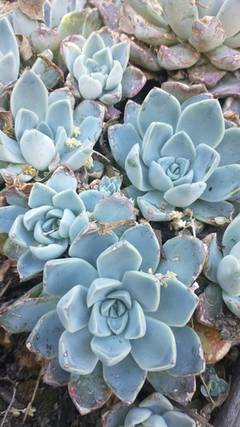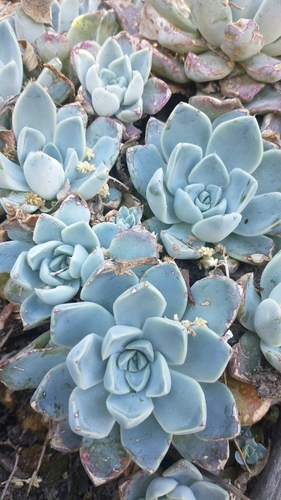
Echeveria, Genus, spp., Multiple species,
- Genus
- Multiple species
echeveria
Mexico, Central America, and northwestern South America
Overview
Echeveria is a genus of about 150 species of evergreen succulents in the stonecrop family (Crassulaceae), grown for their symmetrical rosettes of fleshy leaves. The rosettes range from 2 to 12 inches (5-30 cm) across and sit close to the ground, with leaves that may be green, blue-gray, lavender, pink, or red and are often coated in a powdery wax (farina) or flushed at the edges. Most species are stemless or short-stemmed, while a few form short trunks with age. In the growing season, arching flower stalks rise above the foliage and carry bell-shaped flowers in orange, red, yellow, or pink that draw hummingbirds and bees. The genus is native to dry, rocky habitats from Mexico south into northwestern South America and is adapted to drought and bright light. Plants are frost-tender and rot quickly in wet or poorly drained soil. Echeverias multiply by offsets around the base, forming clusters of rosettes, and many can be raised from a single detached leaf. They are widely grown as container and windowsill succulents and in frost-free rock and gravel gardens.
Native Range
Echeveria is native to semi-arid regions from Mexico, its center of diversity, through Central America and into northwestern South America. Plants grow on rocky slopes, cliffs, and in dry scrub, often at moderate to high elevations.Suggested Uses
Grown in containers, dish gardens, and succulent bowls, as windowsill and conservatory plants, and in frost-free rockeries and gravel gardens. The colorful rosettes are used in living wreaths, wall planters, and wedding work. Massed plantings make low, textural groundcover in dry, warm climates.How to Identify
Appearance
Size & Dimensions
Height2" - 1'
Width/Spread3" - 1'
Colors
Bloom Information
Most Echeveria flower from spring into summer, sending up arching stalks that open their bell-shaped flowers in sequence over several weeks. Hummingbirds and bees visit the nectar-rich flowers. Some species bloom more than once a year in warm, bright conditions.
Detailed Descriptions
Flower Description
orange, red, yellow, or pinkFoliage Description
green, blue-gray, lavender, pink, or redGrowing Conditions
Sun Requirements
Requires 6-10 hours of direct sunlight daily
• Full Sun: 6+ hours of direct sunlight
• Partial Shade: 3-6 hours of direct sunlight
• Full Shade: Less than 3 hours of direct sunlight
Care & Maintenance
Care Guide
Grow Echeveria in full sun to bright part shade in gritty, sharply drained soil or cactus mix with a pH near 6.0-7.0. Water thoroughly when the soil has dried out, then let it dry again, watering far less in winter when growth slows. Plants are hardy only in zones 9-11 and are killed by frost, so in colder areas they are grown in pots and kept above 40°F (4°C) over winter. Strong light keeps the rosettes tight and well colored, while too little light stretches them and fades the markings. Mealybugs, aphids on flower stalks, and root rot in wet soil are the main problems. Watering over the rosette can mark the waxy coating and trap moisture in the center.Pruning
Spent flower stalks are cut off at the base once the flowers fade. Lower leaves that shrivel are pulled away to keep the rosette clean and reduce hiding places for pests. Offsets can be detached and rooted to renew old or stretched plants.Container Growing
Suitable for container growing
Minimum container size: 1 gallons