Drymocallis, Genus, glandulosa, Species,
- Genus & species
sticky cinquefoil
Western North America from British Columbia to Baja California
Overview
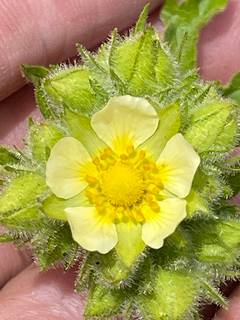
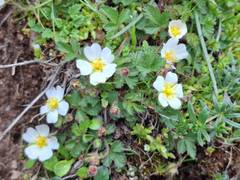
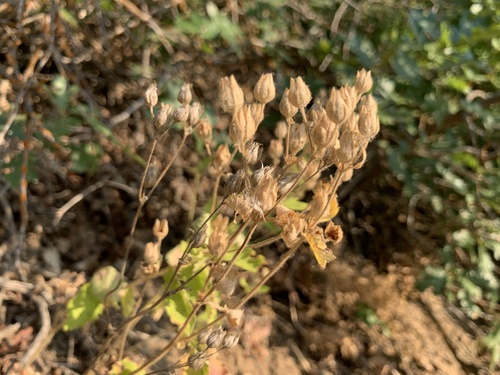
A clump-forming herbaceous perennial reaching 12-32 inches (30-80 cm) tall and 12-18 inches (30-45 cm) wide, growing from a stout woody-fibrous rootstock. Stems erect, branched in the upper third, covered in dense sticky-glandular hairs that cling to skin, fabric, and seeds of other plants. Leaves pinnately compound with 5-9 obovate leaflets 0.5-2 inches (1.5-5 cm) long, sharply toothed, mid-green and glandular on both surfaces. Flowers in open terminal panicles of 10-30 blooms, each cup-shaped, 0.4-0.75 inch (10-18 mm) across, with five pale yellow to creamy-white petals slightly shorter than the green sepals, giving a partly enclosed look unlike most yellow-flowered Potentilla species. Plants flower May through August across their wide elevational range. After seed set, foliage browns at the base while stems remain standing into late autumn. Roots survive temperatures to -25°F (-32°C). Plants do not naturalize on rich garden loam in regions with summer rain; long-lived only on well-drained sites with summer drought.
Native Range
Native to western North America from southern British Columbia south through the Pacific states, the Rocky Mountains, and Great Basin to northern Baja California. Found in dry meadows, forest openings, sagebrush steppe, road cuts, and rocky slopes from near sea level to 11,000 feet (3,350 m).Suggested Uses
Planted in dryland meadow plantings, native gravel gardens, and slope plantings within zones 4-8, at 12-18 inch (30-45 cm) spacing. Mixes with bunchgrasses and other dry-summer perennials in restoration plantings. Container culture is sustained 3-5 years in pots of at least 2 gallons (8 L) with sharp drainage.How to Identify
Appearance
Size & Dimensions
Height1' - 2'8"
Width/Spread1' - 1'6"
Bloom Information
May through August across the species' range, with peak flowering June through July. Lower-elevation populations bloom in May; subalpine populations may continue into early August. Total bloom per stand 6-10 weeks; individual flowers last 4-5 days. Cool, moist springs extend bloom by 1-2 weeks.
Detailed Descriptions
Flower Description
Pale yellow to creamy-whiteFoliage Description
Mid-greenGrowing Conditions
Sun Requirements
Requires 6-10 hours of direct sunlight daily
• Full Sun: 6+ hours of direct sunlight
• Partial Shade: 3-6 hours of direct sunlight
• Full Shade: Less than 3 hours of direct sunlight
Care & Maintenance
Care Guide
Plants benefit from supplemental water during the first growing season; established plants tolerate 4-6 weeks of drought. Crown rot develops on poorly drained sites that stay saturated through winter; raised beds reduce losses on heavy clay. Powdery mildew occurs on lower leaves in humid summers and can defoliate the basal rosette without affecting flowering. Plants are deer-grazed in spring before flowering. Stands persist 5-8 years on dry, well-drained sites; replacement is by seed sown in autumn or early spring.Pruning
Spent flower stems are cut at the base in autumn after seed dispersal. Lower yellowing leaves can be removed during the growing season for visual cleanup but the act does not affect plant health. Hard cutback below the basal rosette in spring delays flowering by 4-6 weeks.Pruning Schedule
Prune: October–November
fall
Container Growing
Suitable for container growing
Minimum container size: 2 gallons