Drymocallis, Genus, arguta, Species,
- Genus & species
tall cinquefoil
Overview
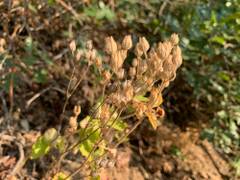
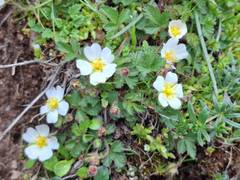
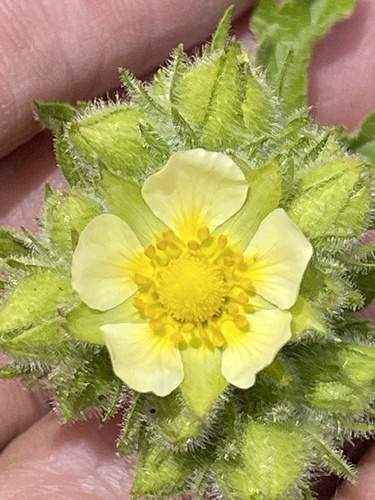
Drymocallis arguta is a clump-forming perennial reaching 1-3 feet (30-90 cm) tall and 1-1.5 feet (30-45 cm) wide, with stout, erect, glandular-hairy and often reddish stems. Leaves are pinnately compound, 4-10 inches (10-25 cm) long, with 7-11 toothed, oval leaflets that are dark green above and paler beneath. Cream to pale yellow flowers, each about 0.5-0.75 inch (1.3-2 cm) across with five rounded petals, are crowded into narrow, branched clusters at the stem tips from late spring into summer. The flowers are followed by dry clusters of small seeds held in the persistent calyx. The whole plant is sticky to the touch from glandular hairs. Growth is upright and the clump stays in place rather than spreading. Lower leaves may brown by late summer in dry soil. The dried seed heads persist into winter on standing stems.
Native Range
Native to much of North America from British Columbia and across Canada south through the Great Plains, Midwest, and into the western and eastern United States. Grows in dry to moist prairies, open woods, rocky slopes, savannas, and roadside banks on well-drained soils.Suggested Uses
Used in prairie and meadow plantings, native borders, and rock gardens, spaced 12-18 inches (30-45 cm) apart. Supports native bees and other small pollinators during early-summer bloom. The narrow, pale flower clusters give a low-key effect next to brighter prairie flowers.How to Identify
Appearance
Size & Dimensions
Height1' - 3'
Width/Spread1' - 1'6"
Bloom Information
Detailed Descriptions
Flower Description
Cream to pale yellowFoliage Description
Dark greenGrowing Conditions
Sun Requirements
Requires 5-9 hours of direct sunlight daily
• Full Sun: 6+ hours of direct sunlight
• Partial Shade: 3-6 hours of direct sunlight
• Full Shade: Less than 3 hours of direct sunlight
Care & Maintenance
Care Guide
Grow in full sun to light shade in well-drained sandy, loamy, or rocky soil; the plant tolerates dry, lean ground. Water during the first season to establish; mature plants tolerate drought and need little irrigation. The deep root system makes established clumps slow to transplant. Wet, heavy soil leads to crown rot. Lower leaves brown in late-summer drought but the plant recovers with cooler, moister weather. No fertilizer is needed on average soils.Pruning
Cut stems back to the basal foliage in late fall or early spring. Dried seed heads can be left through winter for structure or removed to limit self-seeding. Deadheading after the main bloom can prompt a smaller second flush.Pruning Schedule
Prune: March–April
early spring