Diervilla, Genus, spp., Multiple species,
- Genus
- Multiple species
bush honeysuckle
Overview
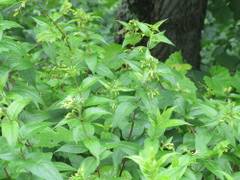
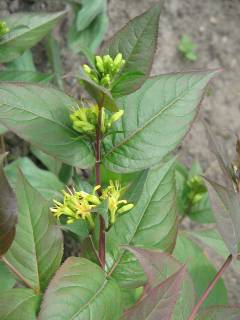
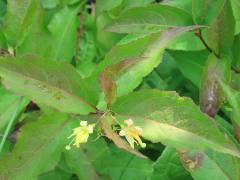
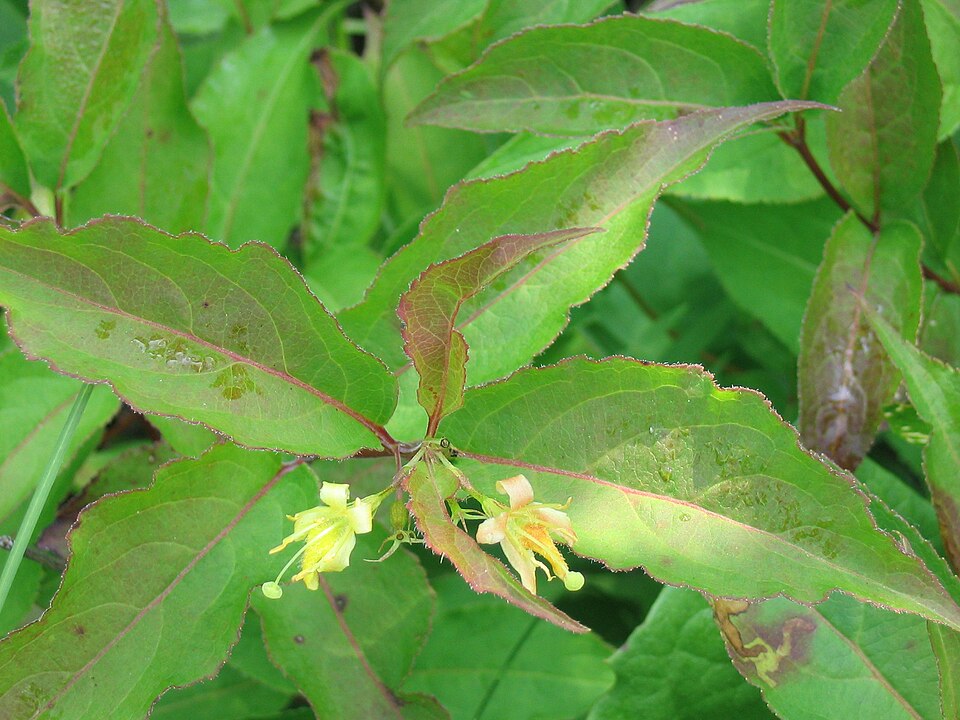
Diervilla is a genus of three species of deciduous shrubs in the family Caprifoliaceae, native to eastern and central North America. Plants form low, suckering, spreading mounds 2-5 feet (0.6-1.5 m) tall and as wide or wider, spreading by underground stems into colonies. The opposite leaves are 2-6 inches (5-15 cm) long, ovate to lance-shaped with toothed margins and a tapered tip, often bronze to red-tinged on emergence and again in autumn. Small tubular, five-lobed yellow flowers 0.5-0.75 inch (12-18 mm) long open in clusters at the stem tips and upper leaf axils through summer, some aging to orange or red. D. lonicera is the most northerly and lowest-growing, while D. sessilifolia and D. rivularis reach the upper size range in the southern Appalachians. The fruit is a slender dry capsule. The suckering habit lets plants spread across slopes and disturbed ground, which can crowd less vigorous neighbours in small beds.
Native Range
Diervilla is native to eastern and central North America, from Newfoundland and the Great Lakes south along the Appalachian Mountains to Georgia and Alabama. Species occupy dry woodland, rocky slopes, clearings, and streambanks.Suggested Uses
Used for mass planting on banks and slopes for erosion control, in shrub borders, and in naturalised or wildlife plantings. The suckering colonies stabilise poor and rocky soils where other shrubs establish poorly.How to Identify
Appearance
Size & Dimensions
Height2' - 5'
Width/Spread3' - 5'
Bloom Information
Flowering runs through summer, from June to August, with new flowers opening at the tips of the current season growth over an extended period. Because bloom is borne on new wood, scattered later flowers appear into early autumn. Individual flowers shift from yellow to orange-red as they age, giving mixed colour within a cluster.
Detailed Descriptions
Flower Description
yellow aging to orange-redFoliage Description
green, bronze to red-tinged when young and in autumnGrowing Conditions
Sun Requirements
Requires 4-8 hours of direct sunlight daily
• Full Sun: 6+ hours of direct sunlight
• Partial Shade: 3-6 hours of direct sunlight
• Full Shade: Less than 3 hours of direct sunlight
Care & Maintenance
Care Guide
Diervilla grows in full sun to part shade and adapts to a wide range of soils, including dry, rocky, and sandy ground of low fertility. Plants tolerate drought once established and withstand exposed slopes, road salt, and brief flooding along streambanks. Flowering is heaviest in sun, while plants in shade grow more open with fewer flowers. The suckering roots spread steadily and can be contained by removing outward shoots. Cold-hardy through USDA zones 3 to 7, the genus needs little supplemental water or feeding once settled.Pruning
Because flowers form on new growth, stems can be cut back hard in late winter or early spring to maintain a dense habit. Suckers are dug or pulled to limit spread, and old or weak canes thinned at the base. Renewal pruning to ground level every few years keeps colonies low and well-leaved.Pruning Schedule
Prune: February–March
winterearly spring