Dichanthelium, Genus, clandestinum, Species,
- Genus & species
deertongue
Overview
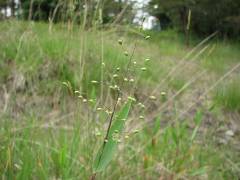
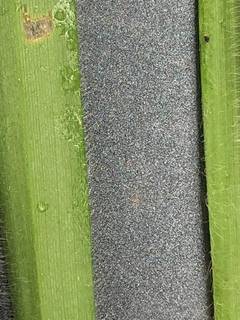
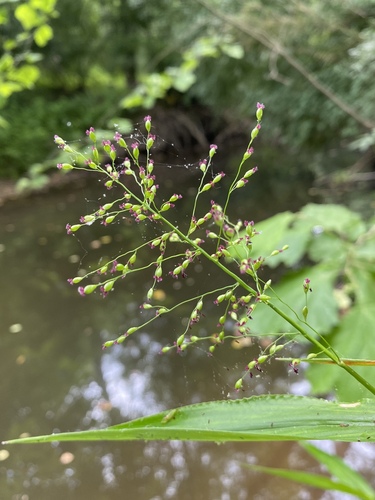
Dichanthelium clandestinum is a warm-season perennial grass of eastern North America, forming clumps 18-42 inches (45-105 cm) tall that spread by short rhizomes into loose colonies. The broad, lance-shaped leaf blades are 4-8 inches (10-20 cm) long and up to 1 inch (2.5 cm) wide, clasping the stem at the base and bristly along the sheath, their shape the source of the common name deertongue. The grass flowers twice a year. In late spring an open, branched panicle of small spikelets rises above the foliage and sheds wind-borne pollen. In summer, smaller flower clusters stay hidden, partly enclosed within the leaf sheaths, where they self-pollinate, the habit behind the epithet clandestinum. Plants grow along stream banks, moist woodland edges, ditches, and clearings, holding soil on damp, disturbed slopes. The foliage is browsed by deer, the seeds feed birds, and the plant is a larval host for several skipper butterflies. Limitations include a coarse texture, a tendency to spread and self-seed in moist ground, and dependence on steady soil moisture. The clumps brown in late fall and stand through winter before new growth resumes in spring.
Native Range
Dichanthelium clandestinum is native to eastern and central North America, from Quebec and the eastern United States west to the Great Plains and south to the Gulf states. It grows along stream banks, moist woodland edges, ditches, thickets, and disturbed clearings.Suggested Uses
Grown in rain gardens, stream and pond margins, and native plantings on moist ground. Used for erosion control and streambank stabilization and in wildlife and restoration seed mixes. Suited to moist woodland edges where its spreading habit fills space.How to Identify
Appearance
Size & Dimensions
Height1'6" - 3'6"
Width/Spread1' - 2'
Bloom Information
The grass flowers in two phases. An open, branched panicle appears in late spring to early summer, generally June, releasing wind-borne pollen. Later, from midsummer into fall, smaller self-pollinating clusters stay hidden within the leaf sheaths. Seeds ripen through summer and into autumn, feeding seed-eating birds.
Detailed Descriptions
Foliage Description
GreenGrowing Conditions
Sun Requirements
Requires 3-8 hours of direct sunlight daily
• Full Sun: 6+ hours of direct sunlight
• Partial Shade: 3-6 hours of direct sunlight
• Full Shade: Less than 3 hours of direct sunlight
Care & Maintenance
Care Guide
Grows in part shade to full sun in moist, fertile loam, clay, or sandy soil at a pH of 5.0-7.0, and tolerates wet ground along streams and ditches. Steady soil moisture supports vigorous growth, and plants decline in prolonged drought. Hardy in USDA zones 4-9, the grass withstands cold winters and resumes growth from the crown and rhizomes each spring. It spreads by rhizome and seed and can form colonies in damp, open ground. No fertilizer is needed in fertile soil.Pruning
Cut the clumps back to a few inches in late winter before new growth begins to clear the previous season standing stems. No other pruning is needed. Dividing the clumps in spring controls the spread and renews older plants.Pruning Schedule
Prune: February–March
winter