Overview
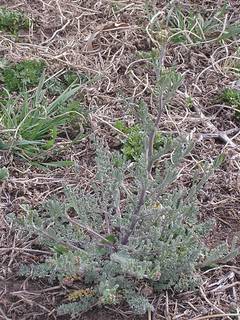
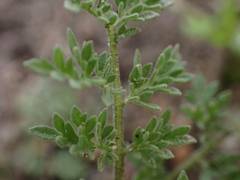
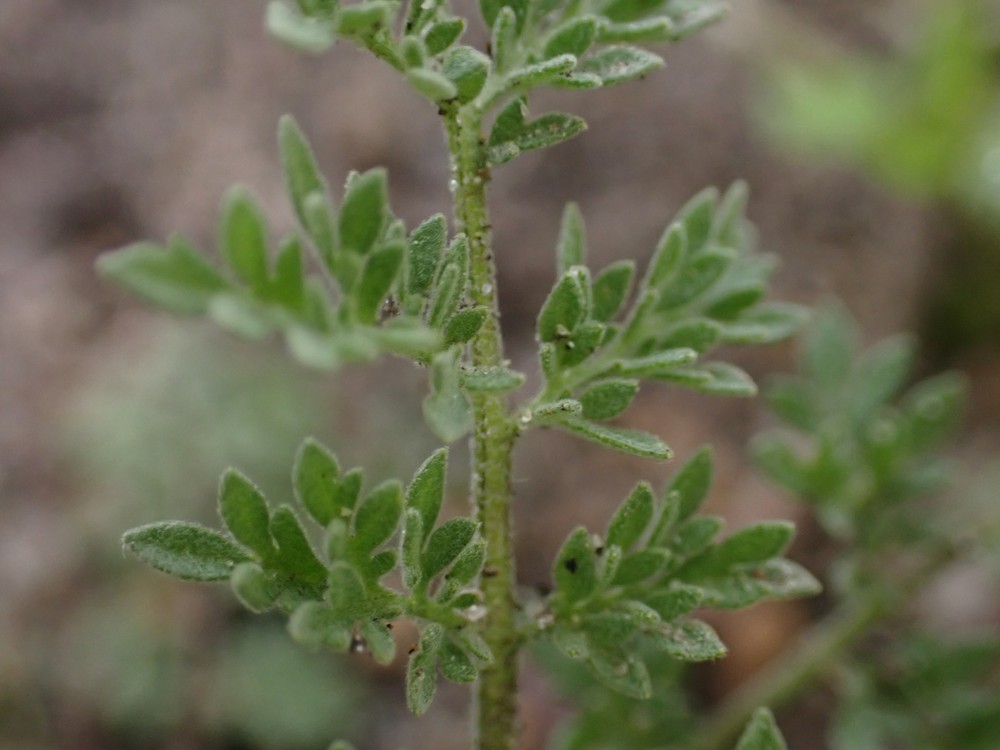
Descurainia is a genus of about 40 species of annual and biennial herbs in the cabbage family (Brassicaceae), found across the temperate Northern Hemisphere, the Americas, and some oceanic islands. Plants grow as erect, branching stems 15-90 cm (6-35 in) tall from a basal rosette, often covered in star-shaped or glandular hairs. The leaves are finely divided into many narrow segments, giving a soft, fern-like or tansy-like look that is the source of the common name tansymustard. Small four-petalled flowers, 1-3 mm across, are pale yellow and crowded at the stem tips in elongating clusters. They are followed by very slender, upright seed pods (siliques) packed with tiny seeds, which can number in the thousands per plant. Descurainia grows on disturbed, open, often dry ground, including fields, roadsides, rangeland, and burned areas, where some species colonise quickly after fire. Several species, such as D. sophia, are widespread weeds of farmland. The plants are short-lived and seldom cultivated, and in quantity the foliage can poison livestock through accumulated nitrates and glucosinolates.
Native Range
Native across the temperate Northern Hemisphere and the Americas, with centres of diversity in western North America and in the Andes. Some species, including the introduced D. sophia, have spread far beyond their original range as weeds.Suggested Uses
Rarely grown by choice, Descurainia appears mainly in restoration and rangeland settings as an early coloniser of disturbed or burned ground. A few species have a history of use by Indigenous peoples of North America, who ground the seeds for meal.How to Identify
Appearance
Size & Dimensions
Height6" - 2'11"
Width/Spread4" - 1'
Bloom Information
Flowering runs from spring into early summer, roughly March to June, often beginning soon after winter or spring rains. Desert and rangeland species can complete flowering and seeding within a few weeks of germination. The small flowers are self-compatible and set seed heavily.
Detailed Descriptions
Foliage Description
grey-greenGrowing Conditions
Sun Requirements
Requires 6-12 hours of direct sunlight daily
• Full Sun: 6+ hours of direct sunlight
• Partial Shade: 3-6 hours of direct sunlight
• Full Shade: Less than 3 hours of direct sunlight
Water & Climate
Water Needs
Drought Tolerance
Drought tolerant when established
Care & Maintenance
Care Guide
Descurainia grows in full sun on dry, open, disturbed soil and needs little care, behaving as a pioneer of bare ground. As annuals and biennials, the plants complete their life cycle in one or two seasons and rely entirely on seed. They tolerate poor, dry, and disturbed soils but are quickly shaded out by taller perennial vegetation. No feeding or watering is needed once seedlings establish. The species are rarely cultivated and are more often managed as agricultural weeds, where dense stands compete with crops and can accumulate nitrates harmful to grazing animals.Pruning
No pruning is required. Plants can be pulled or cut before the pods ripen to limit the heavy self-seeding that makes several species weedy. Spent plants die and dry off naturally after setting seed.Toxicity Warning
Toxic to petsPlanting Guide
Planting Methods & Timing
Planting Method
direct sow
Direct Sow Timing
early spring or autumn
Days to Maturity
60–90 days
Plant Spacing
6 inches