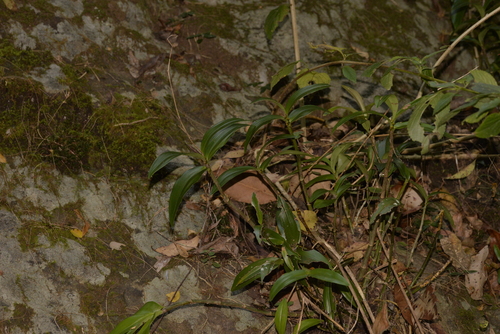
Dendrobium, Genus, spp., Multiple species,
- Genus
- Multiple species
dendrobium orchids
Tropical and subtropical Asia, New Guinea, the Pacific, and Australia
Overview
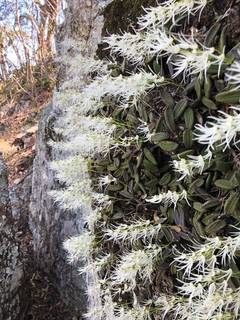
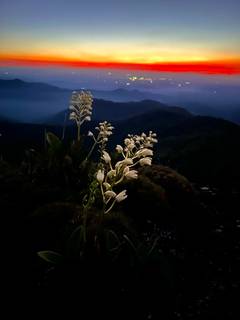
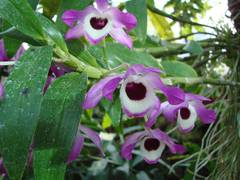
Dendrobium ranks among the largest genera in the orchid family (Orchidaceae), with roughly 1,800 species of mainly epiphytic and lithophytic perennials. The genus spans tropical and subtropical Asia, the Pacific islands, New Guinea, and Australia, growing on tree trunks and rock faces from lowland forest to montane cloud forest. Plants produce clustered, cane-like or pseudobulbous stems ranging from 2 in to 6 ft (5 cm to 1.8 m) long depending on species, each bearing alternate leathery leaves along its length. Flowers arise singly or in arching sprays from nodes on the canes; across the genus they span 0.4 to 4 in (1 to 10 cm) wide in white, yellow, pink, purple, green, and bicolor patterns. The fused lateral sepals and column foot form a small chin-like spur, the mentum, that helps separate the genus from other orchids. Some species hold their leaves year-round, while others such as D. nobile shed them and flower from bare canes in late winter. Because the genus is so broad, cultural needs diverge sharply: warm-growing species fail in cold, while cool-montane species decline in heat. Most need bright shade, free air movement, and a strict wet-and-dry cycle, so they are grown by hobbyists in pots or mounted on bark rather than planted in open ground.
Native Range
The genus is native to tropical and subtropical Asia, extending through New Guinea, the Pacific islands, and northern and eastern Australia. Species occupy habitats from humid lowland forest to cool montane cloud forest.Suggested Uses
Grown as container or mounted specimen orchids on windowsills, in greenhouses, and under lights. In frost-free climates plants are tied onto garden trees and rock walls. Compact species suit terrariums and bright bathrooms with high humidity.How to Identify
Appearance
Size & Dimensions
Height2" - 6'
Width/Spread6" - 1'6"
Bloom Information
Flowering varies widely across the genus, though many cultivated species open in late winter and spring. Individual sprays last 2 to 6 weeks, and evergreen types may flower more than once a year. Deciduous species such as D. nobile bloom from leafless canes after a cool, dry rest.
Detailed Descriptions
Flower Description
white, yellow, pink, purple, green, and bicolorFoliage Description
greenGrowing Conditions
Sun Requirements
Requires 2-6 hours of direct sunlight daily
• Full Sun: 6+ hours of direct sunlight
• Partial Shade: 3-6 hours of direct sunlight
• Full Shade: Less than 3 hours of direct sunlight
Care & Maintenance
Care Guide
Plants grow in bright, filtered light with steady air movement, potted in coarse bark or mounted on slabs rather than in garden soil. Water freely while new canes and roots are active, then reduce water during the cooler rest period to trigger bloom in many species. Daytime warmth of 65-85 F (18-29 C) suits most, with cooler nights to set flower buds. Feed with a dilute balanced orchid fertilizer during active growth and flush the medium periodically to clear salts. Repot every two to three years as the bark breaks down. Common problems include root rot from a soggy medium and scale or spider mites in dry indoor air.Pruning
Cut spent flower spikes back to the cane once blooming finishes. Remove only canes that have shriveled and turned brown, since older leafless canes still store water and may reflower. Dividing crowded clumps into groups of three to four canes is done at repotting.Container Growing
Suitable for container growing
Minimum container size: 1 gallons