Cynoglossum, Genus, australe, Species,
- Genus & species
Australian Hound's-tongue
Overview
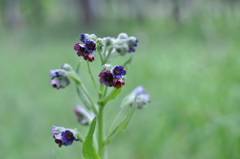
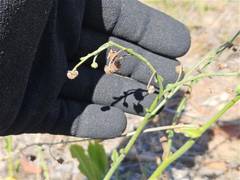
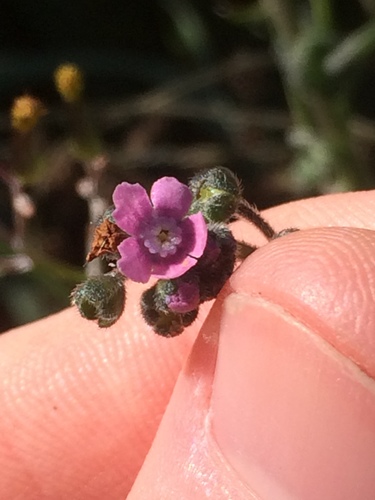
Cynoglossum australe is an erect, roughly hairy perennial or biennial herb growing 12-32 inches (30-80 cm) tall and 8-16 inches (20-40 cm) wide, with one or several stems from a basal rosette. The lance-shaped leaves are 1.5-5 inches (4-12 cm) long, grey-green, and covered in stiff hairs that give a sandpapery feel. Small flowers about 0.2-0.3 inch (5-8 mm) across open in curved, branching sprays from spring into summer, usually blue, sometimes showing pink in bud or fading to white. Each flower is followed by four nutlets covered in hooked bristles that cling to fur, wool, and clothing, the source of the hound's-tongue name and a means of seed spread. The species grows in open eucalypt woodland, grassland, and disturbed ground across eastern and southeastern Australia on a range of soils. It tolerates drought and poor soil but self-seeds freely and can spread where the burrs are carried. All parts contain pyrrolizidine alkaloids that are toxic to people and livestock if eaten.
Native Range
Cynoglossum australe is native to eastern and southeastern Australia, occurring across Queensland, New South Wales, Victoria, Tasmania, and South Australia. It grows in open woodland, grassland, and disturbed ground on clay, loam, and sandy soils.Suggested Uses
Planted in native, meadow, and informal grassland plantings where its self-seeding suits the setting. Used in habitat plantings for small native bees. Spaced 12-18 inches (30-45 cm) apart in drifts.How to Identify
Appearance
Size & Dimensions
Height1' - 2'8"
Width/Spread8" - 1'4"
Colors
Bloom Information
Detailed Descriptions
Foliage Description
Grey-greenGrowing Conditions
Sun Requirements
Requires 5-10 hours of direct sunlight daily
• Full Sun: 6+ hours of direct sunlight
• Partial Shade: 3-6 hours of direct sunlight
• Full Shade: Less than 3 hours of direct sunlight
Care & Maintenance
Care Guide
Cynoglossum australe grows in full sun to part shade in most well-drained soils, including poor and dry ground. Established plants are drought-tolerant and need little summer water. The species is frost-hardy in its native range, roughly USDA zones 8-10, and behaves as a short-lived perennial or biennial. It self-seeds readily through its clinging burrs, so removing seed heads before they ripen limits unwanted spread. No fertilizer is needed, and rich soil produces lax, leafy growth.Pruning
Spent flowering stems can be cut back after bloom to reduce self-seeding from the burrs. Plants are otherwise left unpruned. Old growth can be cleared as new rosettes form at the base.Pruning Schedule
Prune: December–January
summer
Container Growing
Suitable for container growing
Minimum container size: 2 gallons