Image 1 of 15
1 / 15
Plant Reference
Cyclamen, Genus, hederifolium, Species,
- Genus & species
ivy-leaved cyclamen
Southern Europe and western Asia around the Mediterranean basin from France through Italy and Greece to Turkey; deciduous woodlands, rocky slopes, and at the base of old walls
Overview
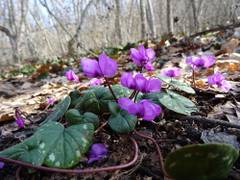
Cyclamen hederifolium is a tuberous perennial in the family Primulaceae growing 4–6 inches (10–15 cm) tall and 6–9 inches (15–23 cm) wide from a flattened woody tuber that reaches 6–12 inches (15–30 cm) in diameter over decades of undisturbed growth in suitable positions. Leaves are ivy-shaped (hastate) with pointed lobes, 2–4 inches (5–10 cm) across, and carry silver markings in patterns that range from narrow silver veining through solid silver centers to nearly solid silver blades; each tuber produces its own leaf pattern and no two seedling plants carry identical markings, which is the character that makes C. hederifolium a collector's species among hardy cyclamen growers. Foliage emerges after or with the flowers in fall, persists through winter and spring in mild climates, and dies back in late spring (May or June) as the tuber enters summer dormancy. Pale to deep pink or white flowers with reflexed (swept-back) pointed petals 0.75–1 inch (2–2.5 cm) long and a darker magenta basal blotch (nose) open from August through November across a 10-week bloom period, and the flowers emerge from the bare tuber on thin pink stems before the foliage pushes through the soil, producing a display of bare flowers against the fall woodland floor. The specific epithet hederifolium means ivy-leaved and refers to the leaf shape that mimics common ivy (Hedera helix). Seed dispersal is by myrmecochory: the seed capsule matures at ground level as the stem coils tightly, and ants collect the elaiosome-covered seeds and carry them to new positions, establishing scattered colonies over time. Limitation: C. hederifolium is widely planted as a hardy cyclamen in temperate gardens from USDA zone 5 through zone 9, and the species is the cyclamen most commonly used for naturalizing under deciduous trees because of the summer dormancy that coincides with tree leaf cover; the tubers grow close to the soil surface, however, and are damaged by foot traffic, digging, and deep cultivation, so the planting position should be permanent and foot traffic over the tuber colony should be limited. All parts of the plant contain saponins and triterpene glycosides that are toxic to cats and dogs if the tubers or foliage are chewed.
Native Range
Native to southern Europe and western Asia around the Mediterranean basin from southern France through Italy, Sicily, Greece, and the Aegean islands to western Turkey. Grows in deciduous woodlands, on rocky slopes, and at the base of old walls at low to middle elevations, and establishes most readily on well-drained substrates with organic matter from decaying leaf litter.Suggested Uses
Used for naturalizing under deciduous trees, in dry shade gardens, woodland bulb plantings, at the base of walls and rock outcrops, and in containers of at least 1 gallon (3.8 L) at 6–9 inch (15–23 cm) spacing between tubers. The fall bloom supplies color during the late-summer-through-autumn period when few other shade perennials are in flower, the silver-patterned winter foliage carries visual interest through the cold season in mild climates, and the summer-dormant habit makes the species compatible with deciduous tree canopy positions where the ground is shaded during the growing season and exposed to filtered winter sun. Sites with regular foot traffic, deep cultivation, or summer irrigation are unsuitable because all three conditions damage the shallow tubers.How to Identify
Appearance
Size & Dimensions
Height4" - 6"
Width/Spread6" - 9"
Bloom Information
Pale to deep pink or white reflexed flowers 0.75–1 inch (2–2.5 cm) long with a darker magenta basal blotch open from August through November across a 10-week bloom period, emerging on thin pink stems from the bare tuber before the foliage pushes through the soil. The flowers are pollinated by late-season bees. After pollination the flower stem coils tightly and pulls the developing seed capsule to the soil surface, where ants collect the ripe seeds in mid to late spring and carry them to new positions (myrmecochory), establishing scattered colonies over time.
Detailed Descriptions
Flower Description
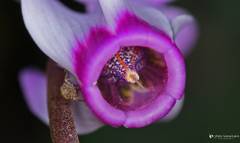
pale to deep pink or white with a darker magenta basal blotch (nose); reflexed (swept-back) pointed petals, 0.75-1 inch (2-2.5 cm) long — longer and more pointed than the petals of C. coumFoliage Description
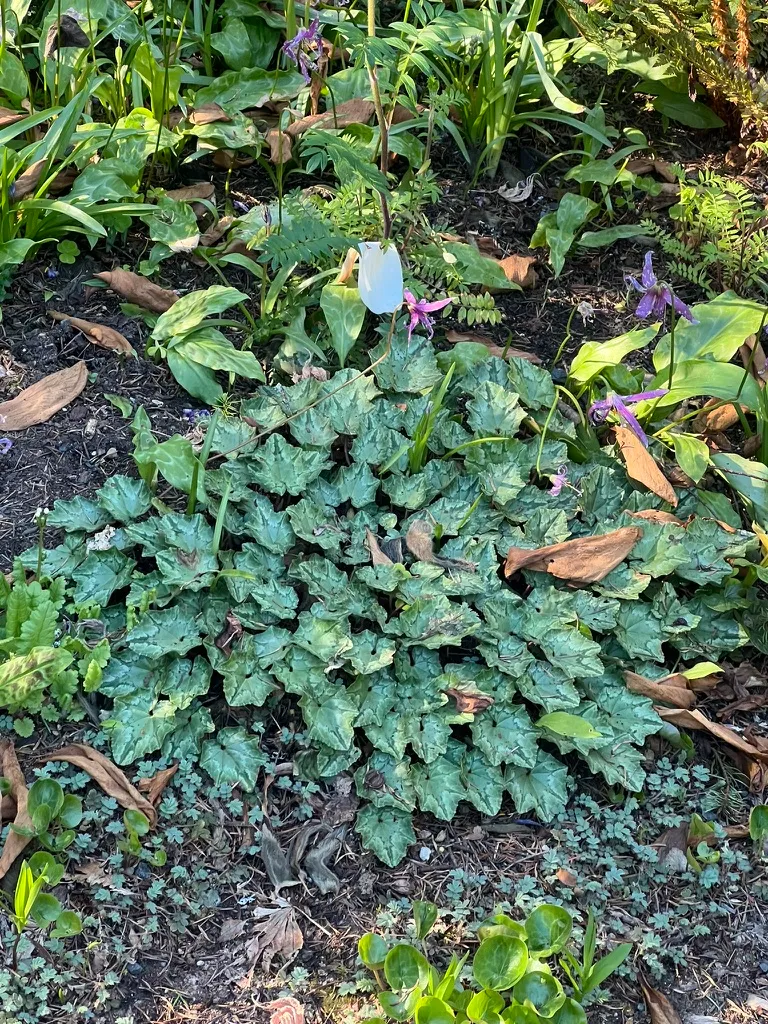
deep green to silver or silver-marbled green with ivy-shaped (hastate) lobing, 2-4 inches (5-10 cm) across; each tuber produces its own foliage pattern and no two plants are identical in leaf marking; foliage emerges after or with the flowers in fall and persists through winter and spring before dying back in late spring (summer-dormant)Growing Conditions
Sun Requirements
Requires 1-4 hours of direct sunlight daily
• Full Sun: 6+ hours of direct sunlight
• Partial Shade: 3-6 hours of direct sunlight
• Full Shade: Less than 3 hours of direct sunlight
Care & Maintenance
Care Guide
Site in part shade to full shade with 1–4 hours of direct sun per day, typically under deciduous trees where the canopy is open during the fall and winter growing season and closed during the summer dormancy period. Soil should be well-drained with a pH of 6.0–7.5 and carry some organic matter from decaying leaf litter; heavy clay and waterlogged sites cause tuber rot during summer dormancy. Tubers are planted 1–2 inches (2.5–5 cm) below the soil surface in late summer or early fall with the concave side facing up, and the planting position is kept permanent because the tubers grow close to the surface and foot traffic, digging, and deep cultivation damage them. Established tubers are drought-tolerant during summer dormancy and need no supplemental water between May and October. Self-sown seedlings from ant-dispersed seed establish scattered colonies over 5–10 years without any cultivation intervention. All parts of the plant contain saponins and triterpene glycosides and are toxic to cats and dogs. Hardy in USDA zones 5–9.Pruning
No pruning is needed for C. hederifolium. Foliage yellows and dies back naturally in late spring (May or June) as the tuber enters summer dormancy, and the dead leaves are left in place or removed gently without disturbing the shallow tuber. Self-sown seedlings can be transplanted in fall when they enter growth, and mature tubers are not divided because the species does not produce offsets and the single tuber enlarges slowly over many years.Pruning Schedule
Prune: June
late spring
Container Growing
Suitable for container growing
Minimum container size: 1 gallons