Cupaniopsis, Genus, parvifolia, Species,
- Genus & species
small-leaved tuckeroo
Overview
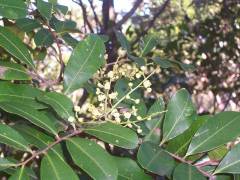
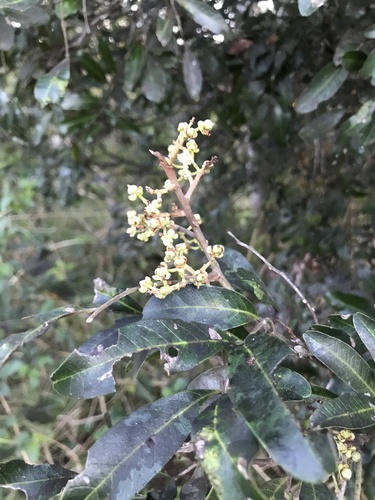
Cupaniopsis parvifolia is an evergreen shrub or small tree reaching 10-26 feet (3-8 m) tall, with a dense, rounded crown. The leaves are pinnately compound, made up of 4-10 small leaflets each 0.8-2 inches (2-5 cm) long, glossy dark green above and paler beneath, with blunt or notched tips. Small cream to greenish flowers are carried in branched clusters and open mainly in autumn and winter. They are followed by three-lobed capsules about 0.4-0.6 inch (10-15 mm) wide that ripen yellow to orange and split to reveal black seeds partly covered by a red to orange aril. Birds feed on the arils and disperse the seeds. Growth is slow to moderate, and the dense foliage holds to ground level in open positions. The plant tolerates dry periods once established but grows in moist, sheltered sites in nature. It is frost-sensitive when young, and its slow growth means a screen planting takes several years to fill in.
Native Range
Native to eastern Australia, in the dry rainforest, vine thickets, and scrubs of Queensland and northeastern New South Wales. Grows on a range of soils in warm, frost-free to lightly frosted areas, generally at low elevations.Suggested Uses
Planted as a screen, hedge, or small shade tree in gardens and streetscapes, spaced 6-13 feet (2-4 m) apart. Used in dry-rainforest revegetation and as a habitat plant for fruit-eating birds. Frost sensitivity when young limits its use in cold districts.How to Identify
Appearance
Size & Dimensions
Height10' - 26'
Width/Spread8' - 16'
Bloom Information
Detailed Descriptions
Flower Description
Cream to greenishFoliage Description
Glossy dark greenGrowing Conditions
Sun Requirements
Requires 5-8 hours of direct sunlight daily
• Full Sun: 6+ hours of direct sunlight
• Partial Shade: 3-6 hours of direct sunlight
• Full Shade: Less than 3 hours of direct sunlight
Care & Maintenance
Care Guide
Grows in full sun to part shade in well-drained soils with regular water during establishment. Mature plants tolerate dry periods of several weeks but keep denser foliage with steady moisture. Young plants are damaged by frost and need shelter in cooler districts. The species tolerates a range of soils, including clay, provided drainage is adequate. Growth is slow to moderate, so plantings take time to reach screening size. Pests and diseases are uncommon in cultivation.Pruning
Responds to pruning and can be clipped as a hedge or screen; trimming in late winter or after flowering keeps it dense. Tip-pruning young plants encourages branching from the base. Cutting into older bare wood produces slower regrowth.Pruning Schedule
Prune: July–August
winter
Container Growing
Suitable for container growing
Minimum container size: 10 gallons