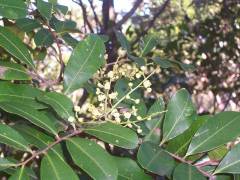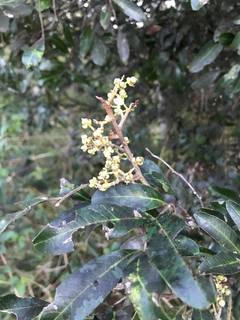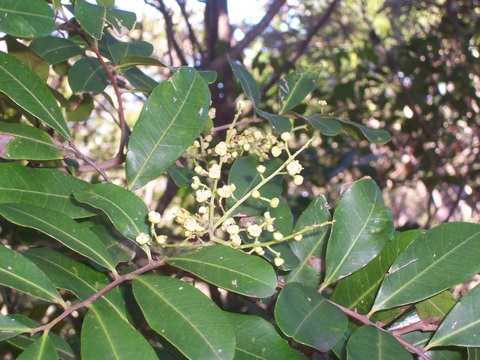
Cupaniopsis, Genus, spp., Multiple species,
- Genus
- Multiple species
Tuckeroo
Australia, New Guinea, and the western Pacific
Overview
Cupaniopsis is a genus of about 60 evergreen trees and shrubs in the soapberry family, native to Australia, New Guinea, and the islands of the western Pacific and Malesia. Most are small to medium trees 16-50 feet (5-15 m) tall, with a dense rounded crown and compound leaves divided into several leathery, blunt-tipped leaflets. Small cream to greenish flowers are borne in branched sprays and are followed by woody, three-lobed capsules that split open to show black seeds wrapped in a bright orange, fleshy aril. Birds take the arils and disperse the seed. The most familiar species, C. anacardioides, the tuckeroo or carrotwood, grows on coastal dunes, estuaries, and littoral rainforest in eastern Australia and is widely planted as a hardy street and shade tree. Outside its range it has naturalized and become an invasive weed in parts of Florida and Hawaii. The genus grows in warm, frost-free climates on a range of soils and tolerates wind, salt, and poor drainage better than many rainforest trees. Growth is moderate, and most species are damaged by frost.
Native Range
Cupaniopsis is native to Australia, New Guinea, and the western Pacific islands, with the greatest diversity in New Caledonia and eastern Australia. C. anacardioides grows on coastal dunes, estuary margins, and littoral rainforest along the eastern Australian coast.Suggested Uses
Cupaniopsis species, especially the tuckeroo, are grown as hardy street, park, and shade trees in warm coastal climates and as windbreaks near the sea. The dense canopy and salt tolerance suit exposed seaside and estuary plantings. The orange-arilled seeds also support fruit-eating birds where the trees are grown.How to Identify
Appearance
Size & Dimensions
Height16' - 50'
Width/Spread13' - 33'
Bloom Information
Flowering is mainly in late winter and spring, broadly July to November in eastern Australia, varying with species and climate. The small cream to greenish flowers open in branched sprays and are lightly fragrant. Woody capsules follow through spring and summer, splitting to show the orange-arilled seeds taken by birds.
Detailed Descriptions
Flower Description
cream to greenishFoliage Description
greenGrowing Conditions
Sun Requirements
Requires 5-9 hours of direct sunlight daily
• Full Sun: 6+ hours of direct sunlight
• Partial Shade: 3-6 hours of direct sunlight
• Full Shade: Less than 3 hours of direct sunlight