Crepis, Genus, capillaris, Species,
- Genus & species
smooth hawk's-beard
Europe, western Asia, northern Africa (native); naturalized across much of North America
SunFull Sun – Part Shade
Overview
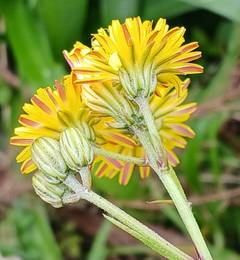
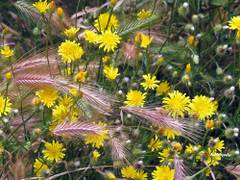
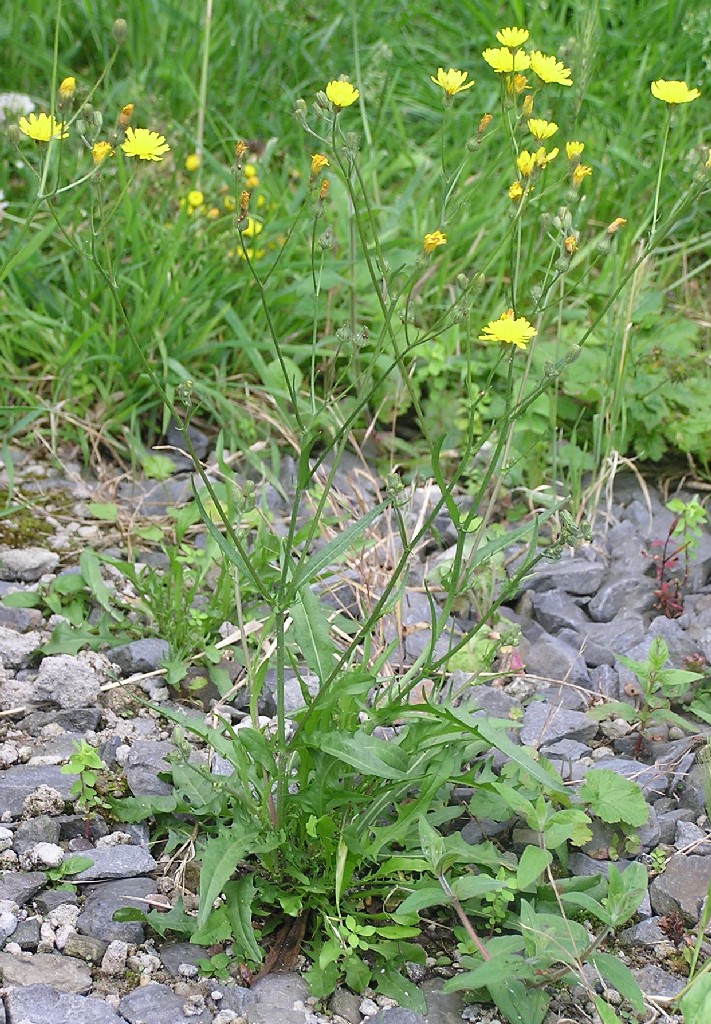
Crepis capillaris is a winter or summer annual (occasionally biennial) in the daisy family (Asteraceae) reaching 8–36 inches (20–90 cm) tall and 6–12 inches (15–30 cm) wide. Plants form a basal rosette of deeply lobed (runcinate) leaves 2–6 inches (5–15 cm) long with a large rounded terminal lobe and backward-pointing lateral lobes. Stems are erect, wiry, branching, smooth, and exude milky latex when broken. Stem leaves are progressively smaller upward, arrow-shaped with clasping bases. Flower heads are 0.4–0.6 inch (10–15 mm) across, composed entirely of yellow ligulate florets resembling small dandelion heads, carried in loose corymbs at branch tips. Outer involucral bracts are short and spreading; inner bracts are longer, erect, and smooth on the inner surface. Fruit is an achene with a white pappus for wind dispersal. A single plant produces 2,000–10,000 seeds. Seeds lack dormancy and germinate rapidly on moist soil. The species is a common yellow-flowered lawn and roadside weed in the Pacific Northwest. Less competitive than Taraxacum officinale (dandelion) in dense turf but colonizes thin or newly established lawns readily.
Native Range
Crepis capillaris is native to Europe, western Asia, and northern Africa, occurring in meadows, grasslands, roadsides, and waste ground from sea level to approximately 5,000 feet (1,500 m). The species is naturalized across much of North America; in the Pacific Northwest, it is a frequent yellow-flowered lawn and roadside weed.Suggested Uses
Used in weed identification courses for teaching differentiation among yellow-flowered Asteraceae in lawns (dandelion, cat's-ear, hawk's-beard). Studied in lawn weed ecology and in Asteraceae ligulate-head morphology exercises. Intentional garden planting is not a standard use.How to Identify
Appearance
Size & Dimensions
Height8" - 3'
Width/Spread6" - 1'
Bloom Information
Flowers from May through September. Individual flower heads open for 1–2 days. Multiple heads are produced sequentially on branching stems over 10–14 weeks. In the Pacific Northwest, flowering peaks in June through August. Seeds mature 1–2 weeks after flowering and disperse by wind via the pappus. Self-pollinating.
Detailed Descriptions
Flower Description
Yellow; flower heads 0.4–0.6 inch (10–15 mm) across, composed entirely of ligulate florets; in loose corymbs at branch tipsFoliage Description
Dark green; basal leaves deeply lobed (runcinate) with a large terminal lobe; stem leaves arrow-shaped, claspingGrowing Conditions
Sun Requirements
Requires 4-10 hours of direct sunlight daily
• Full Sun: 6+ hours of direct sunlight
• Partial Shade: 3-6 hours of direct sunlight
• Full Shade: Less than 3 hours of direct sunlight