Cotula, Genus, coronopifolia, Species,
- Genus & species
brass buttons
SunFull Sun – Part Shade
WaterHigh
Overview
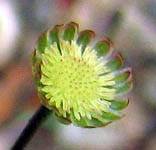
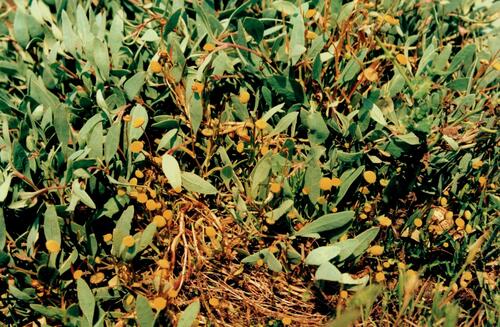
Cotula coronopifolia is a low-growing, fleshy annual or short-lived perennial in the daisy family (Asteraceae) reaching 4–12 inches (10–30 cm) tall with an 8–18 inch (20–45 cm) spread. Stems are prostrate to ascending, succulent, smooth, and rooting at nodes where they contact wet soil. Leaves are alternate, linear to oblanceolate, 1–3 inches (2.5–8 cm) long, fleshy, bright green, with clasping bases and entire to shallowly lobed margins. Flower heads are solitary on long peduncles, discoid (ray florets absent), 0.25–0.5 inch (6–12 mm) in diameter, bright yellow, with a button-like appearance. Plants tolerate brackish and saline conditions, colonizing tidal flats, salt marshes, and freshwater wetland margins. A single plant produces 1,000–3,000 seeds. Seeds disperse by water and in mud attached to waterfowl feet. Stems root at nodes and fragment easily, producing new plants from broken pieces carried by water movement. Naturalized in coastal and wetland habitats along the Pacific coast from British Columbia to California. Forms dense mats that displace native salt marsh and mudflat vegetation.
Native Range
Native to southern Africa, occurring in coastal salt marshes, estuarine mudflats, and seasonal wetlands. Naturalized along the Pacific coast of North America, in parts of coastal Europe, Australia, and New Zealand. In the Pacific Northwest, found in tidal marshes, drainage ditches, freshwater pond margins, and seasonally flooded areas from sea level to approximately 500 feet (150 m).Suggested Uses
Used in wetland weed identification training for estuarine and salt marsh habitat managers. Studied in invasion ecology of coastal wetlands and salt tolerance physiology. In its native southern African range, the species occupies similar coastal and estuarine habitats.How to Identify
Appearance
Size & Dimensions
Height4" - 1'
Width/Spread8" - 1'6"
Bloom Information
Flowers from April through September. Individual flower heads bloom for 5–7 days. New heads are produced continuously as stems elongate and branch, flowering over a 12–16 week period. In the Pacific Northwest, peak flowering occurs in June through August. Seeds mature 2–3 weeks after flowering. Self-pollinating.
Detailed Descriptions
Foliage Description
Bright green, fleshy, linear to oblanceolate with clasping bases; margins entire to shallowly lobedGrowing Conditions
Sun Requirements
Requires 6-10 hours of direct sunlight daily
• Full Sun: 6+ hours of direct sunlight
• Partial Shade: 3-6 hours of direct sunlight
• Full Shade: Less than 3 hours of direct sunlight