Image 1 of 10
1 / 10
Anthony Valois and the National Park Service, no rights reserved (CC0) · Wikimedia Commons
Overview
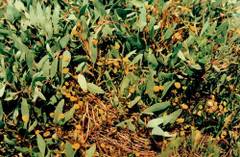
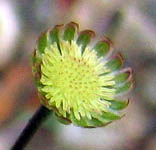
Cotula australis is a small, soft annual herb growing 1-6 inches (2.5-15 cm) tall, with slender, spreading to weakly upright stems that branch from the base and often form a low, loose mat. The leaves are soft, finely divided into narrow segments, 0.4-1.6 inches (1-4 cm) long, and slightly hairy, giving a ferny look. Tiny flower heads about 0.1-0.2 inch (3-5 mm) across sit on thin stalks held above the foliage; they lack ray petals and consist of small yellowish to greenish florets in a flattened button. Flowering runs through winter and spring in mild climates. The fruit is a tiny dry seed, and a single plant can produce many, allowing fast spread on bare ground. The plant grows quickly, completes its cycle in a few months, and appears in lawns, paths, gardens, and other disturbed, moist sites.
Native Range
Native to Australia and New Zealand, and widely naturalized across temperate regions of the world. Grows in lawns, garden beds, footpaths, cultivated ground, and other moist, disturbed sites, in a range of soils.Suggested Uses
Rarely grown by choice; it occurs mainly as a volunteer weed in lawns, paths, and garden beds. It has occasional incidental use as a low green filler in moist, shaded ground. In most settings it is managed as a weed rather than a planted species.How to Identify
Appearance
Size & Dimensions
Height1" - 6"
Width/Spread2" - 8"
Bloom Information
Detailed Descriptions
Foliage Description
greenGrowing Conditions
Sun Requirements
Requires 4-8 hours of direct sunlight daily
• Full Sun: 6+ hours of direct sunlight
• Partial Shade: 3-6 hours of direct sunlight
• Full Shade: Less than 3 hours of direct sunlight
Water & Climate
Water Needs
Care & Maintenance
Care Guide
Grows in full sun to part shade on moist soils and appears on its own in lawns, beds, and bare ground. The plant needs no cultivation and is usually treated as a weed rather than grown deliberately. It completes its life cycle in a few months and relies on heavy seeding to persist from year to year. Mowing and cultivation spread it by scattering seed and stem fragments. It grows poorly in dry, compacted soil and fades as summer heat sets in.Pruning
No pruning is needed. Removing plants before they set seed reduces spread in lawns and beds. Hand-weeding is straightforward because the shallow roots lift cleanly from moist soil.Toxicity: Not assessed
UnknownPlanting Guide
Planting Methods & Timing
Planting Method
direct sow