Cordia, Genus, subcordata, Species,
- Genus & species
Kou
Tropical coasts of the Indian and Pacific Oceans
Overview
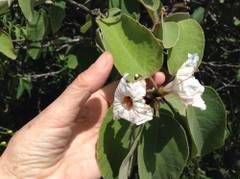
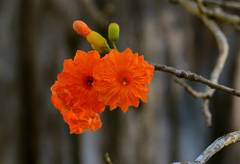
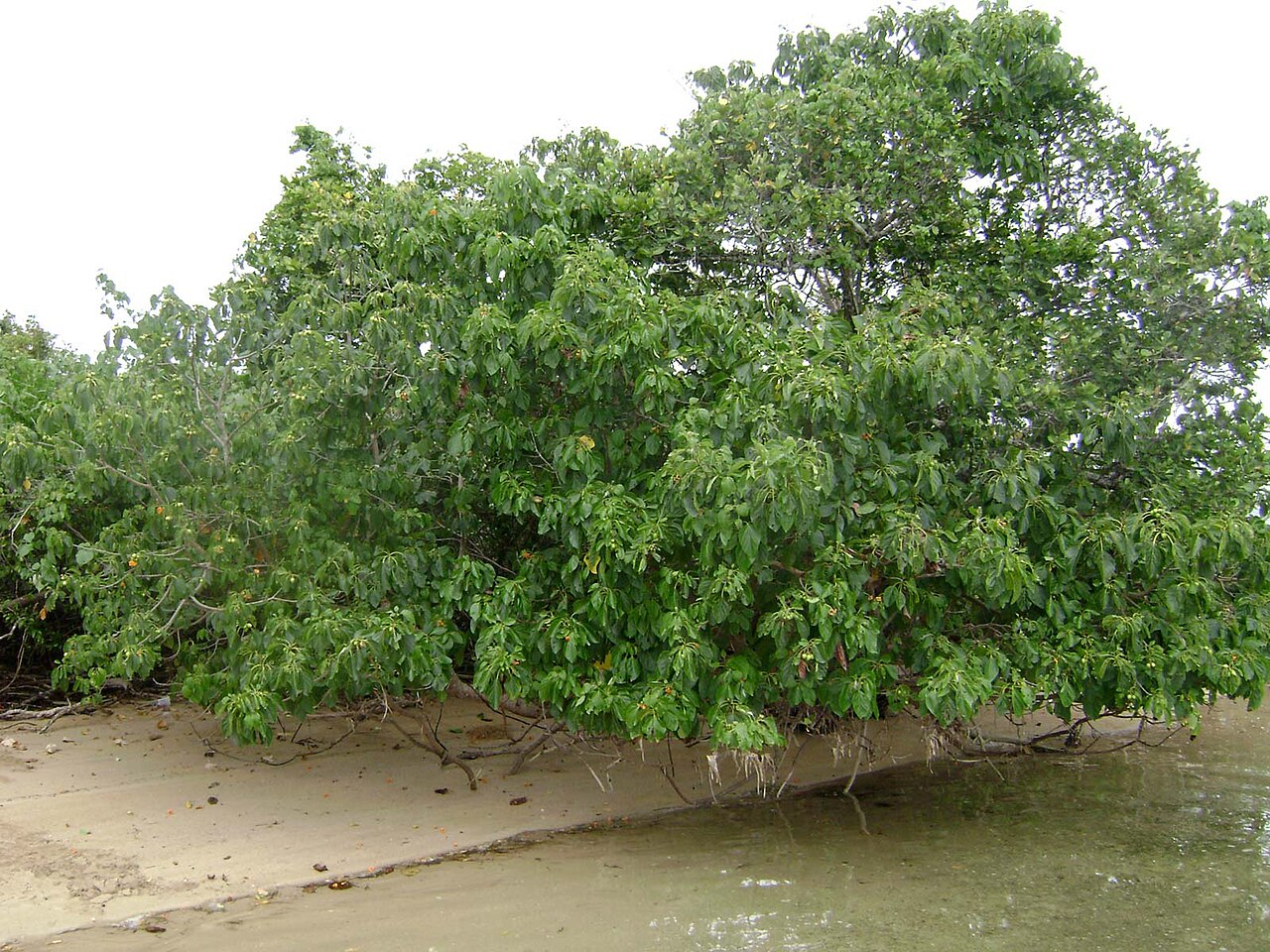
Cordia subcordata is an evergreen tree in the Boraginaceae reaching 20-35 feet (6-11 m) tall and 20-30 feet (6-9 m) wide, with a low branching trunk and a broad rounded crown. Bark is gray-brown and shallowly fissured. Leaves are broadly oval, 4-8 inches (10-20 cm) long and 3-5 inches (7.5-13 cm) wide, glossy green with veins sunken above and raised beneath. Flowers are funnel-shaped, orange to orange-red, 1.5-2 inches (4-5 cm) across, with crinkled overlapping lobes, and are carried in clusters of 3-10 at the branch tips. Fruit is a rounded drupe 0.8-1.2 inches (2-3 cm) across with a fibrous husk enclosing a woody stone that holds up to four seeds and floats in seawater for months. Wood is light and soft at roughly 25 pounds per cubic foot (400 kg per cubic metre) and carries no taste or odour that transfers to food. Growth runs 24-36 inches (60-90 cm) per year. The kou leaf moth, Ethmia nigroapicella, strips foliage from trees in Hawaii, and repeated defoliation across consecutive seasons kills branches. Roots are shallow, and trees blow over in saturated soil.
Native Range
Native to tropical coasts from East Africa and the Seychelles through India, Southeast Asia, and northern Australia to Polynesia. It grows on beach strand, coral flats, and behind dunes from sea level to about 300 feet (90 m), usually within a few hundred feet of the shoreline. In Hawaii it grows on all main islands along leeward coasts, having been carried through the Pacific by voyaging peoples.Suggested Uses
Planted as a shade tree in coastal parks, beach parks, and gardens at 20-25 foot (6-7.6 m) spacing, where the low broad crown covers 400-700 square feet (37-65 square metres) at maturity. The soft light wood is carved into bowls, dishes, and food containers. Orange flowers and the dried fruit husks are strung into lei.How to Identify
Appearance
Size & Dimensions
Height20' - 35'
Width/Spread20' - 30'
Bloom Information
Flowers open in every month along warm coasts, heaviest from March through August. Each cluster carries 3-10 flowers that open one or two at a time across 2-3 weeks. Individual flowers last 1-2 days before dropping intact, leaving a ring of fallen orange flowers under the crown. Flowering pauses for 4-8 weeks after heavy defoliation by the kou leaf moth.
Detailed Descriptions
Flower Description
orange to orange-redFoliage Description
glossy medium to dark greenGrowing Conditions
Sun Requirements
Requires 6-12 hours of direct sunlight daily
• Full Sun: 6+ hours of direct sunlight
• Partial Shade: 3-6 hours of direct sunlight
• Full Shade: Less than 3 hours of direct sunlight
Care & Maintenance
Care Guide
Seed germinates in 3-10 weeks once the husk is removed, and seedlings reach 4 feet (1.2 m) within 18 months. Water weekly for the first year, then during dry spells only; established trees grow on 20 inches (500 mm) of annual rainfall and hold their leaves through 6-8 week dry periods. Soil ranges from coral sand to rocky loam at pH 6.5 to 8.5, and roots tolerate salt spray and brief saltwater flooding. Larvae of the kou leaf moth, Ethmia nigroapicella, skeletonize leaves between April and October, with heavy years removing most of the canopy. Scale insects and sooty mould build up on trees in still air behind buildings. Lifespan runs 40-60 years, with limbs shedding as crowns widen past 25 feet (7.6 m).Pruning
Branches are shortened in winter or early spring, taking no more than one quarter of the live canopy in a season and cutting back to a lateral at least one third the diameter of the removed limb. Lower limbs are lifted to 8 feet (2.4 m) on trees near paths, since the crown branches low on the trunk. Wood is soft, so torn cuts decay quickly while clean cuts at the branch collar close within 2-3 seasons. Defoliated branches are left in place until the following season, because trees releaf from dormant buds within 6-10 weeks.Pruning Schedule
Prune: January–February
winterearly spring