Image 1 of 13
1 / 13
© No machine-readable author provided. Aroche assumed (based on copyright claims)., some rights reserved (CC-BY-SA) · Wikimedia Commons
Cochlearia, Genus, officinalis, Species,
- Genus & species
scurvy grass
Coasts of northern and western Europe
Overview
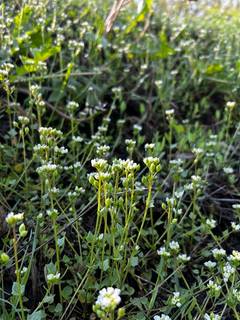
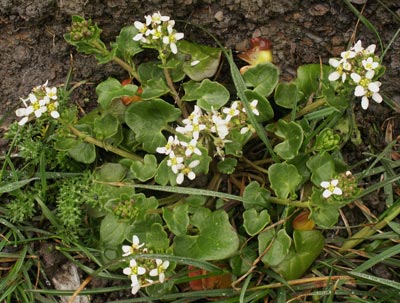
Cochlearia officinalis is a low, fleshy biennial or short-lived perennial of the cabbage family, forming a rosette of long-stalked, heart- to kidney-shaped basal leaves and flowering stems 4-12 inches (10-30 cm) tall. The leaves are thick, glossy, and slightly succulent, holding water against salt and wind. From spring into summer it carries loose heads of white, four-petalled flowers about 0.3 inch (8 mm) across, followed by rounded, swollen seed pods. The fleshy leaves are rich in vitamin C and were eaten by sailors to prevent scurvy, the origin of the common name. It grows on salt marshes, sea cliffs, shingle, and estuary banks, and has spread inland along salt-treated roads. Native to the coasts of northern and western Europe and the North Atlantic, it tolerates salt, wind, and poor soils. The plant is short-lived, often dying after flowering, and flowering thins where taller vegetation shades the rosettes. It self-seeds freely on open, disturbed ground.
Native Range
Cochlearia officinalis is native to the coasts of northern and western Europe and the North Atlantic, from Iberia to the Arctic. It grows on shores around the British Isles and has spread inland along salted roads.Suggested Uses
Grown in coastal, gravel, and wildlife gardens and in herb collections for its edible, vitamin-rich leaves. The early flowers give nectar to bees and other insects on open ground near the sea.How to Identify
Appearance
Size & Dimensions
Height4" - 1'
Width/Spread6" - 1'
Bloom Information
Detailed Descriptions
Foliage Description
glossy greenGrowing Conditions
Sun Requirements
Requires 6-12 hours of direct sunlight daily
• Full Sun: 6+ hours of direct sunlight
• Partial Shade: 3-6 hours of direct sunlight
• Full Shade: Less than 3 hours of direct sunlight
Care & Maintenance
Care Guide
Grows in full sun on moist, free-draining, salty or mineral-rich soils and tolerates salt spray and exposure. A soil pH from 6.5 to 8.0 suits it, and rich, sheltered conditions shorten its life. It withstands coastal wind and short dry spells but flowers most freely in open ground without competition. Seed germinates freely, and plants often renew themselves by self-sowing rather than persisting. It is hardy to about USDA zone 6. Frost is tolerated, and the rosettes stay green through mild winters.Pruning
No pruning is required. Spent flowering stems can be cut back to limit self-seeding, or left to set seed for replacement plants. Old rosettes are cleared once they die after flowering.Container Growing
Suitable for container growing
Minimum container size: 1 gallons