Cochlearia, Genus, spp., Multiple species,
- Genus
- Multiple species
scurvygrasses
Northern Hemisphere (Europe, northern Asia, North America)
Overview
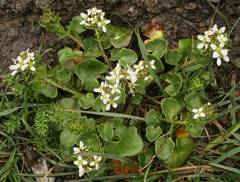
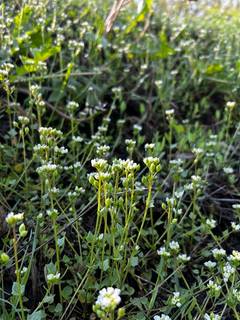
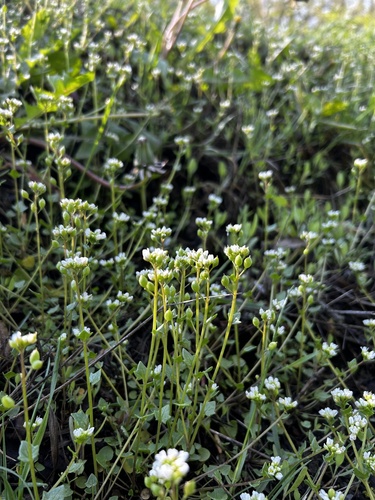
Cochlearia is a genus of about 30 species of small annual, biennial, and perennial herbs in the cabbage family (Brassicaceae), native to cool-temperate, arctic, and alpine regions of the Northern Hemisphere. Plants form a low rosette of fleshy, long-stalked basal leaves that are rounded, kidney-, or spoon-shaped, 0.4-1.6 inches (1-4 cm) long, above which rise branched flowering stems 2-16 inches (5-40 cm) tall. The four-petaled flowers are small, 0.2-0.3 inch (4-8 mm) across, white or occasionally pale lilac, carried in short racemes that lengthen as the rounded or oval seed pods develop. Many species are halophytes of sea cliffs, salt marshes, shingle, and estuary banks, while others grow on arctic tundra and alpine rock. The fleshy leaves are rich in vitamin C and were eaten by sailors to prevent scurvy, the source of the common name. Most species are short-lived, and the annual and biennial kinds die after setting seed. Some, including Danish scurvygrass (C. danica), have spread inland along salted road verges.
Native Range
Native across the cool-temperate, arctic, and alpine Northern Hemisphere, including northern and western Europe, northern Asia, and northern North America. Plants grow on sea cliffs, salt marshes, shingle beaches, estuary banks, arctic tundra, and mountain rocks, usually in full sun on damp, well-drained ground.Suggested Uses
Grown in coastal and gravel gardens, herb gardens, and alpine or trough plantings, and as an edible leaf used in salads for its sharp, cress-like taste. Salt tolerance makes it useful near paths and beds exposed to road or sea spray. Plants are spaced 4-8 inches (10-20 cm) apart.How to Identify
Appearance
Size & Dimensions
Height2" - 1'4"
Width/Spread4" - 10"
Bloom Information
Flowering is mainly in spring and early summer, from April to July across most of the range, with arctic and alpine populations blooming later as snow clears. Coastal annuals such as C. danica may begin as early as March in mild areas. Flowering is followed within weeks by ripening seed pods.
Detailed Descriptions
Foliage Description
green, fleshyGrowing Conditions
Sun Requirements
Requires 6-10 hours of direct sunlight daily
• Full Sun: 6+ hours of direct sunlight
• Partial Shade: 3-6 hours of direct sunlight
• Full Shade: Less than 3 hours of direct sunlight
Care & Maintenance
Care Guide
Cochlearia are grown from seed sown in spring or autumn in full sun on moist, well-drained soil; many tolerate saline and sandy conditions that few other plants accept. They favor cool conditions and even moisture and tend to bolt and fade quickly in heat and drought. A neutral to slightly alkaline pH around 6.5-7.5 suits most species. The annual and biennial kinds complete their cycle quickly and rely on self-sown seed to persist. Plants are generally cold-hardy, many to USDA zone 5 or colder. Poor performance in hot summers is the main limitation in mild-climate gardens.Pruning
No pruning is required. Flowering stems can be cut back after seed set to limit self-seeding or left to ripen for resowing. Tired annual plants are removed once they yellow.Container Growing
Suitable for container growing