Clinopodium, Genus, douglasii, Species,
- Genus & species
yerba buena
Pacific coast of western North America
Overview
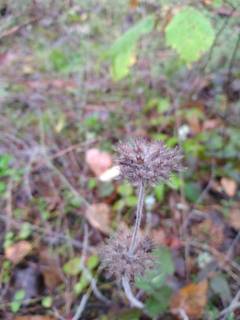
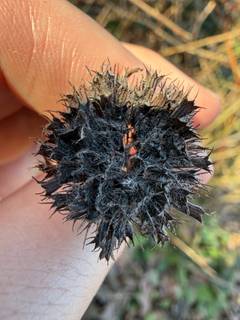
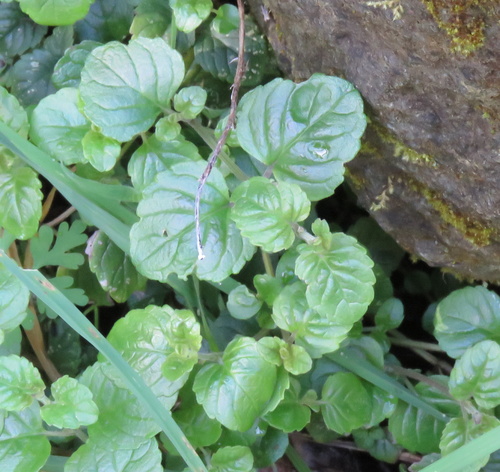
A trailing, mat-forming evergreen perennial in the mint family (Lamiaceae) reaching 2-4 inches (5-10 cm) tall and spreading 24-36 inches (60-90 cm) wide by surface-running stems that root at the nodes. Leaves opposite, ovate, 0.4-1 inch (1-2.5 cm) long, with toothed margins, glossy dark green above, paler below; foliage releases a strong mint-like aroma when crushed. Stems thread along the ground in patches that thicken over 2-3 years on suitable substrates. Small white to pale-lavender tubular flowers appear singly in leaf axils from April through August, each bloom 0.25-0.4 inch (6-10 mm) long with a two-lipped corolla. Fruit is a cluster of four small dry nutlets, dispersed locally and rarely showy. Foliage remains green through winter in zones 7-9 but may yellow under drought or hard freezes; growth slows below 40°F (4°C). Slow to establish from divisions and can take a full season before stems begin running. Mat density decreases on heavy clay or compacted soils where drainage is poor, and stems may rot in standing water. Tolerates light foot traffic but breaks under heavy use.
Native Range
Native to western North America from southern British Columbia south through Washington, Oregon, and California to the Los Angeles Basin, with disjunct populations in northern Idaho. Found in coniferous and mixed evergreen forests, redwood understory, and shaded woodland edges from sea level to 4,000 feet (1,200 m).Suggested Uses
Used as a groundcover in part-shade woodland borders and along shaded paths at 12-18 inch (30-45 cm) spacing. Grows in containers of at least 1 gallon (4 L) with regular moisture and partial shade. Planted under taller native shrubs in dryland gardens within its hardiness range.How to Identify
Appearance
Size & Dimensions
Height2" - 4"
Width/Spread2' - 3'
Bloom Information
April through August in zones 7-9 along the Pacific coast. Peak flowering occurs May through July; individual flowers last 3-5 days, with new buds opening sequentially over a 12-16 week period. Bloom is sparse compared to vegetative cover and can be missed at a distance. Flowering is reduced in dense shade and on dry sites.
Detailed Descriptions
Flower Description
White to pale lavenderFoliage Description
Glossy dark greenGrowing Conditions
Sun Requirements
Requires 2-5 hours of direct sunlight daily
• Full Sun: 6+ hours of direct sunlight
• Partial Shade: 3-6 hours of direct sunlight
• Full Shade: Less than 3 hours of direct sunlight
Care & Maintenance
Care Guide
During the first growing season after planting, soil is kept moist with deep watering every 7-10 days; established mats require irrigation only during dry periods exceeding 3 weeks in zones 7-9. Plants on the dry edge of their range benefit from supplemental water through summer drought. A 1-2 inch (2.5-5 cm) mulch layer of shredded leaf duff or wood chips retains moisture during establishment and is pulled back from stems once they begin running. Slugs feed on new growth in coastal climates from March through May. Mat thinning often follows extended winter saturation on heavy soils. Plants are typically replaced every 4-6 years if center dieback exceeds 30 percent of the patch.Pruning
No formal pruning is required. Runner stems can be trimmed back to the desired patch edge in late spring once active growth resumes, using shears at the soil surface. Damaged or yellowing stems can be removed by hand any time during the growing season.Pruning Schedule
Prune: May
late spring
Container Growing
Suitable for container growing
Minimum container size: 1 gallons