Clethra, Genus, alnifolia, Species, 'Hummingbird', Cultivar,
- Genus & species
- Cultivar
hummingbird summersweet
Species native to eastern North America (Maine to Florida, west to Texas; coastal plains, swamp margins, bogs, wet woodlands); cultivar selected at the U.S. National Arboretum
Overview
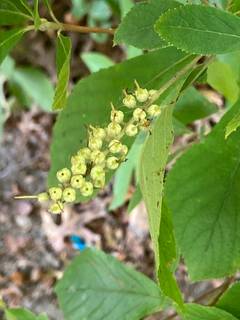
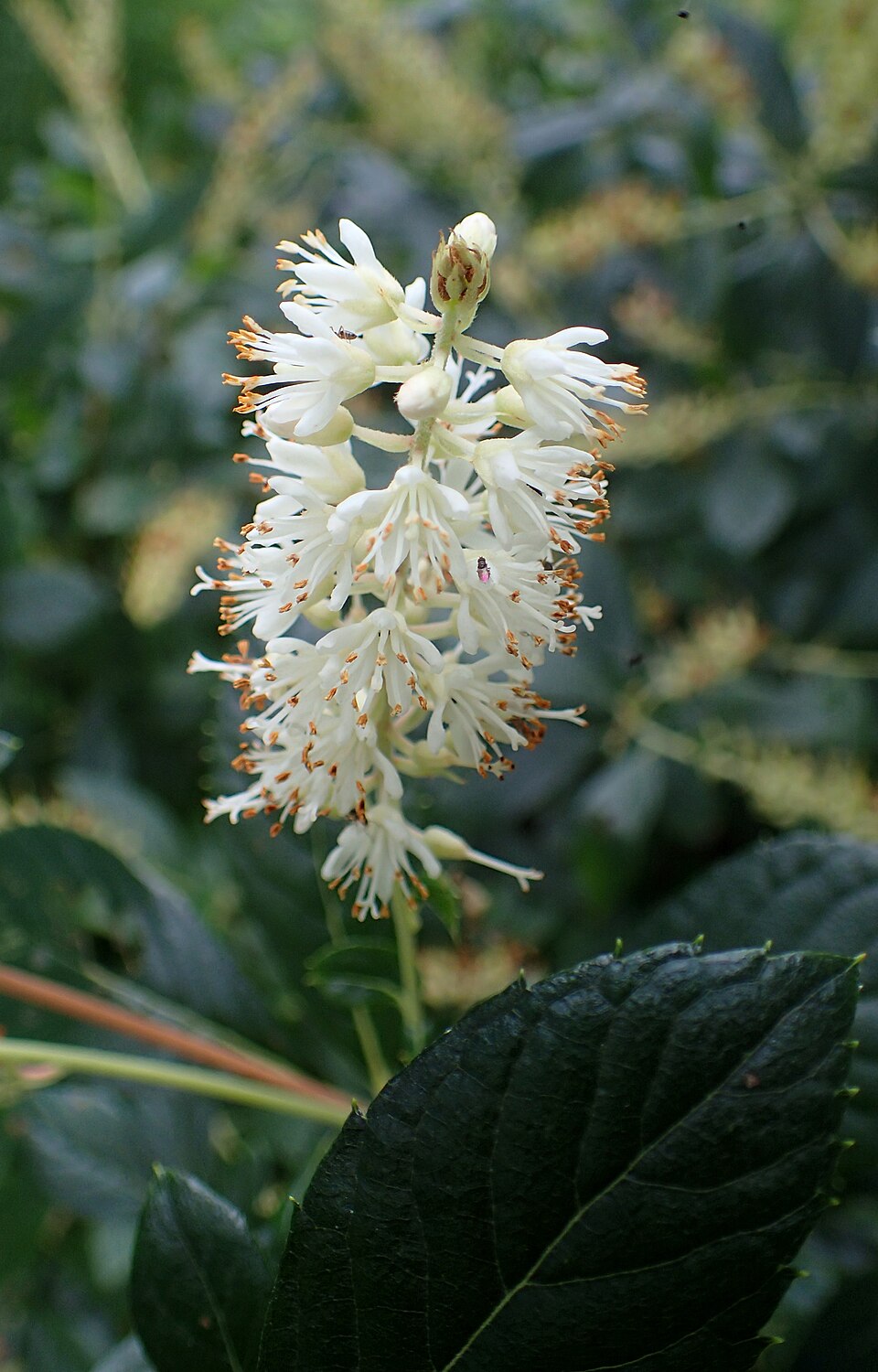
Clethra alnifolia 'Hummingbird' is a compact dense suckering deciduous shrub in the summersweet family (Clethraceae) reaching 3–4 feet (0.9–1.2 m) tall with a spread of 4–6 feet (1.2–1.8 m) — about half the mature size of the species type at 6–8 feet (1.8–2.4 m). The cultivar carries erect bottlebrush-like racemes 3–6 inches (8–15 cm) long of small white intensely fragrant flowers from July through August. The sweet spicy fragrance carries 20–30 feet (6–9 m) on still-air days and makes the bloom season detectable before the plant is in view. Leaves are alternate obovate to elliptic 2–4 inches (5–10 cm) long, dark glossy green, with serrate margins. Fall color is yellow to golden-yellow. The shrub spreads by root suckers and forms a dense rounded colony over time, with the original plant gradually widening as new stems emerge at the perimeter. Growth rate is moderate. Hardy to zone 3. The species is native to eastern North American wetlands, and the cultivar tolerates wet acidic shaded conditions that eliminate most flowering shrub options. Salt-spray tolerance extends the use to coastal plantings. The suckering habit expands the footprint gradually; root barriers control spread in confined beds. 'Hummingbird' was selected at the U.S. National Arboretum.
Native Range
The species Clethra alnifolia is native to eastern North America, from Maine to Florida and west to Texas, where it grows along coastal plains and in swamp margins, bogs, and wet woodlands. The cultivar 'Hummingbird' was selected at the U.S. National Arboretum.Suggested Uses
Grown in mass groupings, wet borders, rain gardens, woodland edges, and foundation plantings at 3–4 foot (0.9–1.2 m) spacing. The compact 3–4 foot mature size fits residential-scale positions where the 6–8 foot species type would overgrow the footprint. The fragrant July–August bloom period fills the gap between spring-flowering shrubs (finished by June) and fall-flowering shrubs (beginning in September). Wet-site positions including stream edges, rain gardens, and pond margins suit the species swamp-origin tolerance for saturated soils. The suckering habit creates dense ground-stabilizing colonies on moist slopes. Container culture works in 7 gallon (26 L) or larger pots with consistent irrigation. The fragrance carries to patios and seating areas 20–30 feet (6–9 m) away on still-air evenings. Butterflies and hummingbirds visit the flowers.How to Identify
Appearance
Size & Dimensions
Height3' - 4'
Width/Spread4' - 6'
Bloom Information
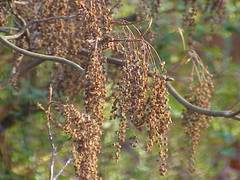
Erect bottlebrush-like racemes 3–6 inches (8–15 cm) long of small intensely fragrant white flowers open from July through August on current-season growth. Bloom duration is 4–6 weeks. Small round dry seed capsules follow flowering and persist into winter on the bare branches.
Detailed Descriptions
Flower Description
White; intensely fragrant in erect bottlebrush racemes 3-6 inches longFoliage Description
Dark glossy green; alternate obovate to elliptic 2-4 inches with serrate margins; yellow to golden-yellow in fallGrowing Conditions
Sun Requirements
Requires 2-10 hours of direct sunlight daily
• Full Sun: 6+ hours of direct sunlight
• Partial Shade: 3-6 hours of direct sunlight
• Full Shade: Less than 3 hours of direct sunlight
Care & Maintenance
Care Guide
Grows in partial shade to full sun in moist to wet acidic soil at pH 4.5–6.0, tolerating loam and peat. Hardy to zone 3. Consistent moisture supports the strongest flowering, and the species tolerates boggy saturated soils that most flowering shrubs cannot manage. Average garden moisture with organic-rich soil also produces acceptable performance. Full shade is tolerated, though flowering is sparser than in sun. Salt-spray tolerance extends the planting range to coastal sites. The suckering habit expands the plant footprint gradually and carries both ornamental and functional value for mass plantings, while root barriers or edging confine the spread in tight garden beds. No serious pest or disease problems.Pruning
Prune in late winter to early spring. Flowers form on current-season growth, so pruning in February–March does not reduce the following summer's bloom. The oldest stems are removed at the base on a 3–4 year rotation to renew the thicket. Suckering growth is thinned annually if spread control is needed. Hard renovation cuts to the ground are tolerated — the plant regrows vigorously from the root system and returns to flowering scale within 2–3 seasons.Pruning Schedule
Prune: February–March
winterearly spring
Container Growing
Suitable for container growing
Minimum container size: 7 gallons