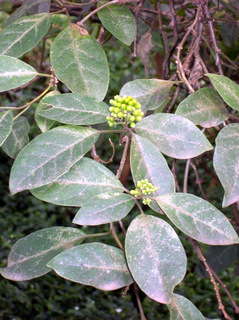
Clerodendrum, Genus, tomentosum, Species,
- Genus & species
downy chance
Overview
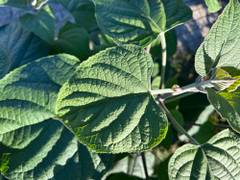
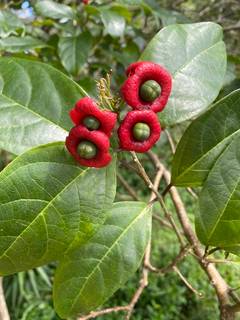
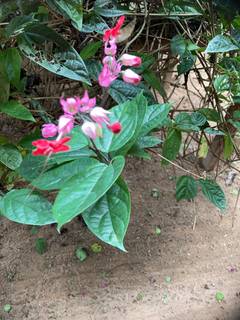
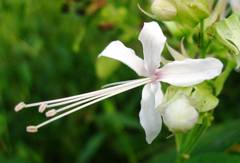
Clerodendrum tomentosum is an evergreen to semi-deciduous shrub or small tree growing 6-26 feet (2-8 m) tall, with an upright, often multi-stemmed habit and densely hairy young shoots. The opposite leaves are oval to lance-shaped, 2-6 inches (5-15 cm) long, dull green and covered with soft hairs that give the foliage a felted feel, with a strong scent when crushed. White tubular flowers about 0.8-1 inch (2-2.5 cm) long, with long protruding stamens and a sweet fragrance, open in branched clusters at the branch tips in spring and summer. As the flowers fade, the green calyx enlarges and turns red. The fruit is a shining black, four-lobed drupe seated on the spreading red calyx, so ripe plants carry contrasting black and red against the foliage. Plants sucker from the roots and can form thickets. Growth is moderate to fast in warm, moist conditions and slows markedly in cold or dry sites.
Native Range
Native to eastern and northern Australia, from Tasmania and Victoria north through New South Wales and Queensland to the Northern Territory, with related populations in New Guinea and the Pacific. Grows in rainforest margins, wet sclerophyll forest, and along watercourses in moist, fertile soils.Suggested Uses
Grown as a screening or habitat shrub in gardens and rainforest plantings, spaced 6-13 feet (1.8-4 m) apart. The flowers and fruit are used by native insects and birds. The suckering habit suits larger, informal gardens rather than confined beds.How to Identify
Appearance
Size & Dimensions
Height6' - 26'
Width/Spread6' - 13'
Bloom Information
Detailed Descriptions
Flower Description
white with red calyxFoliage Description
dull greenGrowing Conditions
Sun Requirements
Requires 4-8 hours of direct sunlight daily
• Full Sun: 6+ hours of direct sunlight
• Partial Shade: 3-6 hours of direct sunlight
• Full Shade: Less than 3 hours of direct sunlight
Care & Maintenance
Care Guide
Grows in moist, well-drained, fertile soils in full sun to part shade. Established plants tolerate short dry spells but grow slowly without summer moisture. The species suckers from the roots and can spread into a thicket, so it needs room or root control in small gardens. Frost cuts back soft growth in cold areas, and plants reshoot from the base in spring. Few serious pests affect it, though leaf-eating beetles chew foliage in warm months.Pruning
Cut back in late winter to control size and remove frost-damaged stems; plants reshoot from old wood and the base. Removing root suckers limits spread into surrounding beds. Light tip pruning after flowering keeps the shrub dense.Container Growing
Suitable for container growing
Minimum container size: 7 gallons