Cleomella, Genus, arborea, Species,
- Genus & species
bladderpod
Overview
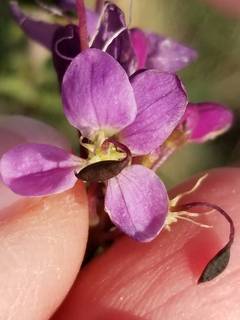
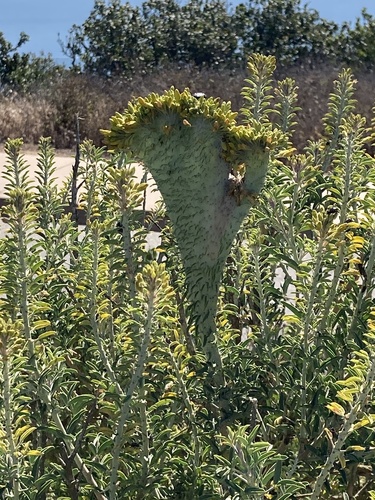
Cleomella arborea is an evergreen shrub in the spiderflower family, forming a rounded mound 3-6 feet (0.9-1.8 m) tall and wide, occasionally taller in protected sites. The blue-green leaves are divided into three narrow leaflets and release a pungent odor when bruised. Bright yellow flowers with protruding stamens are carried in short erect clusters at the branch tips, and the plant flowers through much of the year, heaviest from late winter into spring. Each flower develops into an inflated, papery, balloon-like pod 1-2 inches (2.5-5 cm) long that hangs from a slender stalk and holds several seeds. The shrub grows in dry washes, desert flats, and coastal scrub on sandy or gravelly soils. It tolerates heat, drought, and salt spray but is damaged by hard frost and poor drainage. The strong scent and steady litter of dropped pods limit its use near walkways and patios. It is short-lived, often persisting 5-10 years, but reseeds where the soil is open.
Native Range
Native to the deserts and arid coastal regions of southern California and Baja California, Mexico, with scattered populations in Arizona and Nevada. It grows in dry washes, desert flats, alkaline sinks, and coastal scrub.Suggested Uses
Grown in desert and dry gardens, coastal scrub restoration, and erosion control on sandy slopes. The long flowering season supports bees, and the flowers attract butterflies and hummingbirds.How to Identify
Appearance
Size & Dimensions
Height3' - 6'
Width/Spread3' - 6'
Colors
Bloom Information
Detailed Descriptions
Foliage Description
blue-greenGrowing Conditions
Sun Requirements
Requires 6-12 hours of direct sunlight daily
• Full Sun: 6+ hours of direct sunlight
• Partial Shade: 3-6 hours of direct sunlight
• Full Shade: Less than 3 hours of direct sunlight
Care & Maintenance
Care Guide
Grows in full sun in fast-draining sandy or gravelly soil and tolerates alkaline and saline conditions. Established plants need little to no irrigation and decline with regular summer water. Hard frost kills stems and can kill young plants, limiting it to mild-winter regions. It needs no fertilizer in native soils and is intolerant of heavy clay or poorly drained ground. Light shaping after the main bloom keeps the form dense. Plants are short-lived but replace themselves readily from self-sown seed.Pruning
Light shaping after the spring bloom keeps growth compact and removes spent pods. Older woody plants can be cut back hard in early spring to renew growth, though hard cutting is not always followed by strong rebound.Pruning Schedule
early springlate spring
Container Growing
Suitable for container growing
Minimum container size: 5 gallons