Image 1 of 10
1 / 10
Plant Reference
Choisya, Genus, ternata, Species, 'Sundance', Cultivar,
- Genus & species
- Cultivar
golden Mexican orange blossom
Golden-foliaged sport of Choisya ternata discovered at Sunnyside Nurseries in Kent, England; the parent species Choisya ternata is native to the mountain ranges of central and southern Mexico
Overview
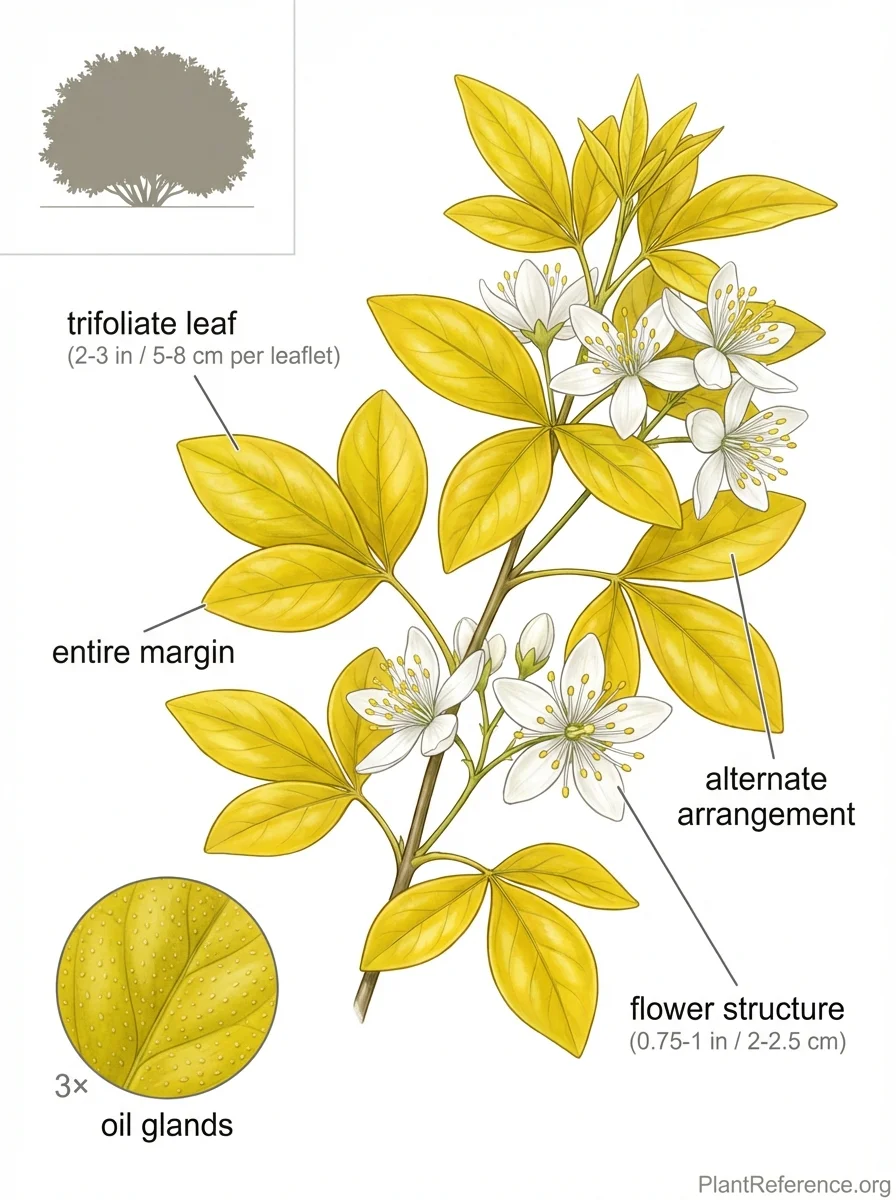
Choisya ternata 'Sundance' is a mounding broadleaf evergreen cultivar in the citrus family Rutaceae growing 4–6 feet (1.2–1.8 m) tall and 4–6 feet (1.2–1.8 m) wide from a multi-stemmed base that produces a rounded dense canopy. The cultivar is a golden-foliaged sport of Choisya ternata that was discovered at Sunnyside Nurseries in Kent, England, and introduced to commercial cultivation in the 1980s, and the cultivar name 'Sundance' is protected as a Plant Breeders' Rights selection under the brand name Lich. Leaves are palmately compound with 3 broad obovate leaflets 2–3 inches (5–7 cm) long carried on a central petiole (the species name ternata is Latin for three-part and refers to the three-leaflet arrangement), and the leaflet color is golden-yellow to chartreuse on new growth, shifting to chartreuse-green as the leaves mature — the golden color is the main ornamental character of the cultivar and separates 'Sundance' from the dark green species-type C. ternata and from the narrow-leafleted hybrid cultivar Choisya 'Aztec Pearl'. The golden color is sensitive to light exposure and develops most vividly in morning sun with afternoon shade positions (approximately 4–6 hours of morning direct sun with filtered light or shade through the afternoon heat), and the cultivar scorches in full hot afternoon sun (the golden foliage bleaches and browns at the leaf margins) and fades to chartreuse-green rather than full gold in deep shade with less than 3–4 hours of direct light. This light-sensitivity governing where the full gold color develops is the main cultural consideration for the cultivar and determines the planting position more than the soil or moisture requirements. The foliage is aromatic when bruised — the genus is in the family Rutaceae alongside Citrus, and the leaves release a citrus scent when brushed or crushed. White 5-petaled star-shaped flowers 1–1.5 inches (2.5–4 cm) across open in terminal and axillary clusters in April and May across a 3–4 week spring bloom, and an occasional smaller second flush follows in September and October in favorable conditions — the cultivar carries fewer flowers than the green-leaved species type because some of the plant's photosynthetic capacity is taken up by the reduced chlorophyll content in the golden leaves. The flowers carry a strong sweet orange-blossom fragrance. Limitation: the cultivar is hardy to approximately 10 °F (−12 °C) and is damaged by sustained freezes below that threshold, which restricts cultivation to USDA zones 7 through 10. The cultivar is smaller and slower-growing than the green-leaved species type (4–6 feet / 1.2–1.8 m vs. 6–8 feet / 1.8–2.4 m for C. ternata). The species contains furanocoumarins in the leaf tissue and sap — these are photoactive compounds that are toxic to cats and dogs if the foliage is ingested and can cause skin photosensitization in humans who handle the foliage in bright sun. Drought-tolerant once established. Deer-resistant.
Native Range
Golden-foliaged sport of Choisya ternata discovered at Sunnyside Nurseries in Kent, England, and introduced to commercial cultivation in the 1980s under the brand name Lich with the cultivar name 'Sundance'. The parent species Choisya ternata is native to the mountain ranges of central and southern Mexico where it grows in open oak and pine-oak forests at middle elevations.Suggested Uses
Used as a golden-foliaged evergreen specimen shrub, accent shrub in mixed borders, and in containers of at least 10 gallons (38 L) at 4–6 foot (1.2–1.8 m) spacing between plants. The year-round golden foliage color in morning-sun positions, the strong orange-blossom fragrance of the spring flowers, and the aromatic citrus-scented leaves combine to carry the cultivar through multiple seasons of interest. Companion plantings that contrast with the golden foliage — dark-leaved Heuchera cultivars, purple-foliaged Berberis thunbergii 'Atropurpurea', and blue-leaved Festuca glauca — build the color-contrast combinations that are the main design use of the cultivar. Full hot afternoon sun positions (foliage scorch), deep shade positions (chartreuse-green rather than gold), and cold-exposed positions in USDA zones 6 and colder (cold damage below 10 °F / −12 °C) are unsuitable. Gardens where cat or dog access to the foliage is a concern should account for the furanocoumarin toxicity.How to Identify
Appearance
Size & Dimensions
Height4' - 6'
Width/Spread4' - 6'
Colors
Bloom Information
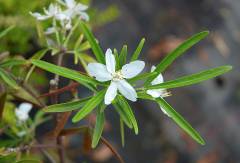
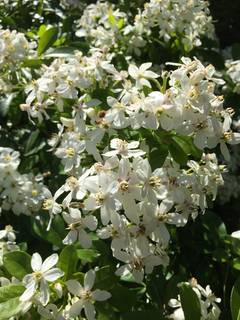
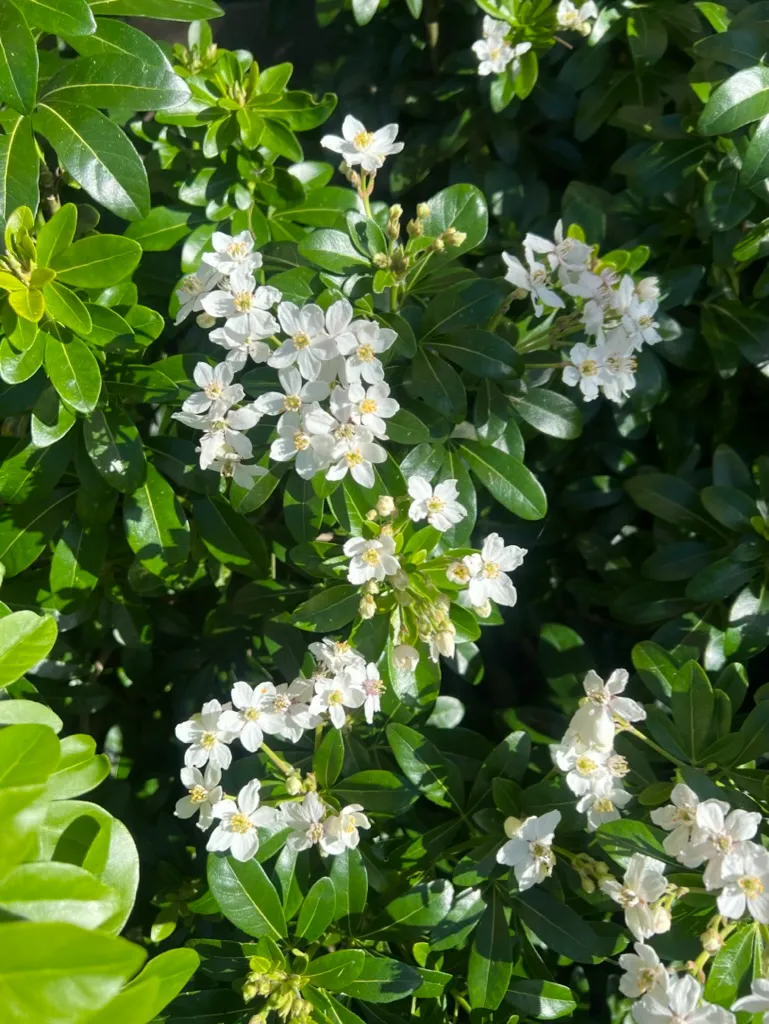
White 5-petaled star-shaped flowers 1–1.5 inches (2.5–4 cm) across open in terminal and axillary clusters in April and May across a 3–4 week spring bloom, and an occasional smaller second flush follows in September and October in favorable conditions. The cultivar carries fewer flowers than the green-leaved species type because some of the photosynthetic capacity is taken up by the reduced chlorophyll content in the golden leaves. The flowers carry a strong sweet orange-blossom fragrance. Honeybees work the flowers for nectar during the spring bloom.
Detailed Descriptions
Flower Description
white 5-petaled star-shaped flowers 1-1.5 inches (2.5-4 cm) across in terminal and axillary clusters; strongly fragrant with a sweet orange-blossom scent; the cultivar carries fewer flowers than the green-leaved species type C. ternataFoliage Description
golden-yellow to chartreuse on new growth, shifting to chartreuse-green with age; palmately compound leaves with 3 broad obovate leaflets 2-3 inches (5-7 cm) long carried on a central petiole; aromatic when bruised (citrus-like scent); the golden color is most vivid in morning sun with afternoon shade and scorches in full hot afternoon sun; deep shade produces chartreuse-green rather than the full gold colorGrowing Conditions
Sun Requirements
Requires 4-8 hours of direct sunlight daily
• Full Sun: 6+ hours of direct sunlight
• Partial Shade: 3-6 hours of direct sunlight
• Full Shade: Less than 3 hours of direct sunlight
Care & Maintenance
Care Guide
Site in morning sun with afternoon shade for the most vivid gold color — approximately 4–6 hours of morning direct sun with filtered light or shade through the afternoon heat. Full hot afternoon sun scorches the golden foliage (bleaching and brown leaf-margin burn), and deep shade with less than 3–4 hours of direct light produces chartreuse-green foliage rather than full gold. Well-drained loam or sandy soil with a pH of 6.0–7.5 holds the root system through all seasons, and drought tolerance develops once the root system is established. The cultivar is hardy to approximately 10 °F (−12 °C) and is restricted to USDA zones 7 through 10. Light pruning after the spring bloom flush (May or June) encourages a fresh flush of vivid golden new growth and holds the shrub at a designed size. The species contains furanocoumarins in the leaf tissue and sap — these are photoactive compounds that are toxic to cats and dogs if the foliage is ingested and can cause skin photosensitization in humans who handle the foliage in bright sun. Deer-resistant. Hardy in USDA zones 7–10.Pruning
Light pruning after the spring bloom flush (May or June) removes spent flower clusters and encourages a fresh flush of vivid golden new growth — the new foliage produced after the post-bloom cut carries the strongest gold color of the year, and the post-bloom cut is the main pruning operation for the cultivar. A second light trim after the occasional fall bloom flush (October) can be done to tidy the canopy before winter. Hard renovation pruning back into bare old wood is tolerated when the cultivar has become overgrown, and the crown regenerates from the base within 1–2 growing seasons.Pruning Schedule
Prune: May–June
late spring
Container Growing
Suitable for container growing
Minimum container size: 10 gallons
Toxicity Warning
Toxic to petsPlanting Guide
Planting Methods & Timing
Planting Method
transplant
Botanical Flashcard