Image 1 of 12
1 / 12
Plant Reference
Choisya, Genus, ternata, Species,
- Genus & species
Mexican orange blossom
Mountain ranges of central and southern Mexico — Veracruz, Puebla, and Oaxaca at 3,000-8,000 feet (900-2,400 m); montane cloud forests and shaded rocky slopes
Overview
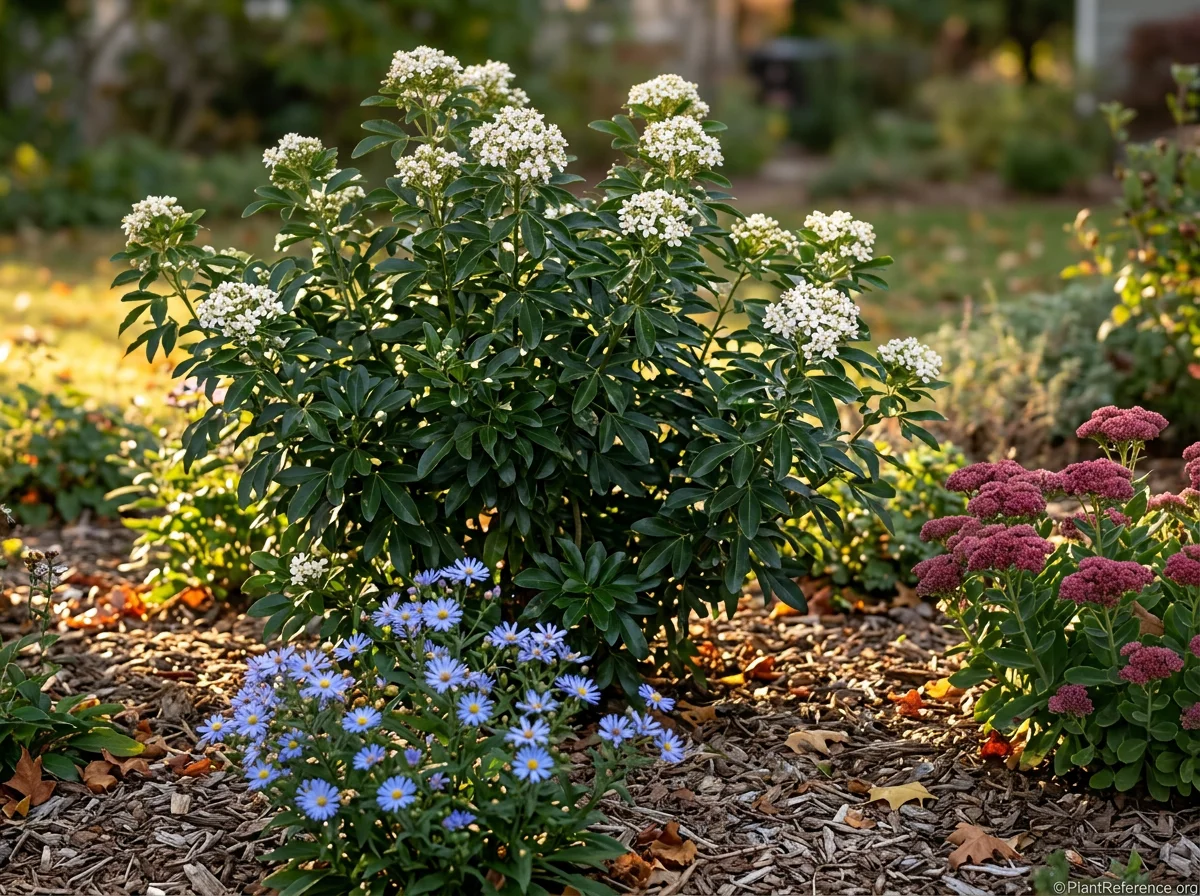
Choisya ternata is Mexican orange blossom (Mexican mock orange), a mounding evergreen shrub growing 6-8 feet (1.8-2.4 m) tall and 6-8 feet (1.8-2.4 m) wide. White 5-petaled star-shaped flowers 1-1.5 inches (2.5-4 cm) in clusters of 3-8 in April-May and August-September (5 weeks total). Strongly fragrant (sweet, orange-blossom). Dark glossy green palmately compound leaves with 3 broad obovate leaflets 2-3 inches (5-7 cm); aromatic when bruised (citrus-like). In Rutaceae. Ternata = in threes. Named for Jacques Denis Choisy. Native to the mountain ranges of central and southern Mexico at 3,000-8,000 feet (900-2,400 m). More shade-tolerant than the hybrid 'Aztec Pearl' — blooms in partial to full shade (though fewer flowers). Two bloom flushes per year. The large mature size (6-8 feet / 1.8-2.4 m in both directions) requires ample space — this is the primary spatial limitation. Hardy to about 10°F (-12°C) — stem dieback in sustained hard freezes. Drought-tolerant once established. Contains furanocoumarins — toxic to cats and dogs. Deer browse. Zones 7-10. Part shade to full sun. Growth rate is moderate.
Native Range
Native to the mountain ranges of central and southern Mexico — Veracruz, Puebla, and Oaxaca at 3,000-8,000 feet (900-2,400 m). Found in montane cloud forests and shaded rocky slopes.Suggested Uses
Grown as an evergreen specimen, informal hedge, screen, or in containers of at least 20 gallons (76 L), spaced 6-8 feet (1.8-2.4 m). Fragrant. Shade-tolerant. Two bloom flushes. Toxic to pets. Zones 7-10.How to Identify
Appearance
Size & Dimensions
Height6' - 8'
Width/Spread6' - 8'
Bloom Information
Detailed Descriptions
Flower Description
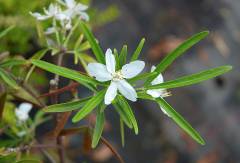
White, 5-petaled, 1-1.5 inches (2.5-4 cm), star-shaped, in terminal and axillary clusters of 3-8; strongly fragrant (sweet, orange-blossom scent); pink-tinged in budFoliage Description
Dark glossy green, palmately compound with 3 broad obovate leaflets 2-3 inches (5-7 cm); aromatic when bruised (citrus-like — in Rutaceae); bold-textured evergreen foliageGrowing Conditions
Sun Requirements
Requires 3-8 hours of direct sunlight daily
• Full Sun: 6+ hours of direct sunlight
• Partial Shade: 3-6 hours of direct sunlight
• Full Shade: Less than 3 hours of direct sunlight
Care & Maintenance
Care Guide
Part shade to full sun or full shade (3-8 hours — reduced bloom in deep shade). Well-drained soil pH 6.0-7.5. Tolerates clay. Drought-tolerant once established. Prune after spring bloom for shape and fall rebloom. Hardy to 10°F (-12°C). Aromatic foliage. Toxic to pets. Deer browse. Zones 7-10.Pruning
Prune lightly after the spring bloom (May-June) to shape — fall rebloom follows. Light trim after fall bloom (September) if needed. Tolerates hard renovation pruning if overgrown — regrows from old wood (unlike Ceanothus).Pruning Schedule
Prune: May–June & September
late springfall
Container Growing
Suitable for container growing
Minimum container size: 20 gallons