Image 1 of 7
1 / 7
Plant Reference
Choisya, Genus, 'Aztec Pearl', Cultivar,
- Genus
- Cultivar
Mexican orange blossom
Hybrid of garden origin; the cross was made by Peter Moore at Hillier Nurseries in Hampshire, England, from two parent species native to Mexico and the southwestern United States — Choisya ternata (Mexico) and Choisya arizonica (Arizona, New Mexico, and northern Mexico)
Overview
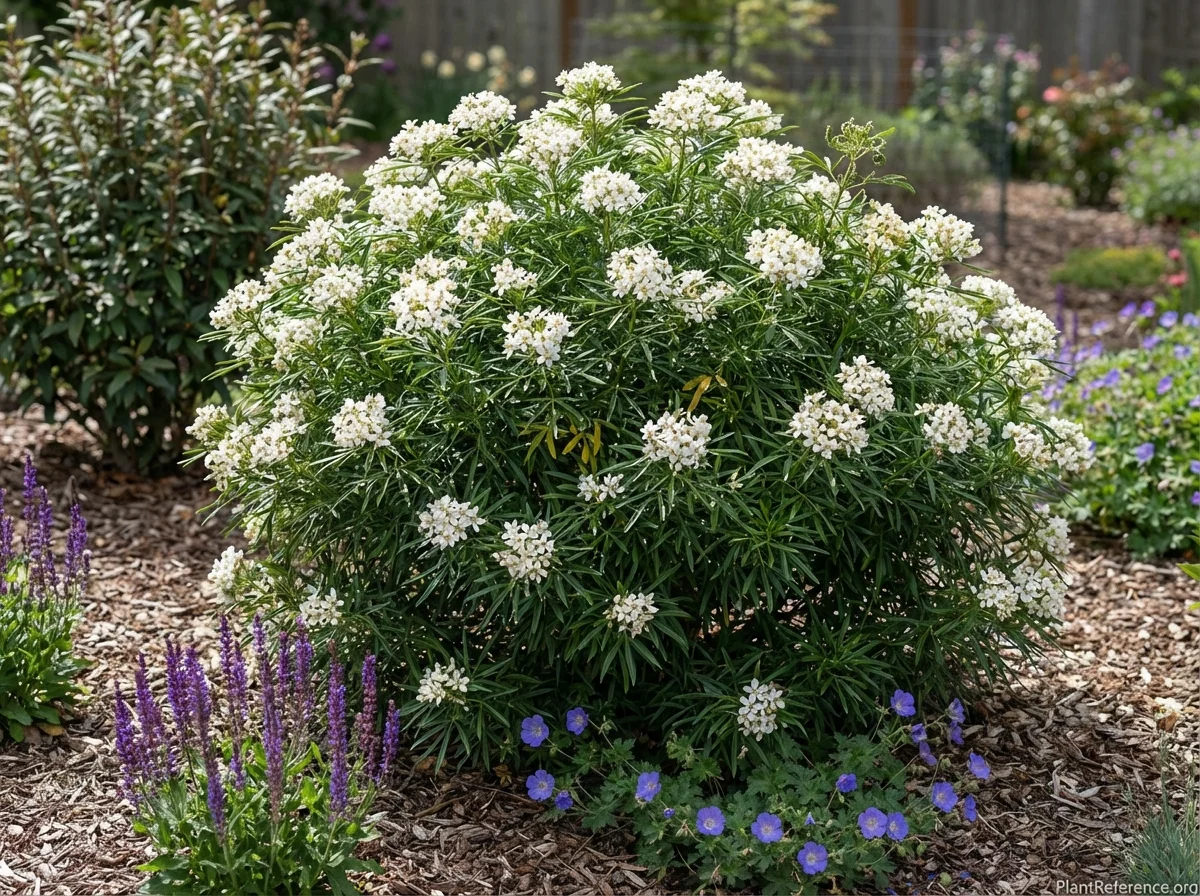
Choisya 'Aztec Pearl' is a mounding broadleaf evergreen hybrid shrub in the citrus family Rutaceae growing 4–6 feet (1.2–1.8 m) tall and 4–6 feet (1.2–1.8 m) wide from a multi-stemmed base that produces a rounded dense canopy. The hybrid is a cross between Choisya ternata (Mexico) and Choisya arizonica (Arizona, New Mexico, and northern Mexico), and the cross was made by Peter Moore at Hillier Nurseries in Hampshire, England, and introduced to commercial cultivation in the late 1980s — the Hillier breeding program selected 'Aztec Pearl' from seedling hybrids for the combination of the heavier flowering and dark leaflet texture of C. ternata with the narrow-leafleted habit of C. arizonica. Leaves are palmately compound with 3–5 narrow lance-shaped leaflets 2–3 inches (5–7 cm) long carried on a central petiole, dark glossy green, and aromatic when bruised — the foliage releases a citrus scent when the leaves are brushed or crushed because the genus belongs to the family Rutaceae alongside Citrus, Ruta (rue), and Murraya (curry leaf tree), and the aromatic oils in the leaf tissue share the chemistry of the citrus family. The narrow leaflet shape gives the hybrid a smaller-leaved texture than the broader-leafleted parent species C. ternata (which carries 3 broad obovate leaflets per leaf) and is the main vegetative character that separates 'Aztec Pearl' from the species-type C. ternata in the garden. White 5-petaled star-shaped flowers 1–1.5 inches (2.5–4 cm) across open in terminal and axillary clusters of 3–7 in April and May across the main spring bloom, and a second smaller flush follows in August and September across the early fall window — the total bloom contribution across the two flushes is approximately 5 weeks, and the pink-tinged buds open to pure white petals with yellow stamens at the center. The flowers carry a strong sweet orange-blossom fragrance that is detectable at several feet from the plant and that is the main reason for siting the shrub near walkways, entry doors, and seating areas. Limitation: the species is hardy to approximately 10 °F (−12 °C) and is damaged by sustained freezes below 5 °F (−15 °C), which restricts cultivation to USDA zones 7 through 10 and sometimes to sheltered zone 6 microclimates. The species contains furanocoumarins in the leaf tissue and sap — these are photoactive compounds that are toxic to cats and dogs if the foliage is ingested and that can cause skin photosensitization in humans who handle the foliage in bright sun. Deer browse the foliage. Drought-tolerant once the root system is established.
Native Range
Hybrid of garden origin — the cross was made by Peter Moore at Hillier Nurseries in Hampshire, England, from two parent species: Choisya ternata (native to Mexico) and Choisya arizonica (native to the southwestern United States — Arizona and New Mexico — and to northern Mexico). The Hillier breeding program introduced 'Aztec Pearl' to commercial cultivation in the late 1980s, and the cultivar received the Royal Horticultural Society Award of Garden Merit in recognition of its garden performance across the British Isles.Suggested Uses
Used as an evergreen specimen shrub, informal hedging, mixed shrub borders, and in containers of at least 15 gallons (57 L) at 4–6 foot (1.2–1.8 m) spacing between plants. The two annual bloom flushes (spring and fall), the strong orange-blossom fragrance, and the narrow-leafleted aromatic evergreen foliage combine to carry the hybrid through three seasons of interest, and the strong fragrance makes the cultivar a suited choice for positions near walkways, entry doors, windows, and seating areas where the scent is accessible to visitors. Gardens where cat or dog access to the foliage is a concern should account for the furanocoumarin toxicity, and cold-exposed positions in zones colder than zone 7 without sheltered microclimates are unsuitable because of the 10 °F (−12 °C) damage threshold.How to Identify
Appearance
Size & Dimensions
Height4' - 6'
Width/Spread4' - 6'
Bloom Information
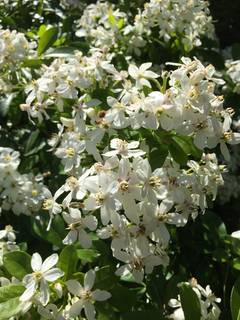
White 5-petaled star-shaped flowers 1–1.5 inches (2.5–4 cm) across open in terminal and axillary clusters of 3–7 in April and May across the main spring bloom, and a second smaller flush follows in August and September across the early fall window. The total bloom contribution across the two flushes is approximately 5 weeks. The pink-tinged buds open to pure white petals with yellow stamens at the center, and the flowers carry a strong sweet orange-blossom fragrance that is detectable at several feet from the plant. Honeybees, bumblebees, and butterflies work the flowers for nectar during both bloom flushes.
Detailed Descriptions
Flower Description
white 5-petaled star-shaped flowers 1-1.5 inches (2.5-4 cm) across carried in terminal and axillary clusters of 3-7; the buds are pink-tinged before opening and open to pure white petals with yellow stamens at the center; strongly fragrant with a sweet orange-blossom scent that is detectable at several feet from the plantFoliage Description
dark glossy green; palmately compound leaves with 3-5 narrow lance-shaped leaflets 2-3 inches (5-7 cm) long carried on a central petiole; aromatic when bruised (citrus-like scent because the genus is in the family Rutaceae — the citrus family); the narrow leaflet shape gives a smaller-leaved texture than the broader-leafleted parent species C. ternataGrowing Conditions
Sun Requirements
Requires 4-8 hours of direct sunlight daily
• Full Sun: 6+ hours of direct sunlight
• Partial Shade: 3-6 hours of direct sunlight
• Full Shade: Less than 3 hours of direct sunlight
Care & Maintenance
Care Guide
Site in full sun to partial shade with 4–8 hours of direct sun per day in well-drained loam or sandy soil with a pH of 6.0–7.5. The species is hardy to approximately 10 °F (−12 °C) and is damaged by sustained freezes below 5 °F (−15 °C), and the limited cold hardiness restricts cultivation to USDA zones 7 through 10 with sheltered positions sometimes supporting the species in zone 6 microclimates. Drought tolerance develops once the root system is established after the first or second growing season. Light pruning after the spring bloom flush (May or June) encourages the second fall bloom and holds the shrub at a designed size. The species contains furanocoumarins in the leaf tissue and sap — these are photoactive compounds that are toxic to cats and dogs if the foliage is ingested and that can cause skin photosensitization in humans who handle the foliage in bright sun. Deer browse the foliage. Hardy in USDA zones 7–10.Pruning
Light pruning after the spring bloom flush (May or June) removes spent flower clusters and holds the shrub at a designed size, and this post-spring-bloom cut encourages the second fall bloom flush in August and September. A second light trim after the fall bloom flush (October) can be done to tidy the canopy before winter. Hard pruning back into old bare wood is avoided because the species does not reliably regenerate from old wood cuts, and heavy cutback can produce bare gaps in the canopy that take 2–3 seasons to refill.Pruning Schedule
Prune: May–June & October
late springfall
Container Growing
Suitable for container growing
Minimum container size: 15 gallons