Chloris, Genus, ×, Hybrid, subdolichostachya, Species,
- Genus & species
- Hybrid
shortspike windmill grass
Overview
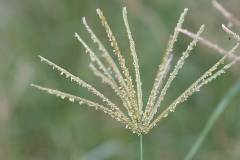
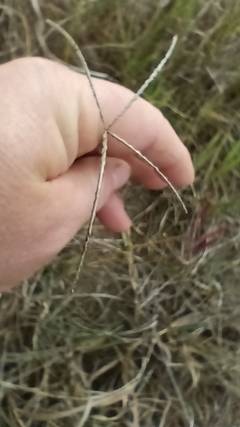
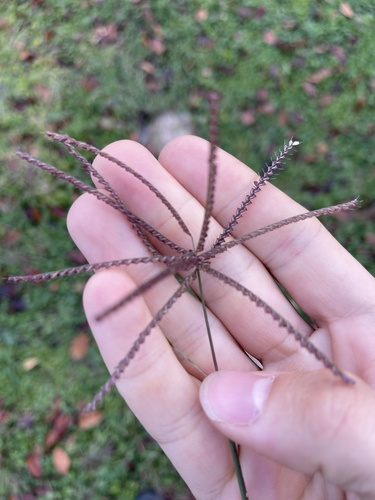
Chloris × subdolichostachya, shortspike windmill grass, is a warm-season perennial bunchgrass of hybrid origin within the windmill grasses, found in the south-central United States. It forms tufts of flat to folded gray-green blades and grows 1–3 feet (30–90 cm) tall in flower. The seed heads are the main feature: several short, finger-like spikes 1–3 inches (2.5–8 cm) long radiate from the top of each stem in a windmill arrangement, ripening from green to tan. Flowering occurs mainly from late spring through fall, often after rain. The grass grows in full sun on dry, sandy, or disturbed soils along roadsides, fields, and open ground, and tolerates heat and drought. As a hybrid between windmill grass species, it is variable in form and intermediate between its parents, which can make field identification difficult. It spreads by seed and can colonize bare, disturbed ground. Top growth turns straw-colored and dies back after frost, regrowing from the crown in spring where winters are mild.
Native Range
Chloris × subdolichostachya is native to the south-central United States, especially Texas, Oklahoma, and neighboring states, where the parent windmill grasses overlap. It grows on prairies, roadsides, and disturbed open ground.Suggested Uses
Used in native grass plantings, prairie restoration, and erosion control on dry, sandy sites, and as a minor forage grass for livestock and wildlife. Its seeds feed birds and small mammals. The variable form and self-seeding make it better suited to naturalized areas than formal borders.How to Identify
Appearance
Size & Dimensions
Height1' - 3'
Width/Spread1' - 2'
Bloom Information
Seed heads form mainly from late spring through fall, with flushes following summer and autumn rains. The radiating spikes shed pollen and then ripen seed over a few weeks. In mild regions scattered seed heads can appear across much of the year.
Detailed Descriptions
Flower Description
green to tanFoliage Description
gray-greenGrowing Conditions
Sun Requirements
Requires 6-12 hours of direct sunlight daily
• Full Sun: 6+ hours of direct sunlight
• Partial Shade: 3-6 hours of direct sunlight
• Full Shade: Less than 3 hours of direct sunlight
Care & Maintenance
Care Guide
The grass grows in full sun on dry, fast-draining sandy or loamy soils and tolerates poor, disturbed ground. Once established it needs no supplemental water and withstands heat and drought, while rich, wet soils are unnecessary and can reduce its vigor. No fertilizer is required. Because it self-seeds and colonizes bare ground, it can spread beyond a planted area. Cutting back the clump in late winter clears old growth before spring regrowth. It is hardy in the warm-temperate zones of its native range, roughly USDA zones 7 to 9.Pruning
Old top growth is cut back to a few inches above the crown in late winter before new shoots emerge. Removing seed heads before they ripen limits self-seeding where spread is unwanted. No other routine pruning is needed.Pruning Schedule
Prune: February–March
winter