Chloris, Genus, spp., Multiple species,
- Genus
- Multiple species
windmill grasses
Tropical and subtropical regions worldwide
Overview
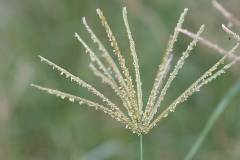
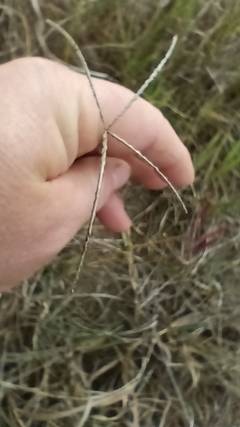
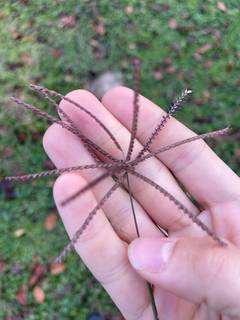
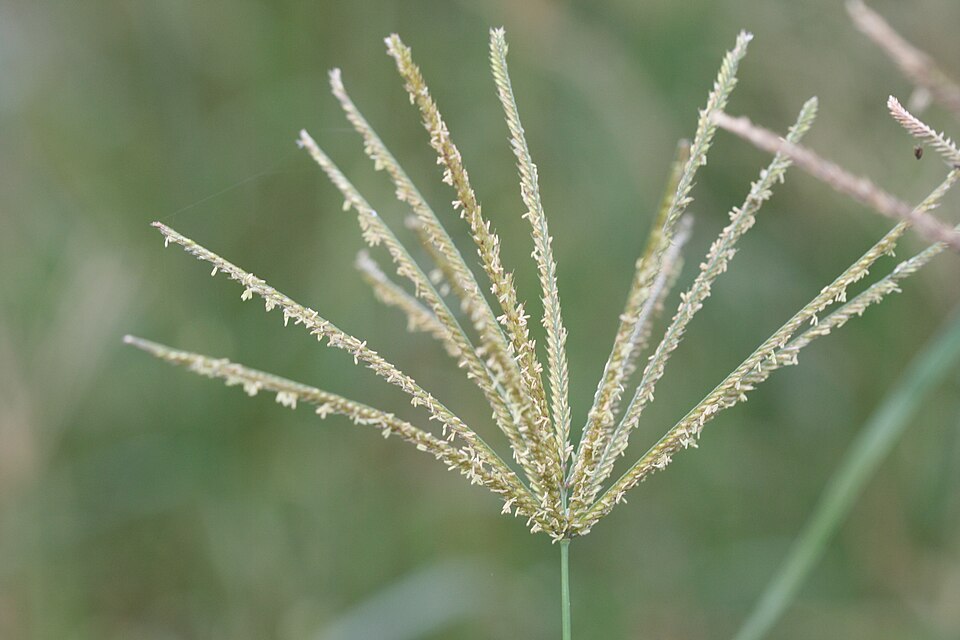
The genus Chloris, known collectively as windmill grasses, takes in roughly 55 species of warm-season grasses (Poaceae) distributed across tropical and subtropical regions worldwide. Both annual and perennial species occur, forming tufts or, in some, spreading by stolons; height ranges from 0.2 m (8 in) in small annuals to 1.5 m (5 ft) in robust perennials such as Rhodes grass (C. gayana). The common name refers to the seed heads, in which several one-sided spikes radiate from a single point at the stem tip like the vanes of a windmill. Each spike carries closely set spikelets, often tipped with slender awns, and the heads age from greenish or purplish to tawny brown. Like other members of its tribe, Chloris uses C4 photosynthesis, which supports rapid growth in heat and bright light. Several species are grown as pasture and forage grasses, while others behave as colonisers of disturbed and roadside ground and can become weedy. Plants establish quickly from seed, tolerate drought once rooted, and grow on a wide range of soils, but most are frost-sensitive and die back or perish where winters are cold.
Native Range
Chloris has a pantropical distribution, with species native to the Americas, Africa, southern Asia, and Australia. Several, including Rhodes grass, have been introduced well beyond their original range as forage and have naturalised widely.Suggested Uses
Chloris species are grown for pasture and erosion control on warm, dry sites, and the larger perennials are planted in meadow and naturalistic schemes for their windmill seed heads. Seeds feed granivorous birds. Vigorous spread makes some species unsuited to small, tidy borders.How to Identify
Appearance
Size & Dimensions
Height8" - 5'
Width/Spread1' - 3'
Bloom Information
Detailed Descriptions
Flower Description
greenish to purplish, ageing tawny brownFoliage Description
grey-greenGrowing Conditions
Sun Requirements
Requires 6-12 hours of direct sunlight daily
• Full Sun: 6+ hours of direct sunlight
• Partial Shade: 3-6 hours of direct sunlight
• Full Shade: Less than 3 hours of direct sunlight
Water & Climate
Water Needs
Drought Tolerance
Drought tolerant when established