Chloris, Genus, gayana, Species,
- Genus & species
rhodes grass
Overview
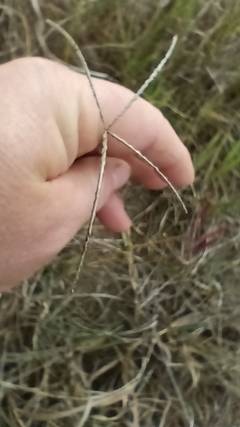
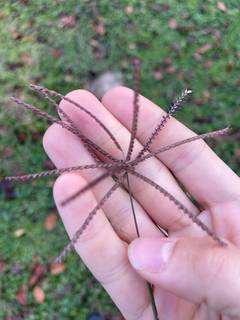
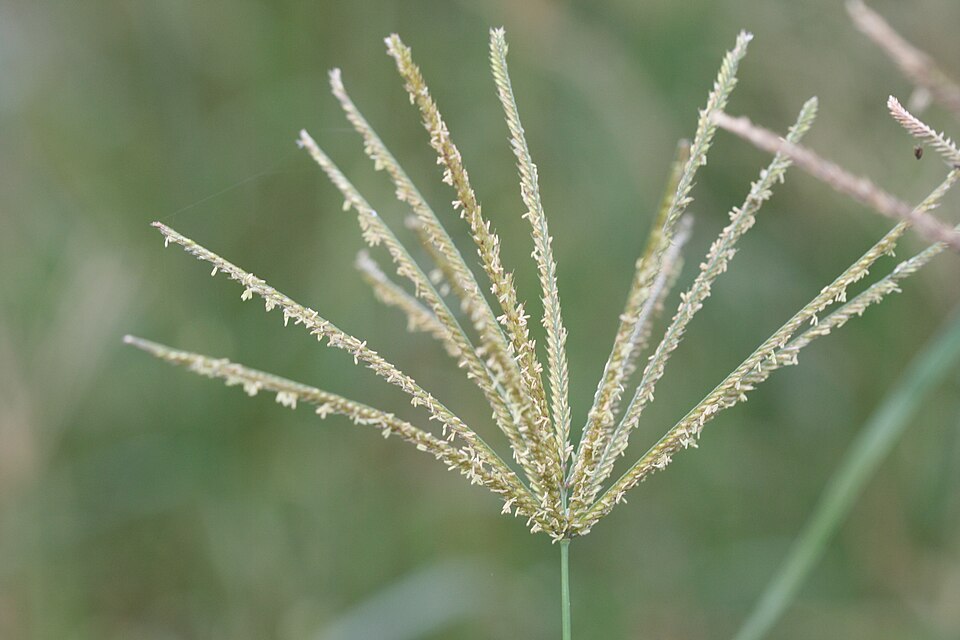
Chloris gayana is a perennial grass reaching 0.5-1.5 m (1.5-5 ft) tall, spreading by stolons that root at the nodes to form a leafy turf. The leaf blades are flat, 15-50 cm (6-20 in) long and 3-8 mm wide, mid-green and slightly rough. The flowering stems carry a cluster of 5-20 finger-like spikes 4-10 cm (1.6-4 in) long arranged in a single whorl at the stem tip, green to pale brown, turning straw-coloured as seed ripens. Flowering occurs through the warm season. Growth is rapid in warmth and moisture, and stolons can extend 0.5-1 m (1.5-3 ft) in a season. The species is a warm-season (C4) grass that tolerates heat, moderate salinity, and short drought but is sensitive to frost, which browns the top growth. Native to Africa, it is widely sown as a pasture and soil-binding grass and has naturalised in many warm regions, where it can spread into disturbed ground and roadsides.
Native Range
Native to eastern and southern Africa, in grassland and open woodland on a range of soils. It is widely sown as a pasture grass in warm climates worldwide and has naturalised in Australia, the Americas, and Asia.Suggested Uses
Sown as a pasture, hay, and soil-stabilising grass on slopes and disturbed ground, at 2-5 kg of seed per hectare or laid as turf. The stolons bind soil and reduce erosion on banks. Its spreading habit and weed potential limit its use near bushland and garden beds.How to Identify
Appearance
Size & Dimensions
Height1'6" - 5'
Width/Spread1'6" - 3'3"
Bloom Information
Flowers through the warm season, mainly late spring to autumn, October to April in the southern hemisphere, with repeated flushes after rain. Seed heads ripen from green to straw colour over 3-5 weeks. Wind disperses the pollen and light seed.
Detailed Descriptions
Flower Description
green to strawFoliage Description
greenGrowing Conditions
Sun Requirements
Requires 6-12 hours of direct sunlight daily
• Full Sun: 6+ hours of direct sunlight
• Partial Shade: 3-6 hours of direct sunlight
• Full Shade: Less than 3 hours of direct sunlight
Care & Maintenance
Care Guide
Grow in full sun on free-draining soil; the grass tolerates a wide range of soils, heat, and moderate salinity. Water to establish, after which it withstands short drought, though growth and density decline in prolonged dry spells. Frost browns the top growth, and the grass is dormant or short-lived in cold-winter areas. It responds to nitrogen with rapid leafy growth and recovers quickly from mowing or grazing. The stoloniferous habit can spread beyond intended areas and is managed by mowing and edging.Pruning
Mow or slash to 5-10 cm (2-4 in) to maintain turf density and remove old flowering stems. The grass reshoots quickly from stolons and crowns after cutting or grazing. Cutting before seed set reduces unwanted spread.Pruning Schedule
Prune: April–May
fall