Chionochloa, Genus, spp., Multiple species,
- Genus
- Multiple species
snow tussock
New Zealand and southeastern Australia
Overview
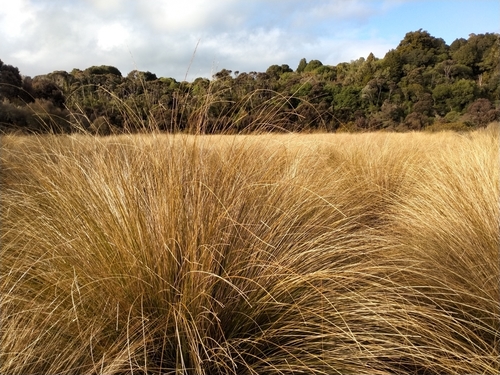
Chionochloa is a genus of about twenty-four perennial tussock grasses in the family Poaceae, native to New Zealand and southeastern Australia, where they are called snow tussocks. Plants form dense, long-lived clumps of narrow, arching leaves and range widely in size, from compact tussocks under 1 foot (30 cm) to robust species reaching 5 feet (1.5 m) tall in flower. The leaves are tough, fibrous, and often blue-green to coppery, with rolled or folded blades that persist year-round. In summer, slender flowering culms rise above the foliage carrying open, drooping panicles of straw-colored to purplish spikelets. Many species dominate alpine and subalpine grassland, where their arching leaves shed snow and regrow slowly after fire or grazing. Several New Zealand species flower heavily only in occasional mast years triggered by warm preceding summers, so seed set varies sharply from year to year. C. rubra (red tussock) and C. flavicans are grown as ornamentals. One limitation is slow growth: plants take several years to form a full tussock and resent disturbance once established. Most are hardy in zones 7-9 and need cool, moist, freely draining conditions.
Native Range
Chionochloa is native to New Zealand, where it is most diverse, with a few species in the mountains of southeastern Australia and Tasmania. Plants form extensive tussock grassland in alpine and subalpine zones and on poor, exposed soils.Suggested Uses
Used as a specimen grass, in gravel and rock gardens, and in naturalistic plantings that echo alpine grassland. Combines with other tussocks, Phormium, and low alpine shrubs in cool-climate schemes. Suited to exposed, windy sites where smaller grasses struggle.How to Identify
Appearance
Size & Dimensions
Height1' - 5'
Width/Spread1' - 4'
Bloom Information
Flowering culms appear in summer, roughly December to February in the Southern Hemisphere. In several New Zealand species, heavy flowering occurs only in mast years that follow a warm summer, with sparse flowering between. The dried flowering stems and seed heads persist into autumn.
Detailed Descriptions
Flower Description
straw to purplishFoliage Description
blue-green to copperGrowing Conditions
Sun Requirements
Requires 6-12 hours of direct sunlight daily
• Full Sun: 6+ hours of direct sunlight
• Partial Shade: 3-6 hours of direct sunlight
• Full Shade: Less than 3 hours of direct sunlight
Care & Maintenance
Care Guide
Grow Chionochloa in full sun in cool, moist, freely draining soil; the genus dislikes heat and humidity. Steady moisture during the growing season suits the tussocks, though sharp drainage is needed to prevent crown rot in wet winters. Plants tolerate wind, frost, and poor soils but grow slowly. Established clumps need little care beyond removing dead leaves. The genus resents division and is more reliably raised from seed. Combing out spent foliage by hand in spring keeps the tussock neat without cutting into living growth.Pruning
Hard cutting back can kill the tussock, so dead leaves are combed or raked out by hand in spring rather than shorn. Spent flowering culms can be removed at the base once they have shed seed. Old, tired clumps regenerate slowly and are usually replaced rather than cut down.Pruning Schedule
Prune: March–April
early spring