Chionochloa, Genus, rubra, Species,
- Genus & species
red tussock grass
New Zealand (South Island — Canterbury region, Southern Alps)
Overview
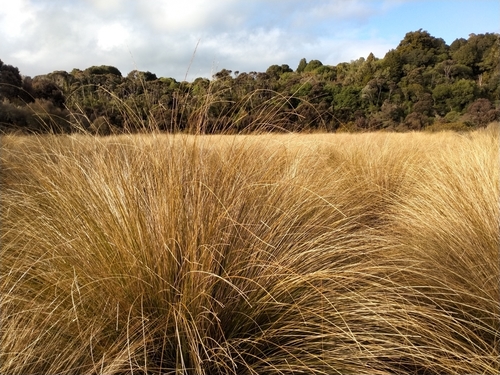
Chionochloa rubra is a New Zealand native, evergreen, clump-forming grass reaching 36–48 inches (90–120 cm) tall and wide as a dense, rounded tussock. The narrow, arching, wiry foliage 24–36 inches (60–90 cm) long is copper-red to bronze-brown year-round; the red-brown color deepens in cool weather and full sun, softening to a more muted bronze in warm summer conditions and partial shade. Pale bronze to tan seed heads sit on stems 12–18 inches (30–45 cm) above the foliage in summer (July–August) and persist through fall and winter as a tan structural element above the tussock. The leaf margins contain silica, and the sharp edges can cut bare skin during handling—gardeners working with the foliage typically use heavy-duty hand protection. Chionochloa is the dominant tussock grass genus in New Zealand alpine grasslands, with approximately 25 species. The tussock form is an adaptation to alpine and subalpine conditions: the dense core of dead leaf bases insulates the crown, and the wiry arching leaves shed snow and wind. Growth rate is slow to moderate; mature size is reached within 2–3 years. The species is sometimes confused with Carex testacea, a shorter New Zealand sedge with green foliage and orange-tipped tips—a different genus, family (Cyperaceae), and overall character.
Native Range
Chionochloa rubra is native to the South Island of New Zealand (Canterbury region and the Southern Alps), growing in alpine and subalpine tussock grasslands at elevations from 1,000 to 6,000 feet (300–1,800 m). The species name 'rubra' refers to the red-brown foliage color.Suggested Uses
Planted as a specimen, in mass plantings, and in gravel gardens in zones 7–9 at 36–48 inch (90–120 cm) spacing. The copper-red tussock form contrasts with green and silver companions in mixed plantings. Sharp drainage and full sun are required for the species to perform—poorly drained or shaded sites are unsuitable. The silica leaf edges cut bare skin, so siting away from paths, play areas, and seating is appropriate where children or pets are present. Grows in containers of at least 5 gallons (19 L). Paired with silver-foliaged plants such as Stachys byzantina or Artemisia 'Powis Castle', the bronze tones of the tussock contrast with the silver in a low-water composition.How to Identify
Appearance
Size & Dimensions
Height3' - 4'
Width/Spread3' - 4'
Bloom Information
Pale bronze to tan seed heads emerge on stems 12–18 inches (30–45 cm) above the foliage in summer (July–August). Seed heads persist through fall and winter as a structural element. The copper-red tussock foliage is the year-round visual feature; the seed heads add height and a different texture for several months.
Detailed Descriptions
Flower Description
Pale bronze to tan, in open panicles on stems 12-18 inches (30-45 cm) above the foliageFoliage Description
Copper-red to bronze-brown, narrow arching wiry blades 24-36 inches (60-90 cm); the red-brown color deepens in cool weather and full sunGrowing Conditions
Sun Requirements
Requires 6-10 hours of direct sunlight daily
• Full Sun: 6+ hours of direct sunlight
• Partial Shade: 3-6 hours of direct sunlight
• Full Shade: Less than 3 hours of direct sunlight
Care & Maintenance
Care Guide
Plant in full sun for the deepest red-brown color; partial shade dulls the foliage to green-brown and reduces the visual contrast that defines the species. Sharp drainage is the single most limiting cultural requirement; root rot develops in heavy, wet winter soils. Drought-tolerant once established (after the first growing season). The leaf margins contain silica, and the sharp edges can cut bare skin—heavy-duty gloves and long sleeves are typical for handling, dividing, or grooming the plant. Shearing the tussock to the ground destroys the natural form and the dense core of dead leaf bases that insulates the crown over winter; the species does not regenerate well from shearing. No serious pest or disease problems in well-drained sites.Pruning
Combing out dead and brown foliage from the tussock core in early spring (March) with gloved hands and a wide-toothed comb removes accumulated debris without damaging live tissue. Shearing or cutting the entire tussock to the ground destroys the species' growth habit and the insulating crown layer. The dense core of dead leaf bases is part of the species' alpine adaptation and is left in place.Pruning Schedule
Prune: March
early spring
Container Growing
Suitable for container growing
Minimum container size: 5 gallons