Chionanthus, Genus, virginicus, Species,
- Genus & species
white fringetree
Eastern North America (New Jersey to Florida, west to Texas/Oklahoma)
Overview
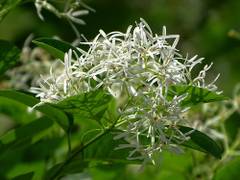
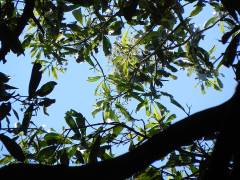
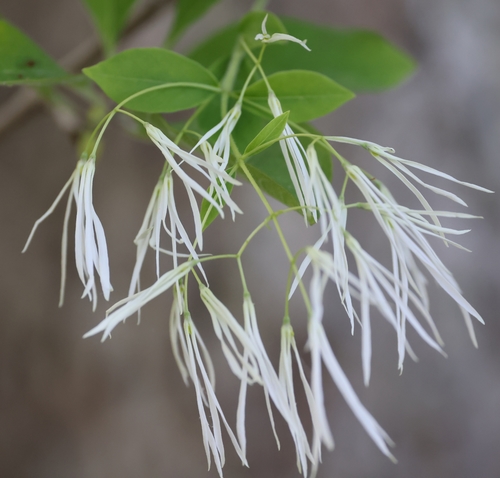
Chionanthus virginicus is a large, multi-stemmed, deciduous shrub or small tree reaching 12–20 feet (3.6–6 m) tall with a spread of 12–20 feet (3.6–6 m). The plant carries drooping, lacy panicles 4–8 inches (10–20 cm) long of fragrant, pure white, strap-like flowers in May–June, hanging below the emerging foliage. Individual petals are narrow and strap-shaped, 0.75–1 inch (2–2.5 cm) long. Leaves are opposite, elliptic to obovate, 4–8 inches (10–20 cm) long—substantially larger than C. retusus at 2–4 inches—medium to dark green. The species leafs out late in spring, often 2–4 weeks after most native deciduous trees in its range. The crown is rounded to spreading, often wider than tall with age. Bark is gray-brown, smooth. Dark blue-black, olive-like drupes 0.5–0.75 inch (1.3–2 cm) long develop on female plants in fall, ripening in September–October. The species is dioecious, though some plants are polygamous. Growth rate is slow to moderate at 6–10 inches (15–25 cm) per year. Fall color is yellow, sometimes developing late. The plant is closely related to Fraxinus (ash) and Olea (olive) within Oleaceae. Emerald ash borer has been documented feeding on C. virginicus, though impacts are less severe than on ash species; monitoring is warranted in regions with active EAB infestation.
Native Range
Chionanthus virginicus is native to eastern North America, from New Jersey to Florida and west to Texas and Oklahoma, occurring in moist woodlands, stream margins, rocky slopes, and forest edges from lowland to 2,500 feet (750 m).Suggested Uses
Planted as a specimen, patio tree, or woodland edge tree at 12–18 foot (3.6–5.4 m) spacing. The fragrant white spring flowers and native status suit pollinator gardens and naturalistic landscapes throughout the eastern United States. Functions at woodland margins, along streams, and in mixed borders. The multi-stemmed form works as a large screening shrub for partial visual barriers 12–20 feet tall. The fall fruit feeds robins, mockingbirds, and other songbirds. Grows in large containers of at least 15 gallons (57 L). Paired with early-leafing native trees such as Acer rubrum or Cornus florida, the late leaf emergence creates a sequenced spring display.How to Identify
Appearance
Size & Dimensions
Height12' - 20'
Width/Spread12' - 20'
Bloom Information
Drooping, lacy panicles 4–8 inches (10–20 cm) long of fragrant, pure white, strap-like flowers open in May–June. Bloom duration is 2–3 weeks. Male plants typically produce larger, showier panicles than female plants. Dark blue-black drupes 0.5–0.75 inch (1.3–2 cm) long ripen in September–October on female plants, providing fall food for birds.
Detailed Descriptions
Flower Description
Pure white, strap-likeFoliage Description
Medium to dark green, large elliptic to obovateGrowing Conditions
Sun Requirements
Requires 4-10 hours of direct sunlight daily
• Full Sun: 6+ hours of direct sunlight
• Partial Shade: 3-6 hours of direct sunlight
• Full Shade: Less than 3 hours of direct sunlight
Care & Maintenance
Care Guide
Plant in full sun to partial shade in moist, well-drained, acidic soil. Full sun produces the heaviest flowering. Tolerates a range of soil types from sand to loam. Slow to establish; vigorous growth often does not begin until the third or fourth year after planting. The species leafs out 2–4 weeks later than most native deciduous trees in its range—this late emergence is normal and not a sign of stress. Consistent moisture during establishment supports healthier early growth. Emerald ash borer feeds on this species in regions with active infestation; monitoring during peak EAB activity (May–August) and consultation with local extension services supports early detection. No other serious pest or disease problems.Pruning
Prune in late winter to early spring before bud break. The species can be maintained as a multi-stemmed shrub or trained to a single-trunk tree form. Lower branches are removed gradually over several years to develop a clear trunk. The rounded crown requires minimal shaping. Dead, damaged, and crossing branches are removed.Pruning Schedule
Prune: February–March
winterearly spring
Container Growing
Suitable for container growing
Minimum container size: 15 gallons