Chionanthus, Genus, retusus, Species,
- Genus & species
Chinese fringetree
Overview
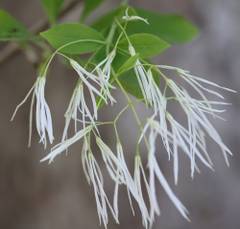
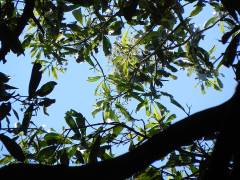
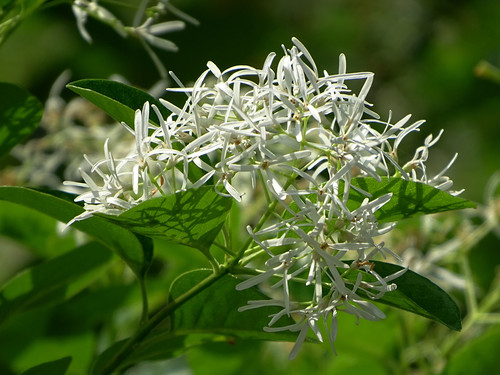
Chionanthus retusus is the Chinese fringetree, a small to medium deciduous tree growing 180–300 inches (450–750 cm / 15–25 feet) tall and wide with a rounded to spreading crown. Dense upright panicles 2–4 inches (5–10 cm) of pure white strap-like flowers at the branch tips in late spring to early summer (May–June). The flower panicles are held above the foliage — contrasting with the related C. virginicus (native fringetree), whose drooping panicles hang below the leaves. Glossy dark green opposite elliptic to obovate leaves 2–4 inches (5–10 cm) — smaller and glossier than C. virginicus (4–8 inches / 10–20 cm). Gray-brown bark developing corky deeply furrowed texture on mature trunks — a winter feature visible at close range. In the olive family (Oleaceae). The genus name means 'snow flower' (Greek chion + anthos). Dioecious: separate male and female trees. Female trees produce olive-like dark blue-black drupes 0.5 inch (1.3 cm) in fall — consumed by birds. Male trees produce heavier flower displays. More heat-tolerant and adaptable than C. virginicus. Slow to establish — may take 3–5 years to grow vigorously after transplanting. Growth rate is moderate at 8–12 inches (20–30 cm) per year. Lightly fragrant flowers. Non-toxic. Deer-resistant. Full sun for the heaviest flowering. Zones 5–9.
Native Range
Native to China, Japan, Korea, and Taiwan, growing in mountain woodlands, forest margins, and rocky slopes at 1,000–6,500 feet (300–2,000 m).Suggested Uses
Commonly planted as a specimen, patio tree, or small street tree at 15–20 foot (4.5–6 m) spacing. Functions in mixed borders and as an understory tree at woodland edges. The rounded spreading form is as wide as tall at maturity. The corky bark is a winter feature at close range. Grows in containers of at least 15 gallons (57 L). More compact than C. virginicus — suited to smaller residential lots.How to Identify
Appearance
Size & Dimensions
Height15' - 25'
Width/Spread15' - 25'
Bloom Information
Detailed Descriptions
Flower Description
Pure white, strap-like petals, in dense upright panicles 2-4 inches (5-10 cm) at branch tipsFoliage Description
Glossy dark green, opposite, elliptic to obovate, 2-4 inches (5-10 cm); smaller and glossier than C. virginicusGrowing Conditions
Sun Requirements
Requires 4-10 hours of direct sunlight daily
• Full Sun: 6+ hours of direct sunlight
• Partial Shade: 3-6 hours of direct sunlight
• Full Shade: Less than 3 hours of direct sunlight
Care & Maintenance
Care Guide
Full sun for heaviest flowering; tolerates partial shade. Moist well-drained acidic to neutral soil. More heat-tolerant than C. virginicus. Slow to establish — 3–5 years to grow vigorously after transplanting. Consistent moisture during establishment. Tolerates urban conditions. No serious pest or disease problems. Dioecious — most nursery plants are not sexed.Pruning
Prune in late winter to early spring (February–March). Maintain as a single-leader tree or allow a multi-stemmed form. Remove dead, damaged, and crossing branches. The rounded crown requires minimal shaping. Remove low branches over time to expose the corky mature bark.Pruning Schedule
Prune: February–March
winterearly spring
Container Growing
Suitable for container growing
Minimum container size: 15 gallons