Chaenactis, Genus, glabriuscula, Species,
- Genus & species
common yellow chaenactis
California and western United States
SunFull Sun
Overview
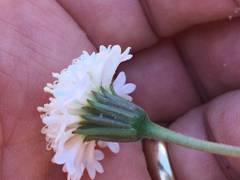
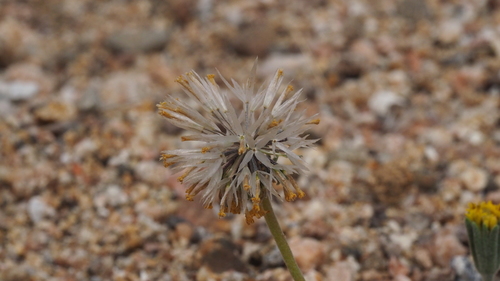
Chaenactis glabriuscula is a winter annual of California and the western United States, forming a basal rosette of finely dissected gray-green leaves and branched stems 4-20 inches (10-50 cm) tall. The leaves are divided into many small narrow segments, giving a feathery look, and are often coated with thin cobwebby hairs when young. From early spring the stems carry flat-topped yellow flower heads 0.5-0.8 inch (12-20 mm) across, each made entirely of small disk florets without ray petals, so the heads read as rounded yellow buttons. After wet winters plants branch widely and flower heavily, while in dry years they stay small and bear few heads. C. glabriuscula grows on open sandy and gravelly soils of grasslands, slopes, desert margins, and disturbed ground below about 5,500 feet (1,675 m). It completes its cycle in one season, setting seed and dying as the soil dries in late spring. Its reliance on winter rain means bloom varies sharply from year to year, and the short annual lifespan limits it to a single season of display.
Native Range
Chaenactis glabriuscula is native to California and adjacent parts of the western United States and Baja California. It grows on open sandy and gravelly soils of grasslands, foothills, chaparral openings, and desert margins.Suggested Uses
C. glabriuscula is used in wildflower meadows, desert and native gardens, and restoration seeding of dry open sites where it adds yellow spring bloom. It suits naturalistic xeriscapes that rely on winter rain. Its annual cycle and rain-dependent bloom make it a seasonal filler rather than a permanent planting.How to Identify
Appearance
Size & Dimensions
Height4" - 1'8"
Width/Spread6" - 1'
Bloom Information
C. glabriuscula flowers from early to late spring, roughly March through May, after winter and early-spring rains. The yellow heads open over several weeks, and bloom is heavy after wet winters and sparse in dry years. Bees and other insects visit the flowers, which set seed quickly as the soil dries.
Detailed Descriptions
Foliage Description
Gray-greenGrowing Conditions
Sun Requirements
Requires 6-12 hours of direct sunlight daily
• Full Sun: 6+ hours of direct sunlight
• Partial Shade: 3-6 hours of direct sunlight
• Full Shade: Less than 3 hours of direct sunlight
Water & Climate
Water Needs
Drought Tolerance
Drought tolerant when established
Care & Maintenance
Care Guide
C. glabriuscula grows in full sun on sandy or gravelly, sharply drained soil with a neutral to slightly alkaline pH of 6.5-8.0. As a winter annual it germinates with autumn and winter rain and flowers in spring, needing no supplemental water in a normal rainfall year. Sowing seed in autumn onto bare mineral soil follows its natural cycle. Rich soil and summer irrigation cause weak growth and rot. The plant dies after seeding and returns only from seed the next season. It has few pests in open sunny sites.Pruning
C. glabriuscula needs no pruning. As an annual it is left to flower and set seed, after which the dried plant can be cleared. Leaving spent plants in place lets the seed drop for the following season.Container Growing
Suitable for container growing
Minimum container size: 1 gallons
Toxicity
Non-toxicPlanting Guide
Planting Methods & Timing
Planting Method
direct sow
Direct Sow Timing
Autumn
Days to Maturity
60–90 days
Plant Spacing
8 inches