Chaenactis, Genus, douglasii, Species,
- Genus & species
hoary pincushion
Overview
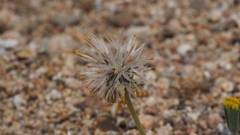
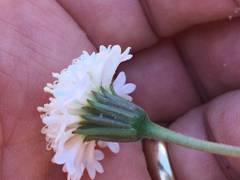
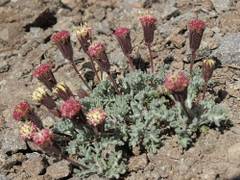
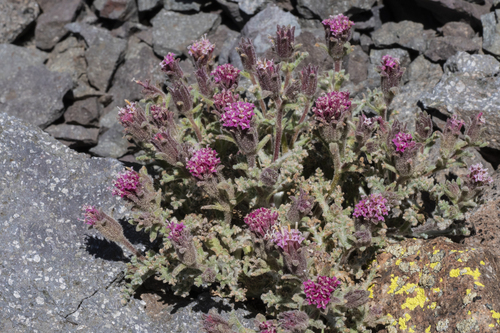
Chaenactis douglasii is a low, gray-haired biennial to short-lived perennial in the aster family, forming a basal rosette and flowering stems 4-16 inches (10-40 cm) tall. The whole plant is covered in dense woolly hairs that give it a hoary, gray-green cast. Leaves are finely dissected into many narrow segments, mostly clustered at the base and along the lower stem, 1-4 inches (2.5-10 cm) long. The flower heads are discoid, lacking ray florets, and made up of many small white to pale pink tubular flowers packed into a dome 0.4-0.6 inch (10-15 mm) wide that resembles a pincushion. Several heads are carried on branched stems. Bloom runs from late spring into summer. The species grows on dry, rocky or gravelly slopes, talus, and sagebrush steppe across western North America, often on disturbed or poor soils. It needs sharp drainage and full sun, and is short-lived, persisting in gardens mainly by self-sowing. Seeds are dry, single-seeded achenes dispersed by wind. The flowers draw native bees and small butterflies.
Native Range
Chaenactis douglasii is native to western North America, ranging from British Columbia south through the Rocky Mountains and Great Basin to California, Arizona, and New Mexico. It grows on dry rocky slopes, talus, gravelly flats, and sagebrush steppe from low foothills to subalpine ridges.Suggested Uses
Used in rock gardens, gravel gardens, and dryland or sagebrush-steppe restoration within its range. The low gray foliage and pincushion heads suit naturalistic plantings on lean soils. It establishes on disturbed, low-fertility ground that does not support many other perennials.How to Identify
Appearance
Size & Dimensions
Height4" - 1'4"
Width/Spread6" - 1'
Colors
Bloom Information
Detailed Descriptions
Flower Description
white to pale pinkFoliage Description
gray-greenGrowing Conditions
Sun Requirements
Requires 6-12 hours of direct sunlight daily
• Full Sun: 6+ hours of direct sunlight
• Partial Shade: 3-6 hours of direct sunlight
• Full Shade: Less than 3 hours of direct sunlight
Care & Maintenance
Care Guide
Grows in full sun with six or more hours of direct light. Sharp drainage is essential, and gravelly, sandy, or rocky soils of low fertility suit it, while rich or wet ground shortens its life. Once established the taproot makes it drought-tolerant, and irrigation is rarely needed beyond establishment. The plant is short-lived and maintains itself in the garden by self-sowing into open gravel. Seed sown in fall and given winter cold germinates in spring. Excess fertilizer produces weak, floppy growth.Pruning
Little pruning is needed. Spent flowering stems can be trimmed after seed set, though leaving some heads allows self-sowing. Dead rosettes are cleared as plants complete their short life cycle.Pruning Schedule
Prune: August–September
summerfall
Container Growing
Suitable for container growing
Minimum container size: 1 gallons