Image 1 of 8
1 / 8
Plant Reference
Cercidiphyllum, Genus, japonicum, Species, 'Pendulum', Cultivar,
- Genus & species
- Cultivar
weeping katsura
Japan and central China (the species); 'Pendulum' is a cultivar of garden origin selected for the weeping habit
Overview
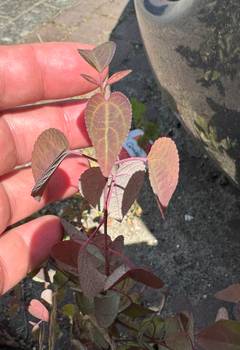
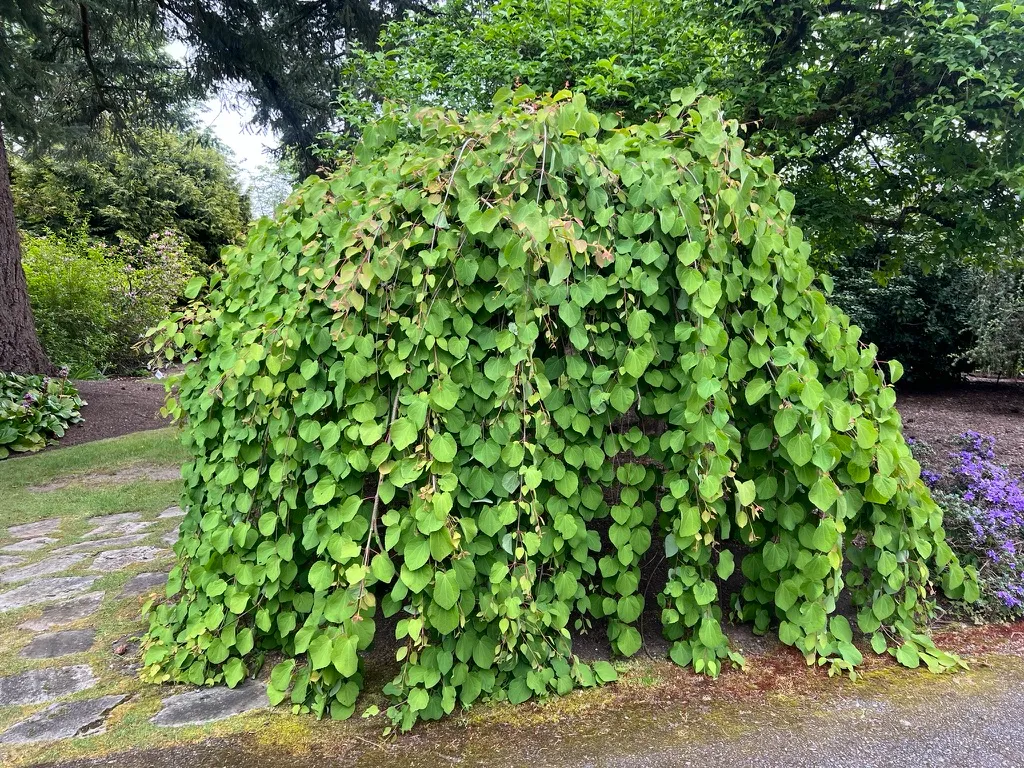
Cercidiphyllum japonicum 'Pendulum' is weeping katsura, a weeping deciduous tree growing 15-25 feet (4.5-7.5 m) tall and 15-25 feet (4.5-7.5 m) wide. Cascading branches form a curtain of blue-green round to heart-shaped leaves 2-4 inches (5-10 cm) wide that may reach the ground. Emerges reddish-purple in spring. Turns yellow, orange, and apricot in fall — the senescing foliage emits a burnt sugar/caramel fragrance (maltol), same as the species. Red to pink inconspicuous flowers (no petals) on bare branches in March-April. In Cercidiphyllaceae. Smaller than the species type (15-25 feet / 4.5-7.5 m vs. 40-60 feet / 12-18 m for C. japonicum). The final height depends on how high the central leader is staked before allowing it to weep — staking to 8-10 feet (2.4-3 m) creates a taller specimen. Does not tolerate drought — leaf scorch and premature leaf drop in dry conditions. This drought sensitivity is the primary limitation. Late spring frosts damage new growth in zones 4-5. Ground-reaching branches may need trimming. Deer-resistant. Non-toxic. Zones 4-8. Full sun to partial shade. Growth rate is moderate.
Native Range
The species C. japonicum is native to Japan and central China. 'Pendulum' is a cultivar of garden origin selected for the weeping habit.Suggested Uses
Grown as a specimen tree in residential gardens, near water features, and courtyard gardens spaced 15-25 feet (4.5-7.5 m). Weeping form. Burnt sugar fall fragrance. Smaller alternative to the species. Requires consistent moisture. Deer-resistant. Non-toxic. Zones 4-8.How to Identify
Appearance
Size & Dimensions
Height15' - 25'
Width/Spread15' - 25'
Bloom Information
Early spring (March-April). Red to pink inconspicuous flowers (no petals) on bare branches before leaf emergence. 1 week of bloom. Dioecious. Wind-pollinated.
Detailed Descriptions
Flower Description
Red to pink, inconspicuous (no petals), tiny, on bare branches before leaf emergenceFoliage Description
Blue-green, round to heart-shaped, 2-4 inches (5-10 cm) wide; emerges reddish-purple in spring; turns yellow, orange, and apricot in fall; the fall foliage emits a burnt sugar/caramel fragrance (maltol) — same as the speciesGrowing Conditions
Sun Requirements
Requires 4-8 hours of direct sunlight daily
• Full Sun: 6+ hours of direct sunlight
• Partial Shade: 3-6 hours of direct sunlight
• Full Shade: Less than 3 hours of direct sunlight
Care & Maintenance
Care Guide
Full sun to partial shade (4-8 hours). Moist, well-drained acidic to neutral soil pH 5.5-7.0. Does not tolerate drought — supplemental water during dry periods. Stake the leader upward to the desired height before allowing it to weep. Late spring frost damage in zones 4-5. Prune in summer (June-August). Deer-resistant. Non-toxic. Zones 4-8.Pruning
Prune in summer (June-August). Trim ground-reaching branches if they create a tangled skirt. The weeping form is natural — do not attempt to train upright. Remove dead or damaged branches from within the canopy curtain.Pruning Schedule
Prune: June–August
summer