Ceratostigma, Genus, willmottianum, Species,
- Genus & species
Chinese plumbago
Western China (Sichuan, Yunnan, Tibet) and northern Myanmar
Overview
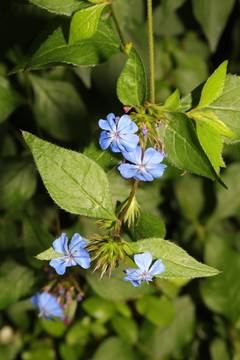
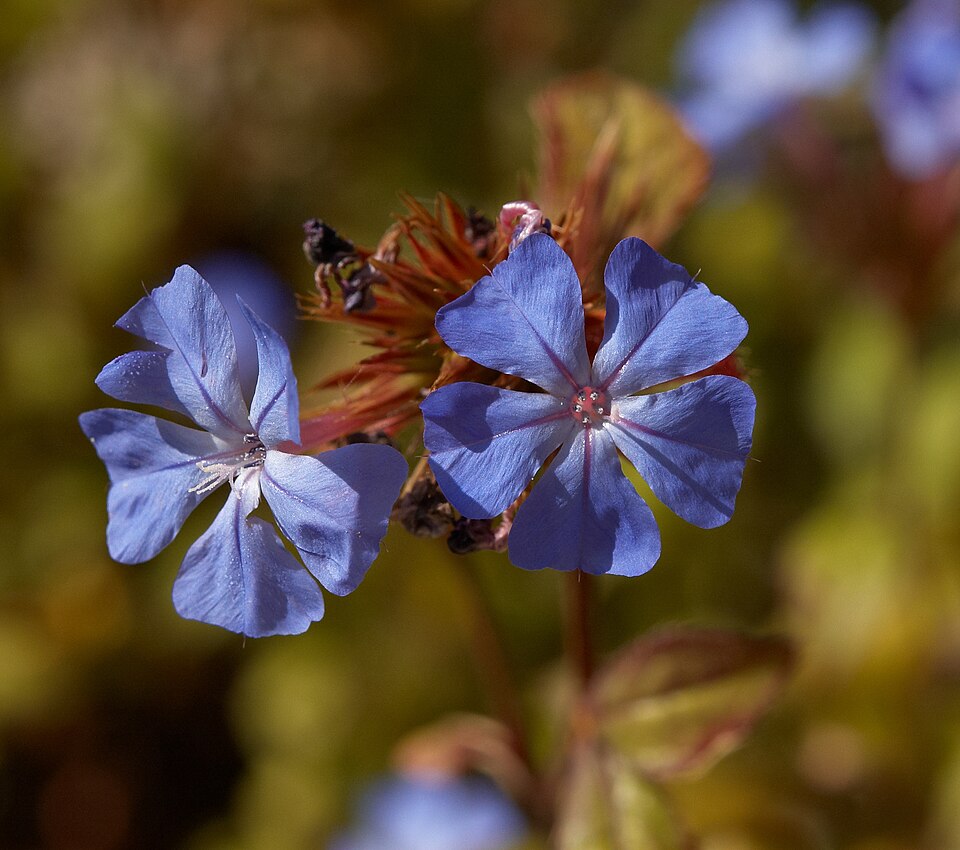
Ceratostigma willmottianum is a compact, mounding, deciduous subshrub reaching 24–36 inches (60–90 cm) tall with a spread of 24–36 inches (60–90 cm). The plant carries wiry, reddish-brown stems with alternate, diamond-shaped to obovate leaves 1–2 inches (2.5–5 cm) long, medium green with reddish margins and bristly hairs along the edges. Clusters of 5-petaled, cobalt-blue flowers 0.5–0.75 inch (1.3–2 cm) across appear at the stem tips from July through October—a 10–14 week bloom season, longer than the 6–8 weeks of C. plumbaginoides. Foliage turns bronze-red to deep burgundy from mid-September onward, producing a blue-and-red combination similar to C. plumbaginoides but on a taller, shrubby plant. In zones 6–7, stems die back to the ground in winter and regrow from the base at 18–24 inches (45–60 cm) per season; in zones 8–9, partial woody stems survive. Flowers form on both old and new wood. Growth rate is moderate. The species was named for Ellen Willmott, the English plantswoman who first grew it in her garden at Warley Place from seed collected by Ernest Wilson in western China in 1908. Lifespan in cultivation is 5–8 years. Root rot develops in wet winter soils.
Native Range
Ceratostigma willmottianum is native to western China (Sichuan, Yunnan, Tibet) and northern Myanmar, occurring on dry, rocky slopes, scrubby hillsides, and forest margins from 3,000 to 9,000 feet (900–2,700 m).Suggested Uses
Planted in mixed borders, dry borders, and Mediterranean-style gardens at 24–30 inch (60–75 cm) spacing. The upright habit and 10–14 week bloom season from July through October fill the late-season blue gap. Functions as a low informal hedge or border edging. Grows in containers of at least 3 gallons (11 L). Paired with Caryopteris, fall asters, and ornamental grasses, the blue panicles sustain color from July through October. The clump-forming, non-spreading habit stays more controlled than C. plumbaginoides in formal beds.How to Identify
Appearance
Size & Dimensions
Height2' - 3'
Width/Spread2' - 3'
Bloom Information
Detailed Descriptions
Foliage Description
Medium green with reddish margins, turning bronze-red to burgundy in fallGrowing Conditions
Sun Requirements
Requires 6-12 hours of direct sunlight daily
• Full Sun: 6+ hours of direct sunlight
• Partial Shade: 3-6 hours of direct sunlight
• Full Shade: Less than 3 hours of direct sunlight
Care & Maintenance
Care Guide
Plant in full sun in lean to average, well-drained soil. Full sun produces the most flowers and the deepest fall color. Sharp drainage is the single most limiting requirement; wet winter soils cause root rot. Drought-tolerant once established. In zones 6–7, stems die to the ground in winter, and a 2–3 inch (5–7.5 cm) mulch layer over the crown reduces winterkill. In zone 8 and warmer, partial stems survive. Lifespan in cultivation is 5–8 years, and replacement plantings should be scheduled. No serious pest or disease problems when drainage is adequate.Pruning
In zones where stems die back, cut all dead growth to 2–4 inches (5–10 cm) above ground in early spring. In milder zones where stems survive, pruning to the lowest live buds in early spring promotes compact growth. The plant flowers on new wood, so hard spring pruning does not sacrifice bloom.Pruning Schedule
Prune: March
early spring
Container Growing
Suitable for container growing
Minimum container size: 3 gallons