Image 1 of 18
1 / 18
Plant Reference
Ceratostigma, Genus, plumbaginoides, Species,
- Genus & species
leadwort
Overview
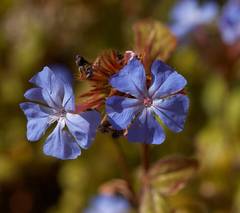
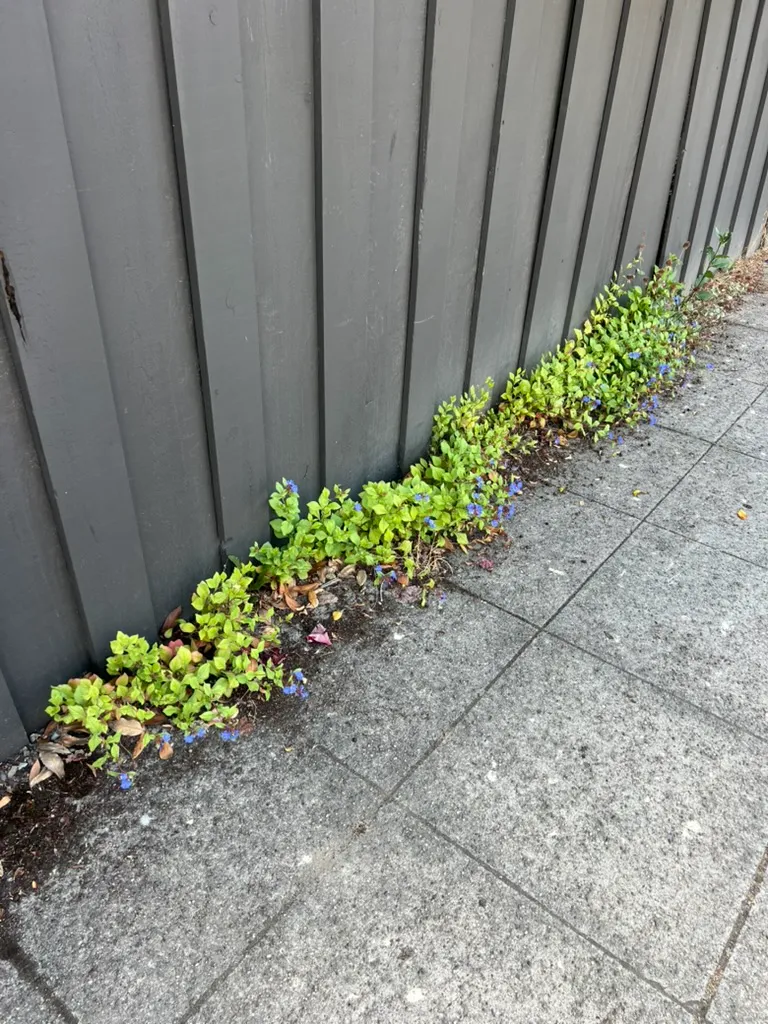
Ceratostigma plumbaginoides is a low, spreading, herbaceous to semi-woody perennial ground cover reaching 6–12 inches (15–30 cm) tall with a spread of 12–24 inches (30–60 cm). The plant spreads by underground rhizomes to form a dense, weed-suppressing mat covering 3–4 square feet (0.3–0.4 m²) per plant within 2–3 years. Leaves are alternate, obovate, 1–2 inches (2.5–5 cm) long, medium green, turning bronze-red to deep burgundy in fall. The fall foliage color overlaps with the cobalt-blue flower period from mid-September through October, producing a simultaneous blue-and-red display. Clusters of 5-petaled, cobalt-blue flowers 0.5–0.75 inch (1.3–2 cm) across open from August through October—true blue is a rare flower color among fall-blooming perennials, which are predominantly yellow, orange, red, and purple. Growth emerges late in spring (often May), leaving bare ground until the rhizomes activate. The underground spread is moderate and controlled enough for ground cover use but can colonize adjacent areas over time. In cold zones (5–6), the plant dies fully to the ground; in milder areas, semi-woody stems may persist partially. The late emergence allows spring bulbs to complete their cycle before the leadwort fills in.
Native Range
Ceratostigma plumbaginoides is native to western China (Sichuan, Hubei provinces), occurring on rocky slopes, dry woodland margins, and open ground from 2,000 to 6,000 feet (600–1,800 m).Suggested Uses
Planted as a ground cover under trees, along borders, and on slopes at 12–18 inch (30–45 cm) spacing. The late-season blue flowers and red fall foliage fill the autumn color gap. Functions over spring bulbs: bulb foliage dies back before the leadwort fills in. Grows in containers of at least 2 gallons (8 L). Paired with fall asters and chrysanthemums, the true blue flower color contrasts with purple, pink, and bronze tones. The rhizomatous spread can be contained with steel edging in formal beds.How to Identify
Appearance
Size & Dimensions
Height6" - 1'
Width/Spread1' - 2'
Bloom Information
Clusters of 5-petaled, cobalt-blue flowers 0.5–0.75 inch (1.3–2 cm) across open from August through October. Bloom duration is 6–8 weeks. The blue flowers overlap with the developing bronze-red fall foliage color from mid-September onward, creating a blue-and-red combination.
Detailed Descriptions
Foliage Description
Medium green, turning bronze-red to deep burgundy in fallGrowing Conditions
Sun Requirements
Requires 4-10 hours of direct sunlight daily
• Full Sun: 6+ hours of direct sunlight
• Partial Shade: 3-6 hours of direct sunlight
• Full Shade: Less than 3 hours of direct sunlight
Care & Maintenance
Care Guide
Plant in full sun to partial shade in average, well-drained soil. Full sun produces the most flowers and the deepest fall color. Tolerates dry conditions once established. The late emergence (May) leaves bare ground in spring, and shallow cultivation at that time damages the dormant rhizomes. A plant marker placed in fall prevents accidental disturbance. Spreading rhizomes can be contained by edging or by planting in confined beds. No serious pest or disease problems. Cut to the ground in late fall or early spring.Pruning
Cut all dead stems and foliage to the ground in late fall after frost or in early spring before new growth emerges. No pruning needed during the growing season.Pruning Schedule
Prune: March
early spring
Container Growing
Suitable for container growing
Minimum container size: 2 gallons