Cerastium, Genus, fontanum, Species, ssp., Subspecies, vulgare, Subspecies,
- Genus & species
- Subspecies
mouse-ear chickweed
Overview
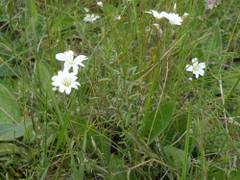
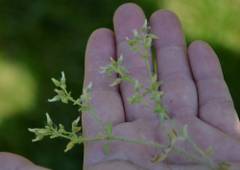
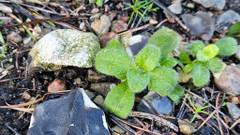
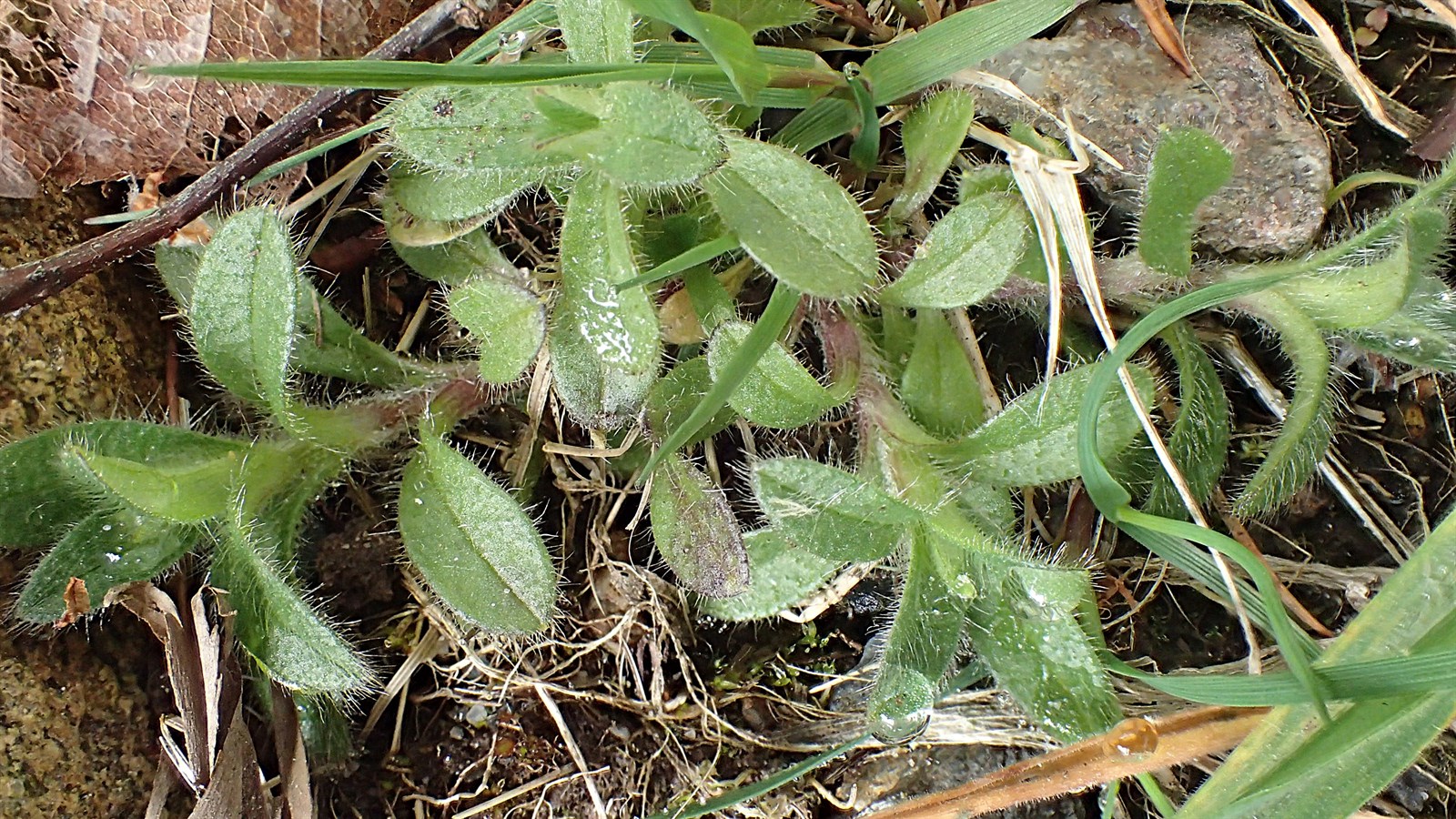
Cerastium fontanum ssp. vulgare is a low-growing, mat-forming perennial in the pink family (Caryophyllaceae) reaching 2-12 inches (5-30 cm) tall and spreading 6-18 inches (15-45 cm) wide. Stems are prostrate to ascending, rooting at the lower nodes, densely covered in short sticky (glandular) and non-glandular hairs. Leaves are opposite, ovate to elliptic, 0.3-0.8 inch (8-20 mm) long, dark green, and hairy on both surfaces. Flowers are white, 0.25-0.4 inch (6-10 mm) across, with five deeply notched petals (each appearing as two), borne in loose terminal cymes. Fruit is a cylindrical capsule slightly curved at the tip, opening by 10 teeth, containing 50-100 orange-brown seeds. Plants form dense, low mats that persist through winter in mild climates, remaining semi-evergreen. Both seeds and rooting stem fragments establish new plants. A single plant produces 7,000-15,000 seeds annually. Seeds germinate year-round in the Pacific Northwest when soil moisture is adequate. The subspecies ranks among the more widespread lawn and garden weeds in temperate regions worldwide, tolerates close mowing, and establishes in compacted soils where turfgrass thins.
Native Range
Cerastium fontanum ssp. vulgare is native to Europe and western Asia, occurring in meadows, pastures, roadsides, and disturbed ground from sea level to approximately 8,000 feet (2,400 m). Naturalized across North America, Australia, New Zealand, and most temperate regions, and recorded in all 50 U.S. states and all Canadian provinces.Suggested Uses
Used in weed identification courses for separating Caryophyllaceae lawn weeds (mouse-ear chickweed, common chickweed, pearlwort). Studied in turfgrass management curricula as a widespread cool-season lawn invader. Young leaves are edible and have been consumed as potherbs in European folk traditions.How to Identify
Appearance
Size & Dimensions
Height2" - 1'
Width/Spread6" - 1'6"
Bloom Information
Flowers appear March through September in the Pacific Northwest, with sporadic flowering in mild winter months. Individual flowers open for 2-3 days. New flowers are produced continuously on branching cymes over a 14-18 week period. The subspecies is self-pollinating and does not require insect visitation for seed set. Seeds mature 3-4 weeks after pollination.
Detailed Descriptions
Flower Description
White, 0.25-0.4 inch (6-10 mm) across, with 5 deeply notched petals (appearing as 10) in loose terminal cymesFoliage Description
Dark green, small, ovate to elliptic, densely covered in short sticky hairsGrowing Conditions
Sun Requirements
Requires 4-10 hours of direct sunlight daily
• Full Sun: 6+ hours of direct sunlight
• Partial Shade: 3-6 hours of direct sunlight
• Full Shade: Less than 3 hours of direct sunlight