Cerastium, Genus, spp., Multiple species,
- Genus
- Multiple species
mouse-ear chickweeds
Mainly temperate Northern Hemisphere
Overview
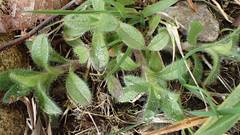
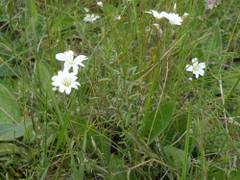
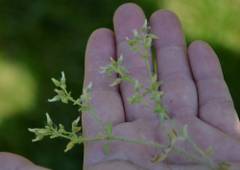
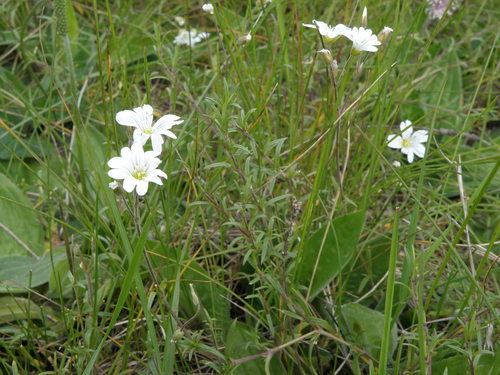
Cerastium is a genus of about 100 species of low annual and perennial herbs in the pink family, Caryophyllaceae, known as mouse-ear chickweeds for their small, soft, often gray-hairy leaves. Plants form low mats, tufts, or sprawling stems 2 to 12 inches (5 to 30 cm) tall, with opposite, narrow to oval leaves usually clothed in soft hairs. The white flowers have five petals, each notched at the tip so the bloom appears to have ten lobes, and are 0.2 to 1 inch (5 to 25 mm) across in branched clusters. After flowering the plants form small cylindrical capsules that open by ten tiny teeth to release many seeds. Cerastium is native mainly to the temperate Northern Hemisphere, with many species in Europe and Asia and others in the Americas and on mountains worldwide, growing in grassland, rock, dunes, alpine scree, and disturbed open ground. Snow-in-summer (C. tomentosum) is a silvery, mat-forming perennial grown as a groundcover, while field and sticky mouse-ears (C. fontanum and C. glomeratum) are common weeds of lawns and waste ground. Many species spread readily by seed and creeping stems.
Native Range
Cerastium is found mainly across the temperate Northern Hemisphere, with the greatest diversity in Europe and temperate Asia, and additional species in the Americas, on tropical mountains, and in the far south. Plants grow in meadows, rocky slopes, screes, coastal sand and shingle, and disturbed or cultivated ground.Suggested Uses
Mat-forming Cerastium is planted as a silvery groundcover for sunny banks, rock gardens, wall tops, gravel, and the front of dry borders, spaced 12 to 18 inches (30 to 45 cm) apart to knit into cover. It is used to spill over walls and edge paths in hot, dry sites. The spring flowers feed small bees, while the weedy species are managed rather than planted.How to Identify
Appearance
Size & Dimensions
Height2" - 1'
Width/Spread1' - 2'
Bloom Information
Cerastium blooms mainly in late spring and early summer, generally May and June, with snow-in-summer covering its silver mats in white at that time. Weedy annual species can flower over a longer stretch from spring into autumn. The small white flowers open in the day and close in dull weather, drawing small bees and flies. Seed ripens within a few weeks of each flush.
Detailed Descriptions
Foliage Description
gray-green to silver, hairyGrowing Conditions
Sun Requirements
Requires 6-12 hours of direct sunlight daily
• Full Sun: 6+ hours of direct sunlight
• Partial Shade: 3-6 hours of direct sunlight
• Full Shade: Less than 3 hours of direct sunlight
Care & Maintenance
Care Guide
Cerastium grows in full sun and sharply drained, lean soil at a pH of 6.0 to 7.5, tolerating drought, poor fertility, sand, and gravel once established. Rich, moist, or shaded ground causes soft growth and rot, and the mat-forming species rot quickly in wet winters or heavy clay. Most perennial kinds are cold hardy to USDA zones 3 to 7 and spread fast enough to overrun smaller neighbors. Plants need little water or feeding and are clipped after bloom to keep them dense. Few pests trouble them beyond rot in poor drainage. Weedy species self-sow heavily and root from trailing stems.Pruning
Shearing mat-forming Cerastium such as snow-in-summer right after bloom removes the faded flowers, keeps the mat tight, and prevents heavy self-seeding. Overgrown patches are cut or pulled back from paths and smaller plants in spring or after flowering. Dead and rotted sections are raked out to let the mat regrow.Pruning Schedule
Prune: June–July
summer
Container Growing
Suitable for container growing
Minimum container size: 1 gallons